
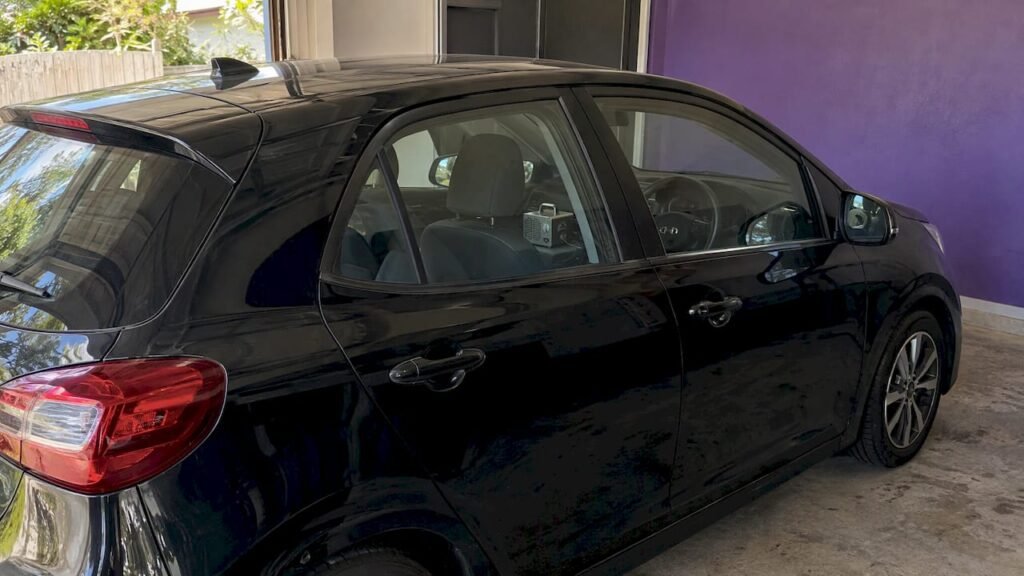
Ozone treatment is safe for you, your family and your pets when it is done with the car empty, the cabin treated for a controlled time and the air fully cleared before anyone gets back in. The risk is not in the car afterwards. It is in breathing ozone while the machine is running, which is why the process, not the gas, is what you are really judging. We offer ozone deodorisation as a mobile service across the Sunshine Coast, so the car is treated at your home or workplace and you stay well clear of it until it is ready.
TL;DR
- Nobody, human or animal, should be in or near the car while the generator runs. Ozone is a lung irritant and the exposure rules are strict.
- A typical car cycle is 30 to 60 minutes of treatment, a 30-minute rest, then at least 60 minutes of open-air ventilation. A faint smell can linger for up to three days.
- People with asthma, children, older people and pets are the ones to keep furthest from a treatment in progress.
- Ozone is a deodorising step. Rubbish, spills and damp are cleaned out first so the treatment has the best chance of working.
- Done in a controlled way, it is a sound choice for smoke, pet and musty smells.
Table of Contents
- What ozone does inside a car
- Who should stay away while it runs
- What the Australian exposure figure means
- How long until it is safe to get back in
- Will ozone harm the car itself?
- What ozone treats well, and what has to be dealt with first
- A short checklist before a treatment
- Our view on ozone safety
- Getting the smell out for good
- FAQ
- Sources
What ozone does inside a car
Ozone is a form of oxygen with three atoms instead of two. A generator makes it from the air, fills the cabin with it and lets it react with the molecules that cause smell. Because it is a gas, it reaches places a cloth and a brush cannot: foam inside seat bases, the headliner, air vents and the gaps under carpet.
That is why ozone is used for the stubborn odours: cigarette smoke, pet smells, spilled milk, gym clothes and the musty smell a car gets after a wet Sunshine Coast summer. If you want the full process from start to finish, our guide on how to sanitise your car with ozone treatment walks through it, and our practical guide to removing odours from cars covers the cleaning that comes before it.
Who should stay away while it runs
The key safety point is simple: ozone is made to react with things, and your lungs are one of them. The US Environmental Protection Agency says inhaled ozone can damage the lungs, and that relatively low amounts can cause chest pain, coughing, shortness of breath and throat irritation. It can also make asthma worse and reduce the body’s resistance to respiratory infections.
The same page notes that people differ substantially in how sensitive they are, and that exercise increases the amount you breathe in and so the risk. That matters for families, because a child running around a driveway while a treatment is happening breathes in more than someone sitting still.
In practice, that gives you a short list of rules:
- No people in the car. Not the driver, not a child in a seat, not someone “just grabbing a bag”.
- No pets in the car or close by. The EPA says high-concentration ozone should only be used under controlled conditions that make sure no person or pet is exposed.
- Keep the car outside or in a well-ventilated open area. The automotive guideline published by Bosch’s service-solutions arm says treatment should take place outside closed rooms and that the vehicle must be secured against unauthorised access, so no one opens a door mid-cycle.
- Start the generator from outside. The same procedure has the operator start the machine without sitting inside the cabin.
If anyone in your household has asthma or another lung condition, talk to your GP before being anywhere near an ozone treatment, and let your detailer know so the car can be handed back only once the air has fully cleared.
What the Australian exposure figure means
Australia has a workplace limit for ozone, and it is a useful yardstick for how seriously the gas is treated. Safe Work Australia’s workplace exposure standards table, amended November 2025, lists ozone with a peak limitation of 0.1 parts per million (0.2 mg/m³). The document says exposure standards are maximum concentrations that must not be exceeded, and that adoption of national changes can differ between states and territories.
A “peak limitation” is the highest concentration measured over the shortest practical period, and Safe Work Australia’s explanatory document says that period must not exceed 15 minutes. The ozone figure was also 0.1 ppm in the 2022 edition, so there is no recent change to worry about.
The takeaway for a car owner is not that you need a meter. It is that the concentration inside a car during treatment is far above what anyone should breathe, and the concentration when you return must be down at harmless levels. That is a matter of timing and airflow, which we cover next. The standard applies to workplaces, so it is a benchmark for how cautiously ozone is handled rather than a rule written for your driveway.
How long until it is safe to get back in
The timeline in the Bosch guideline is the clearest published one for cars. It gives 30 to 60 minutes as usually enough for the treatment, then a further 30 minutes of dwell time with the car left closed, then at least 60 minutes of open-air ventilation. It also says ozone may remain noticeable by smell for up to three days.
| Stage | Typical time | What happens |
|---|---|---|
| Treatment | 30 to 60 minutes | Generator runs in the sealed, empty, secured car |
| Dwell | 30 minutes | Generator off, car left closed so ozone keeps working |
| Ventilation | At least 60 minutes | Doors opened, car aired in open air |
| Lingering smell | Up to 3 days | A faint, fresh, slightly sharp scent may remain |
So allow roughly two to two and a half hours from start to a car you can sit in, longer for a heavily affected car. Because we come to you, that time fits around a workday or a school pick-up: the car is dealt with where it is parked, and you do not need to sit in a waiting room.
Two habits help the airing stage. Leave all doors, the boot and the windows open, and in humid weather give the car a little extra time so the cabin air really does exchange. If the car has been damp, such as after a leak or a flooded footwell, it should be dry before any odour treatment. The step-by-step advice on drying a damp car interior is worth following first, because moisture is what keeps a musty smell coming back.
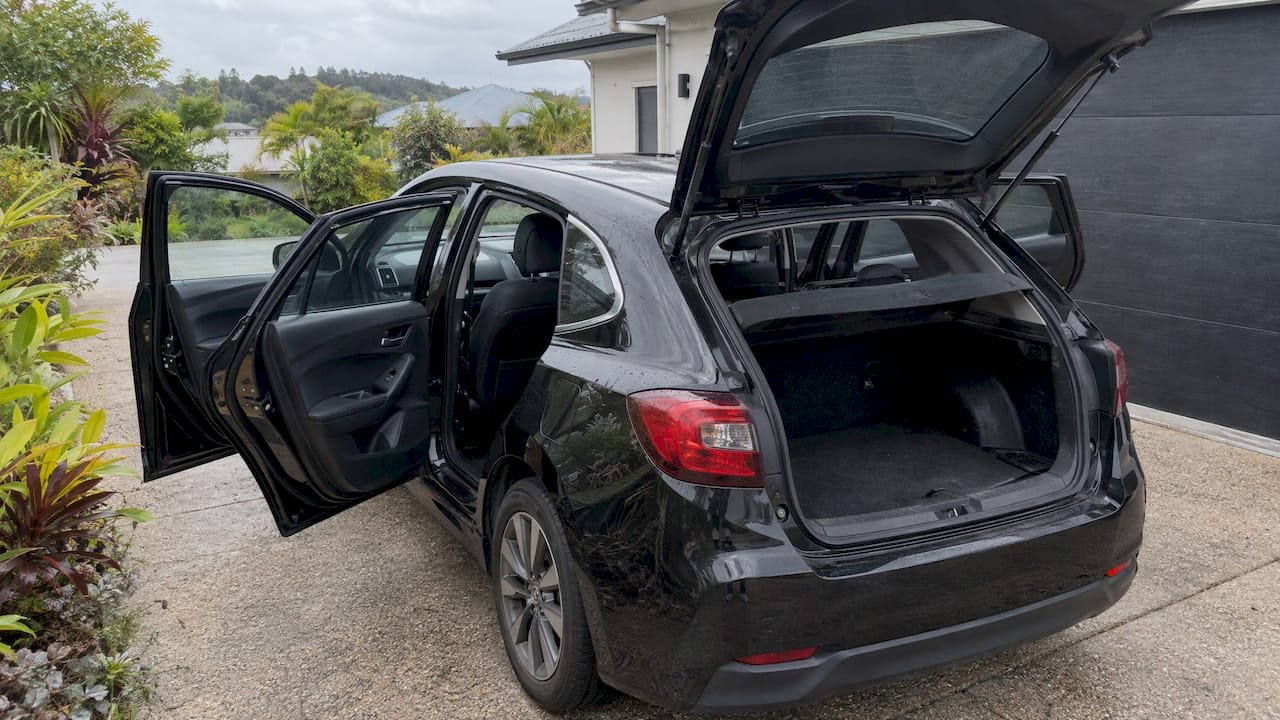
If you still notice a sharp smell on handover day, do not sit in the car with the doors shut. Open it up, let it air further and wait. A lingering scent that fades over a day or two is expected, according to the guideline above, but a strong, irritating smell is a sign the car needs more airing.
Will ozone harm the car itself?
Ozone is an oxidiser, so concentration and time matter for the car as well as for you. The EPA’s guidance says ozone can damage rubber, the coatings on electrical wiring and fabrics. The Restoration Industry Association makes a similar point that ozone can oxidise materials, particularly rubber and some electrical insulation, which can create material and electrical-safety problems when it is used carelessly.
This is the practical reason to avoid hiring out a cheap generator and leaving it running overnight in the cabin. A controlled treatment keeps the dose and the run time matched to the car, which protects trims, seals and wiring while still doing the deodorising job. The 30 to 60 minute cycle from the guideline is a long way from “leave it on all night”.
A few things that help the car:
- Remove loose items from the car first, especially leather bags, rubber mats you value and anything sentimental.
- Do not run the treatment repeatedly in a short space of time to chase a smell. If a smell comes back, the source is usually still there.
- Protect the surfaces afterwards. Leather and fabric that have been freshened are easier to keep that way with a protective layer. We apply Fabric Guard at $25 per seat and a leather ceramic coating at $50 per seat, so seats stay easier to wipe and less likely to soak up the next spill.
What ozone treats well, and what has to be dealt with first
Ozone is the finishing step for odour, not a substitute for cleaning the source. That is how professionals use it: remove the cause, clean the surfaces, then deodorise what is left in the air and in the porous materials.
Cigarette smoke. Smoke settles into the headliner, the seat foam and the carpet. Ozone reaches all of those. Pairing it with a thorough clean gives the best result, and our page on removing cigarette smell from a car explains how the two fit together.
Pet smells. For families with dogs, the hair and any accidents are extracted and cleaned first, then ozone deals with the odour that stays in the fibres. The pet then stays out of the car until it is fully aired.
Musty and mouldy smells. Here the order really matters. The Restoration Industry Association says ozone does not eliminate mould spores or hyphae, water damage or mould growing into materials, so it is not a replacement for removal and detailed cleaning. For heavy mould odours, though, confined ozone can be used as a deodorising process before or after laundering or dry cleaning. In a car, that means find and dry the wet spot, extract and clean the affected carpet or seat, and then treat the cabin air and fabric for the smell that remains.
Food and drink spills. Milk, sports drinks and takeaway leaks need extraction first. The smell often comes from what has soaked into the foam, and extraction takes it out.
The EPA also says there is uncertainty about chemical by-products when ozone reacts with other substances. This is one more reason a thoroughly cleaned car is the right starting point: there is less for the ozone to react with, and what is left is mainly the odour itself.
A short checklist before a treatment
- Take everything out. Rubbish, bags, child seats if possible, sunglasses, chargers and anything with rubber or leather you care about.
- Find the source. Check under the seats, in door pockets, the boot and the spare wheel well. A forgotten sports bag can undo any treatment.
- Vacuum and wipe the cabin. Surface grime competes with the odour for the ozone, so a clean cabin gives a better result.
- Dry anything wet. Damp carpet needs to be dried or extracted before deodorising.
- Keep people and pets away. Plan for the household to stay out of the car and a good distance from it for the whole run.
- Plan the airing time. Book it for a time when you do not need the car for a few hours afterwards.
If you would rather not do steps 2 to 4 yourself, that is where an interior detail comes in: the cleaning and extraction are done by us at the same visit location, and we can advise whether ozone deodorisation suits your car’s smell.
Our view on ozone safety
We treat ozone the way it deserves to be treated: as a powerful tool that is excellent at its job when the process around it is right.
The process is simple. The car is empty, nobody is exposed while the machine runs, the treatment is kept to a sensible time for the vehicle, and the car is aired fully before it goes back to its owner. We would rather a customer wait an extra half hour for fresh air than hurry the handover.
We also think odour work is best done as part of a proper detail. Cleaning, extraction and protection first, then deodorisation, means the smell is gone for the right reason. Ozone deodorisation is one of the services we offer alongside seat and carpet extraction, fabric and leather protection and our other interior work.
Because we are fully mobile, you do not need to drive anywhere with a smelly car or sit in it afterwards. We come to your home, workplace or wherever the car is parked on the Sunshine Coast, and we ask that people and pets keep clear until it is ready.
isaac’s
Getting the smell out for good
If your car has a smoke, pet or musty smell that cleaning alone has not shifted, we can look at the car and recommend the right combination of extraction, deodorising and protection, at your location. Our interior-focused packages are the Deluxe Detail and Revival Detail, listed at $375 to $575 and $575 to $775 respectively, with the price depending on vehicle size and condition. Ask us about ozone deodorisation when you book.
If you want the whole picture first, our list of odour removal techniques shows where ozone fits among the options. When you are ready to book, get in touch with Isaac’s Pro Detailing and tell us what the smell is and how long it has been there.
FAQ
How long after ozone treatment is a car safe to sit in?
A common procedure is 30 to 60 minutes of treatment, a 30-minute rest with the car closed, then at least 60 minutes of ventilation with the doors open in open air. That is roughly two to two and a half hours in total. A faint smell can last up to three days, but it should be mild and should fade.
Is ozone treatment safe for pets and children?
Yes, as long as they are kept well away while the generator runs and until the car has been fully aired. The EPA advises that high-concentration ozone be used only where no person or pet is exposed. Children, older people and anyone with asthma are the most sensitive, so keep them clear of the car during the whole process.
Will ozone remove mould from my car?
Ozone is good at deodorising the musty smell that mould leaves behind, but it does not remove mould spores or growth that has got into materials, or fix water damage. The wet source is dried and cleaned first, and then ozone is used on the remaining odour. If you can see mould, tell us when you book so the car is cleaned first.
Can ozone damage my car’s interior?
High concentrations over long periods can age rubber, some plastics and wiring insulation, according to the EPA and the Restoration Industry Association. That is why the dose and run time should be controlled and matched to the vehicle, rather than leaving a generator running for hours. A controlled treatment keeps the interior in good condition.
What is the Australian limit for ozone exposure?
Safe Work Australia’s table, amended November 2025, lists a peak limitation of 0.1 ppm for ozone in workplaces, measured over no more than 15 minutes. It is a workplace standard, but it shows how little ozone people should breathe, and why nobody should be in a car during treatment.
Sources
- US EPA: Ozone generators that are sold as air cleaners
- Bosch service solutions: Instruction for action, ozone generator (28 April 2020)
- Safe Work Australia: Workplace exposure standards, amended November 2025
- Safe Work Australia: Changes to workplace exposure limits, May 2025
- Restoration Industry Association: Are ozone generators a substitute for mould removal?
- Humidité après une vitre cassée : agir vite et sécher la voiture