
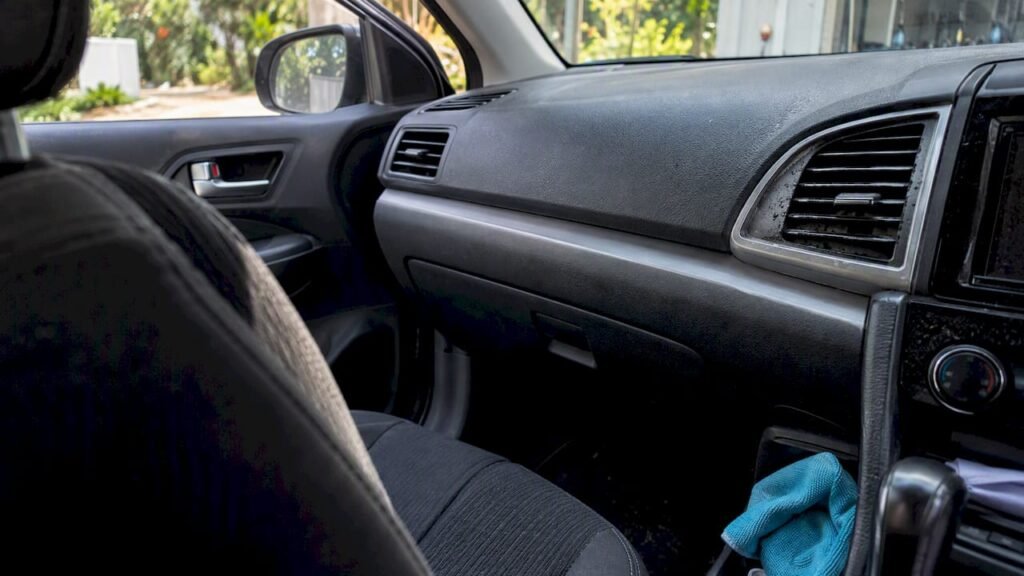
Most car AC smells come from mould or bacteria growing on the evaporator or trapped in the cabin filter, which is why it’s important to effectively diagnose the source first to stop car odour for good. Check the filter first and replace it if it is dirty, then run the fan on dry mode for several minutes before switching off the engine. If the smell is sweet, sulphuric or like something burning, stop using the air conditioning and get the car inspected rather than trying to mask it.
TL;DR:
- Replacing the cabin filter and running a dry fan cycle can eliminate most musty smells caused by microbial growth.
- Persistent odors may indicate bacteria deep inside the evaporator housing, requiring professional cleaning rather than DIY sprays.
- Strong sweet, burning, or chemical odors signal leaks or electrical faults and must be diagnosed by a qualified technician urgently.
- Moisture buildup on the evaporator from humid climates, short trips, or worn seals promotes mould growth, worsening smells over time.
- Regular maintenance, including filter checks and ventilation practices, can prevent odours from returning and ensure system health.
Table of Contents
- How smells develop inside an air conditioning system
- What your car AC smell is actually telling you
- Step-by-step DIY removal methods you can try now
- When the smell signals an urgent mechanical or chemical problem
- Simple habits that stop the smell coming back
- How a professional odour removal workflow actually works
- Why fixing the source beats masking the smell
- Getting rid of the smell for good with a mobile detail
- Where this advice comes from
- FAQ
- Sources
How smells develop inside an air conditioning system
Every time you run the air conditioning, the evaporator coil pulls moisture out of the cabin air and chills it, which is exactly why damp air feels drier and cooler coming through the vents. That coil sits inside a dark, enclosed housing, and the condensation it produces is meant to drain away through a small tube under the car. When that drainage works properly and the coil dries out between uses, there is little for anything to grow on. When it does not, you end up with a warm, wet surface sitting in the dark for hours at a time, which is close to ideal conditions for mould and bacteria.

A musty or mouldy smell in a car’s air conditioning is primarily caused by moisture collecting on the evaporator unit, creating a damp environment where bacteria, fungi, mildew and mould can take hold, according to Tyrepower Scone. The cabin filter and the external air intake add fuel to that growth. Pollen, dead leaves, dust and even stray food particles get drawn in through the intake and settle on the filter and surrounding ductwork, giving microbes something to feed on as well as somewhere damp to live.
A few other factors decide how bad the problem gets:
- Humid climates and frequent short trips give the evaporator less chance to dry out between uses.
- Older vehicles often have worn seals or a cabin filter that no longer sits flush, letting in more debris.
- A filter that is the wrong size or fitted loosely lets unfiltered air bypass it entirely.
- Once mould or bacteria establish themselves on the coil, every blast of the fan recirculates spores and odour straight through the vents and into the cabin.
That recirculation is why the smell often seems worse the moment you turn the air conditioning on, then fades slightly once the airflow dilutes it, only to return the next time the system has sat idle.
What your car AC smell is actually telling you
Different smells point to different problems, and getting this right saves you from throwing time and product at an issue that actually needs a mechanic. Other smells such as sweet, gas-like or burning odours point to different faults entirely, including coolant leaks or electrical problems, as Tyrepower Scone notes. Use the smell itself as your first diagnostic tool.
- Musty or mouldy: microbial growth on the evaporator or inside the ductwork, almost always safe to tackle yourself first.
- Sour or vinegar-like: active bacterial breakdown, often in the vents themselves or in damp fabric nearby, such as a wet floor mat.
- Sweet: a possible coolant or heater core leak. Stop using the air conditioning and get it looked at, since coolant vapour is not something to keep breathing.
- Burning or smoky: an electrical fault or an overheating component. Treat this as urgent and avoid driving if you see smoke.
- Rotten egg: usually a fuel system or catalytic converter issue rather than anything to do with the air conditioning at all, and it needs a mechanic.
If you are not sure which category you are dealing with, the safest default is to treat anything other than a plain musty smell as a reason to get a professional opinion before you drive much further.
Step-by-step DIY removal methods you can try now
Most musty or mildly sour smells respond well to a straightforward cleaning sequence, and you do not need specialist tools for the first few steps.
- Find and replace the cabin air filter. It is usually behind the glovebox or under the dashboard on the passenger side; check your owner’s manual for the exact spot. A dirty filter looks grey or brown, feels gritty, and may have visible leaf fragments or a musty smell of its own. Swap it for a new one if it looks anything like that.
- Vacuum and wipe the vents and dashboard intake. Use a soft brush attachment to loosen dust and debris sitting in the vent slats, then vacuum it out and wipe the surfaces down with a damp microfibre cloth.
- Run fan-only or dry mode after every drive. Switch off the air conditioning compressor a few minutes before you park and let the fan run on its own for around five to ten minutes to evaporate any moisture left on the evaporator. Consumer guidance from Choice recommends exactly this kind of fan or dry cycle to prevent mould building up inside air conditioning units.
- Apply an AC disinfectant spray or foaming evaporator cleaner. Follow the label instructions closely, since most need to be sprayed into the intake or through the vents with the system running, and ventilate the car well afterwards by leaving the doors open.
- Treat ozone as a finishing step only, never a first resort. Ozone machines can eradicate persistent organic and mould related odours, but they must be used after physical cleaning is done, and people or pets must not be present during treatment because ozone is a strong oxidant, according to a WorkSafe Victoria safety alert. Never run an ozone generator with anyone inside the vehicle, and ventilate thoroughly before anyone gets back in.
Pro Tip:Do the filter swap and a dry cycle before you spend money on any spray. It is the cheapest fix and solves the problem outright more often than people expect.
If you have tried all five steps and the smell is still there after a week or two of normal driving, it usually means the mould or bacteria have reached somewhere a spray cannot access, such as deep inside the evaporator housing, and that is when it is worth bringing in a detailed odour removal technique or professional help.
When the smell signals an urgent mechanical or chemical problem
Not every car AC smell is a cleaning job. Sweet, fuel-like, burning or persistent chemical odours usually point to a leak or an electrical fault, and both carry real risk, from carbon monoxide-style poisoning to a fire hazard if wiring is overheating. If you smell any of these, pull over safely, stop using the air conditioning and get the car assessed before driving it much further.
Refrigerant and coolant issues are not a DIY fix in Australia for good reason. Australian legislation requires licensed handling of refrigerant and sets legal obligations for anyone working on vehicle air conditioning systems, under the Ozone Protection and Synthetic Greenhouse Gas Management Regulations. That is partly an environmental protection, since refrigerant gases are potent greenhouse gases, and partly a safety one, since pressurised refrigerant lines are not something to open without the right equipment and training.
A technician investigating a chemical smell will typically check for:
- Refrigerant or coolant leaks around hoses, fittings and the heater core.
- Faulty electrical components or wiring near the blower motor and compressor.
- Blocked or damaged evaporator access panels preventing proper airflow and drying.
- A clogged or disconnected drain line letting condensation pool instead of draining away.
Breathing in mould spores can aggravate allergies and increase the risk of respiratory infection, which is one reason to treat a persistent odour as more than a comfort issue, particularly for anyone with asthma or other sensitivities, as public health commentary from Professor Lidia Morawska on airborne particles makes clear. In the short term, ventilate the car with the windows down, avoid running the air conditioning until it has been checked, and do not drive if you see smoke or smell something burning strongly.
Simple habits that stop the smell coming back
Once the smell is gone, a short routine keeps it that way without much effort.
- Check the cabin filter regularly and swap it sooner if you drive on dusty roads or near bushland.
- Run the fan on dry mode for five to ten minutes after driving in humid weather, especially if you have had the air conditioning on for a long stretch.
- Avoid leaving wet towels, swimwear or damp shoes in the car, since they add moisture the evaporator then has to deal with.
- Keep the external air intake, usually at the base of the windscreen, clear of leaves and debris.
- Check that the condensation drain tube under the car is not blocked; a damp patch under the vehicle after the air conditioning has been running is normal, but no drip at all can mean a blockage is letting moisture pool inside instead.
Pro Tip:If you notice the smell returning within a few weeks of cleaning it yourself, the issue is probably further into the ductwork than a spray can reach, and a professional deep clean is the more reliable next step.
A professional interior cleaning routine covers these checks as a matter of course. This is worth knowing if you would rather have someone else keep on top of it.
How a professional odour removal workflow actually works
Isaac’s Pro Detailing Sunshine Coast approaches stubborn car odours as a sequence rather than a single product. Professional detailers and remediation specialists treat odour issues by first extracting soils and moisture, then disinfecting and drying, with ozone used only after those steps, according to this guide to ozone generators in car detailing. That order matters because ozone cannot reach organic matter sitting inside carpet fibres or seat foam, it can only neutralise what is already exposed to the air.
The typical sequence looks like this:
- Inspect the cabin, vents and evaporator access points to identify the source rather than guessing.
- Vacuum and extract soils and moisture from carpets and seat foam using dedicated extraction equipment.
- Deep-clean fabrics and upholstery to remove the organic residue that feeds bacteria and mould.
- Access and disinfect the evaporator and surrounding ductwork where a spray alone cannot reach.
- Dry the system thoroughly with directed airflow before considering any further treatment.
- Finish with ozone treatment only where needed, following strict occupancy and ventilation protocols.
Extraction and drying come before any gaseous treatment because ozone without it is treating a symptom, not the source. Technicians do not handle refrigerant unless licensed to do so, in line with Australian regulatory requirements, and ozone is never run with people or pets inside the vehicle. For a closer look at how the ozone stage is handled safely, see this explanation of ozone treatment.
Why fixing the source beats masking the smell
Spraying something fragrant into the vents feels like progress, but it almost never is. Masking covers a smell for a day or two while the mould or bacteria causing it keep growing undisturbed, which is why the odour always seems to return stronger. Extraction and proper drying address the actual growth, which is why they hold up over weeks rather than hours.
A mobile professional service has an advantage here mostly because of access: most owners do not have extraction equipment or evaporator access tools sitting in the garage, and renting them for a one-off job rarely makes sense. Ozone and refrigerant work in particular are not something to attempt without the right training, for the safety reasons already covered. Treat DIY steps as the right first move for a mild, musty smell, and treat anything persistent or chemical as a job for someone equipped to finish it properly.
— isaac’s
Getting rid of the smell for good with a mobile detail
If the filter swap and a dry cycle have not shifted the smell, or you would rather skip straight to a proper job, A professional mobile detailing service can come to you at home or work and handle the whole sequence in one visit.

The Revival Detail and Deluxe Detail packages both include interior extraction and odour treatment, giving the evaporator and ductwork the clean and dry-out that a spray bottle cannot reach on its own. For cars that need more than a standard detail, the Ultimate Protection Package adds broader interior and exterior care, and ozone finishing is available as an add-on where the odour has been persistent.
A typical professional service runs through the steps covered above: inspection, extraction, disinfecting, drying and, where needed, ozone as the final stage, carried out with appropriate safety precautions.
- Clients can typically book online and choose a convenient time at their home or workplace.
- You may receive a quote based on vehicle size and the extent of the odour issue.
- This service is performed on-site to provide convenience while you continue with your day.
Book a mobile detail to get the smell sorted properly rather than covered up.
Where this advice comes from
The safety points in this guide draw on a WorkSafe Victoria safety alert on ozone exposure and the Ozone Protection and Synthetic Greenhouse Gas Management Regulations governing refrigerant handling in Australia. Cleaning guidance follows Choice’s consumer advice on preventing mould in air conditioning systems, alongside background from Tyrepower Scone on common causes.
This article is general information, not a substitute for advice from a qualified doctor. Consult a qualified healthcare professional about your own circumstances before acting on anything here.
FAQ
How do I get rid of AC smell in my car?
Start by replacing the cabin air filter and running the fan on dry mode for five to ten minutes after driving, which resolves most musty smells on its own. If it persists, vacuum the vents, apply a labelled AC disinfectant spray and ventilate the car well, escalating to a professional evaporator clean if the smell returns within a few weeks.
Why is there a bad smell coming from a car AC?
A bad smell almost always comes from moisture sitting on the evaporator coil, which creates damp, dark conditions where mould and bacteria grow, according to Tyrepower Scone. A dirty cabin filter or blocked drain tube often makes the problem worse by adding debris or trapping extra moisture.
How do I get my AC to stop smelling?
Replace the cabin filter, clean the vents and run a dry cycle after every drive to stop moisture building up on the evaporator, following the fan or dry mode approach Choice recommends for preventing mould. If the smell keeps coming back, the evaporator itself likely needs a professional clean rather than another spray.
Why do I like the smell of car AC?
A faint, clean smell when the air conditioning first kicks in is usually just cool, dry air displacing warmer cabin air, which some people find pleasant. If that smell is musty, sour or chemical rather than simply cool and fresh, it is a sign of microbial growth or a mechanical issue rather than something to enjoy.
Sources
- Why Does My Car’s Air Conditioning Smell?
- Safety alert — ozone exposure (WorkSafe Victoria)
- How to clean your air conditioner (Choice)
- Ozone Protection and Synthetic Greenhouse Gas Management Regulations