
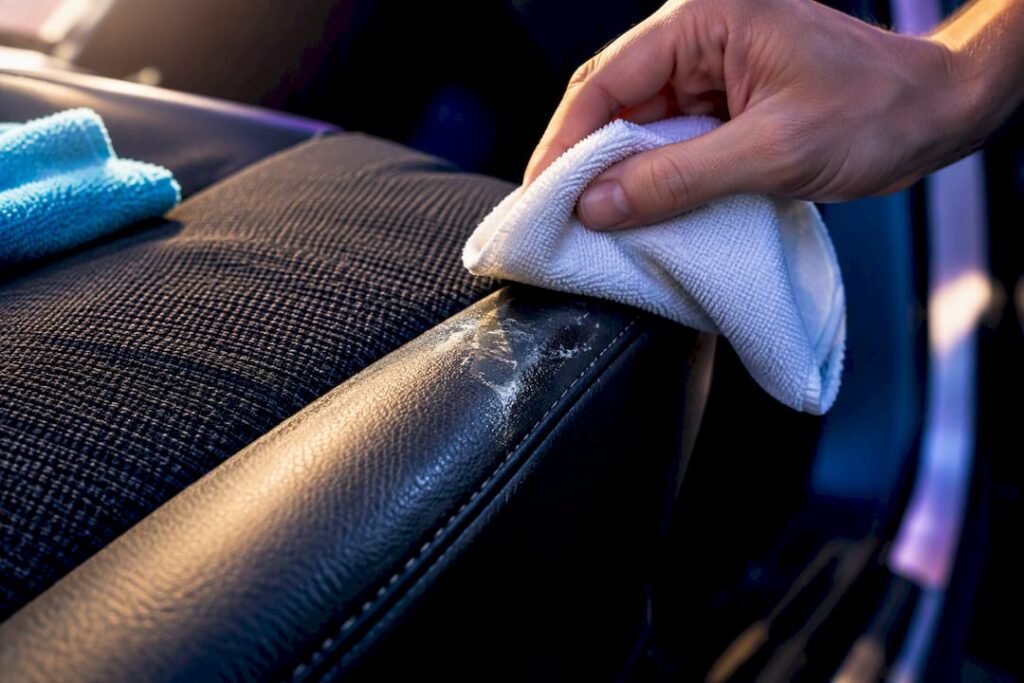
Blot the excess sunscreen straight away, never rub it, and clean fabric or vinyl with mild soap and warm water while leather gets a leather-safe cleaner instead. If an oily patch remains, dust it with baking soda or cornstarch to pull the residue out before treating the mark directly, or book a mobile detailer if the stain has already set.
TL;DR:
- Sunscreen contains oils and mineral filters, which create stubborn, baked-in stains on car interior surfaces, especially under high heat conditions.
- Immediate blotting and dusting with baking soda or cornstarch within minutes of spill greatly improve the chances of removal before oils bond deeply.
- Surface-specific cleaning methods vary: soap and baking soda for fabric, specialist cleaners for leather, gentle wipes for vinyl, and ammonia-free products for glass.
- Avoid scrubbing or using harsh solvents, as they can spread stains, dull surfaces, or damage leather finishes, making professional help more effective for set-in stains.
- White vinegar can help with oily parts of the stain on fabric and vinyl but is ineffective against mineral pigments and risky on leather with repeated use.
Table of Contents
- Why sunscreen stains car interior surfaces so stubbornly
- Surface-specific fixes: fabric, leather, vinyl and glass
- How to remove sunscreen from car fabric and leather step by step
- What professional detailers and leather conservators do differently
- Preventing sunscreen stains before they happen
- Does white vinegar actually remove sunscreen stains?
- When to call a mobile detailer for sunscreen stains
- An honest note on conservative cleaning
- Sources
- FAQ
Why sunscreen stains car interior surfaces so stubbornly
Sunscreen is not a simple liquid spill. Most formulas combine oils with either chemical UV filters or mineral ones like zinc oxide and titanium dioxide, and that combination is what makes sunscreen leave behind an oily film plus a stubborn mineral residue that beads water rather than washing away with it.
The oil component is the real troublemaker. It seeps into the open pores of fabric weave and the natural grain of leather within minutes, especially once cabin heat gets involved. A closed car on a summer afternoon can turn a light smear into a baked-in mark far faster than the same sunscreen would set on a kitchen bench.
That heat factor is why scrubbing makes things worse, not better. Grinding a cloth into the stain forces oil deeper into the fibres and pushes mineral particles further into the grain instead of lifting them off the surface.
A few things worsen sunscreen stains on car seats and other surfaces once they’re on:
- Direct sun through the windscreen, which raises interior surface temperature well above ambient
- Time left untreated, since oils continue migrating into pores and grain
- Rubbing or scrubbing, which spreads pigment rather than removing it
- Sand or grit trapped in the residue, which acts like sandpaper during cleaning
Pro Tip:Keep a stash of microfibre cloths in the glovebox. Blotting within the first few minutes, before the cabin heats the residue, is the single biggest factor in whether a stain lifts completely or leaves a shadow.
Surface-specific fixes: fabric, leather, vinyl and glass
Different surfaces absorb sunscreen differently, so the right first move depends entirely on what you’re cleaning.
- Fabric seats and carpet. Blot first, then mix a few drops of mild dish soap into warm water and dab it onto the stain with a clean cloth, working from the edge toward the centre. Sprinkle baking soda or cornstarch over any remaining oily patch, leave it for 15 to 20 minutes to absorb the grease, then vacuum thoroughly.
- Leather. Blot edge-to-centre with a dry microfibre cloth before touching anything wet. Specialist sunscreen and make-up cleaners are formulated to emulsify oils and lift zinc or titanium dioxide residue that ordinary soap tends to smear rather than remove. Apply it to the cloth, never straight onto the seat, and follow with a leather conditioner only if the manufacturer’s finish allows.
- Vinyl and hard plastic. A mild soap solution or a dedicated interior cleaner, applied with gentle circular wiping, handles most vinyl and plastic sunscreen marks. Skip acetone or strong solvents. Vinyl finishes can go dull or sticky fast once a solvent bites into the coating, a risk this dashboard cleaning guide covers well for plastics generally.
- Glass. An ammonia-free glass cleaner clears sunscreen film from the windscreen and inside glass without leaving the hazy streaks ammonia-based products sometimes cause on tinted surfaces.
- Steering wheels and controls. Work in small sections with heavily diluted soap and dry immediately. Leather or vinyl wheels left even slightly damp turn tacky within the hour, which is worse than the original mark.
Pro Tip:Test any cleaner, even a mild one, on a hidden patch of the same material first. Twenty seconds of patience there can save you from a lightened patch on a visible seat panel.
How to remove sunscreen from car fabric and leather step by step
Set-in stains need a slower, staged approach rather than one aggressive pass. Rushing straight to a strong cleaner on a stain that’s already a day old is how DIY jobs turn a small mark into a bigger problem.
Gather these before you start:
- Two or three microfibre cloths
- A soft-bristled brush
- A spray bottle filled with warm water
- Mild dish detergent
- Baking soda or cornstarch
- A leather-safe cleaner if you’re working on leather
- Isopropyl alcohol, but only for uncoated, unfinished leather, never on anything with a protective topcoat
Stage 1: Blot and absorb. Press a dry cloth onto the stain to lift surface oil, then dust baking soda or cornstarch over what’s left and let it sit for 15 minutes before brushing it away.
Stage 2: Gentle cleaning. Dilute a small amount of mild detergent in warm water, dampen a cloth (not soaked), and work from the outer edge of the stain inward. Keep the area lightly damp rather than wet, since oversaturating fabric or leather invites watermarks and, on leather, can push moisture past the finish.
Stage 3: Targeted treatment. If colour or greasiness remains, move to a leather-safe stain remover for leather seats or an upholstery spotter for fabric. Test on an inconspicuous spot first, every time, regardless of how many times you’ve used the product before.
Stage 4: Rinse and dry. Wipe away any cleaner residue with a barely damp cloth, then dry thoroughly. For fabric, low-water extraction is the preferred professional method at this stage because it lifts oil and pigment without the watermarking risk of a full wet wash.
Stop and call a professional if you notice discolouration that won’t lift, a leather finish that feels sticky or has changed texture, or a stain covering a large section of seat. Our car upholstery cleaning guide covers the extraction process in more depth if you want to understand what that escalation actually involves.
What professional detailers and leather conservators do differently
Trained detailers and leather conservators approach sunscreen stains the same cautious way, and it’s worth understanding why before you reach for a stronger product than you need.
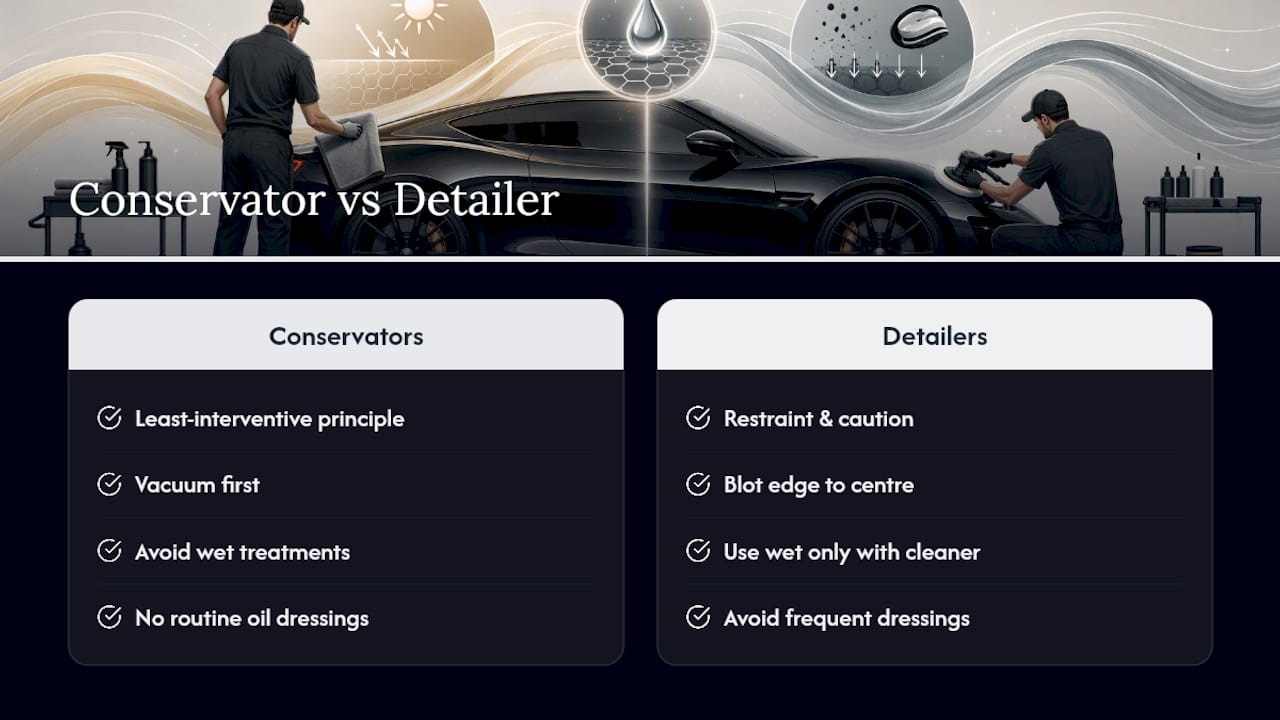
Conservators follow a least-interventive principle: vacuum first, avoid wet treatments where possible, and steer clear of routine oil dressings altogether. Museum conservation guidance warns that dressings and aggressive chemicals can darken leather, attract dust, and cause damage that only shows up months later. That’s a strong caution for a museum piece, but the same chemistry applies to a car seat, just on a faster timeline.
Cleaning and re-dressing leather can have unintended side-effects including darkening, stickiness and increased acidity, which is why minimal intervention and environmental control are recommended over routine chemical treatment.
Detailers apply the same restraint in practice: blot edge-to-centre, use microfibre and soft brushes only once the right cleaner is on the material, and reach for extraction on fabric rather than a full wet wash whenever it’s available.
Pro Tip:If a stain is more than a day or two old, treat it as a job for a leather-safe remover from the start rather than working through milder options first. Time lets oils bond with the finish, and every hour you spend testing gentler products is an hour the stain has to set further.
Time is genuinely the enemy here. Baked-on sunscreen that’s had days of cabin heat to work into a leather finish often won’t fully reverse, no matter how careful the treatment. Professional extraction or leather restoration can improve it, but full erasure isn’t always realistic once oils have chemically interacted with the finish layer.
Preventing sunscreen stains before they happen
The cheapest fix for sunscreen damage is never needing to clean it up. A few habits make a real difference on beach days and weekends spent in and out of the car.
- Apply sunscreen 15 to 30 minutes before you get in the car and rub it in fully rather than leaving a visible film on your skin.
- Keep a few microfibre cloths or wipes in the glovebox for a quick wipe-down before you sit down.
- Choose quick-dry or non-greasy sunscreen formulas where you can. They transfer far less onto seats than heavy, oil-rich lotions.
- Throw a towel or seat cover over the driver’s seat on beach trips, especially for kids who tend to climb in still dripping.
- Use a sunshade on the windscreen and park in shade where possible, since baking-on is what turns a light smear into a permanent mark.
- Vacuum out sand regularly. Left sitting on fabric or vinyl, it acts as an abrasive every time someone shifts in the seat.
Our leather protection guide goes into more detail on building these habits into a proper seasonal routine if sunscreen season runs long where you live.
Does white vinegar actually remove sunscreen stains?
White vinegar is one of the most repeated home remedies for sunscreen marks, and it does have a place, just not as a universal fix. Diluted vinegar (roughly one part vinegar to two parts water) can help cut through the oily residue on fabric and some vinyl surfaces, and its mild acidity breaks down grease better than water alone.
Where vinegar falls short is on mineral-based residue. Zinc oxide and titanium dioxide sit as a physical film rather than dissolving in an acid the way oil does, so vinegar can shift the greasy component while leaving a pale, chalky mark behind. That’s often the “stain vinegar didn’t fix” people describe.
Vinegar is also risky on leather. Its acidity can dry out or dull a leather finish with repeated use, so it’s best reserved for fabric and vinyl rather than seats with any leather content. If you do try it, always dilute it, spot-test first, and rinse the area with a clean damp cloth afterwards so no residue is left to dry on the surface.
Treat vinegar as a useful supporting step for fabric, not the whole solution for a sunscreen stain that includes mineral filters. Pair it with the baking soda absorption step covered earlier for the best result on tough, oily marks.
When to call a mobile detailer for sunscreen stains
Home methods handle most fresh sunscreen marks, but there’s a clear point where DIY stops being worth the risk. Book a professional when a stain has visibly set for more than a day or two, when a leather finish feels different to the touch after you’ve tried cleaning it, or when the mark covers a large area of seat rather than a small patch.
Professional treatment goes further than what’s practical at home. Deep extraction lifts oil and pigment out of fabric weave without the watermarking risk of a home wet-wash, specialist stain removers target the specific chemistry of sunscreen residue on leather, and a proper conditioning or leather ceramic coating step afterward helps the seat resist the next spill.
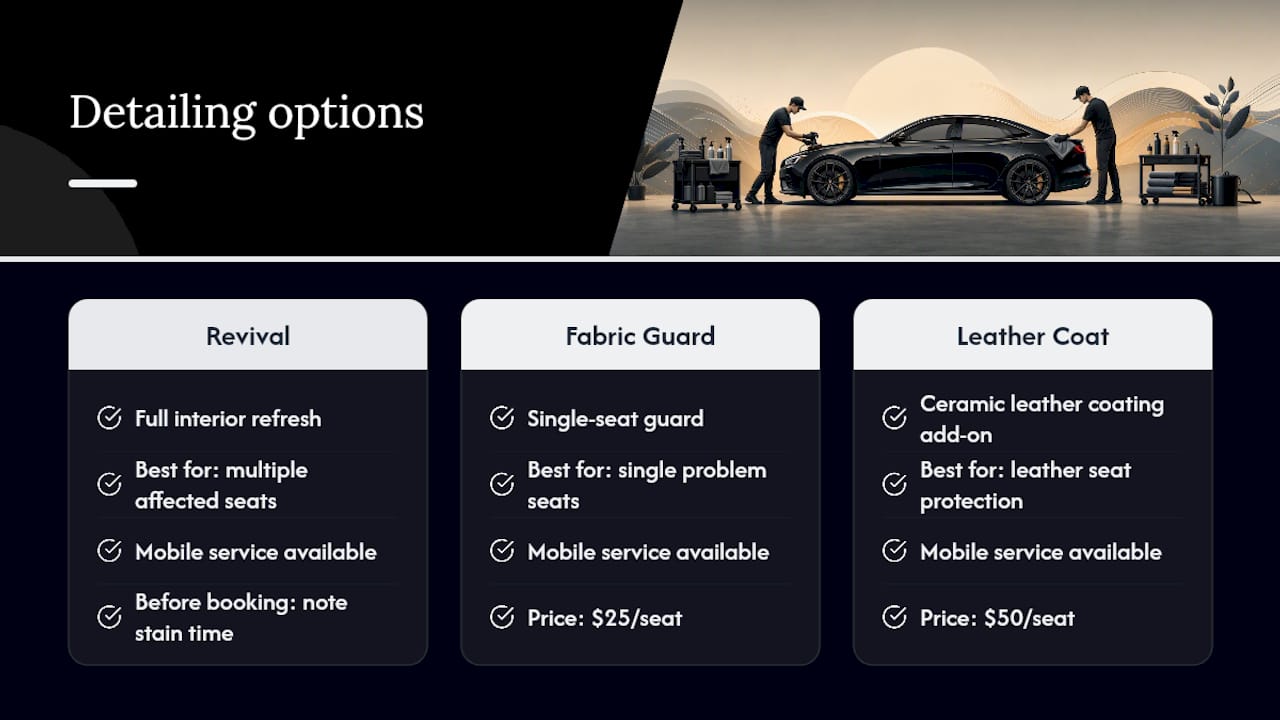
A mobile professional detailing service offers a practical alternative to persisting with a home fix that isn’t working. Fully mobile services come to your home, workplace or wherever the car is parked, so there’s no need to drive around with a stained seat trying to find a workshop with a free slot. For a car with sunscreen damage across multiple seats, the Revival Detail covers a full interior refresh, while single problem seats suit the standalone Fabric Guard or leather ceramic coating add-ons at $25 per seat and $50 per seat respectively.
Before booking, note roughly when the stain happened and whether you’ve already tried any home cleaners on it. That helps us assess whether it’s a straightforward clean or a case for deeper leather restoration. If you’re after longer-term protection so this isn’t a repeat job every summer, the Ultimate Protection Package bundles interior protection with paint and wheel coatings in one booking. Get in touch to arrange a time that suits your location and we’ll take it from there.
An honest note on conservative cleaning
Aggressive DIY fixes trade a quick result for long-term risk. Conservative cleaning costs you a little more patience but protects leather grain and finish far better than scrubbing ever will. Prevention is always cheaper than repeated correction, and professional help exists to restore what’s realistically achievable, not to promise a stain never happened.
— isaac’s
Sources
- Treatments | Development Services
- Protect Your Car’s Interior from Sunscreen: Tips for Preventing and Cleaning Stains – GetNeat
- ReMoveAll Sunscreen and Make up speciality cleaner 200ml – Detail Central
- Training
FAQ
Are sunscreen stains on car seats permanent?
Not always, but the longer they sit, the harder they are to fully reverse. Fresh stains usually respond well to blotting and a surface-appropriate cleaner, while older stains that have baked into leather under heat can chemically bond with the finish, which sometimes needs professional restoration to improve rather than a full guarantee of erasure.
How do I remove yellow sunscreen stains from leather car seats?
Blot the area first, then apply a leather-safe stain remover to a microfibre cloth rather than directly onto the seat, working from the outside of the mark inward. Specialist cleaners formulated for sunscreen residue lift the mineral filters that cause yellowing far better than household soap, which tends to smear the pigment instead of removing it.
How do I get sunblock off car seats quickly?
Blot immediately with a dry cloth to remove excess oil, then clean fabric or vinyl with a mild soap and warm water solution or treat leather with a leather-safe cleaner. If any greasy residue remains, dust it with baking soda or cornstarch, leave it 15 to 20 minutes, then vacuum or wipe away.
Will vinegar remove sunscreen stains?
Diluted white vinegar helps break down the oily component of a sunscreen stain on fabric and vinyl, but it does little against the mineral filters that leave a pale, chalky residue. It also isn’t recommended for leather, since repeated acidic contact can dry out the finish.
What does a mobile detailer do for set-in sunscreen stains that DIY can’t fix?
A mobile detail typically includes deep extraction for fabric and targeted leather-safe stain removal, followed by conditioning where the leather finish allows it. Isaac’s Pro Detailing Sunshine Coast offers this through the Revival Detail package or as standalone Fabric Guard and leather ceramic coating services, priced per seat.