
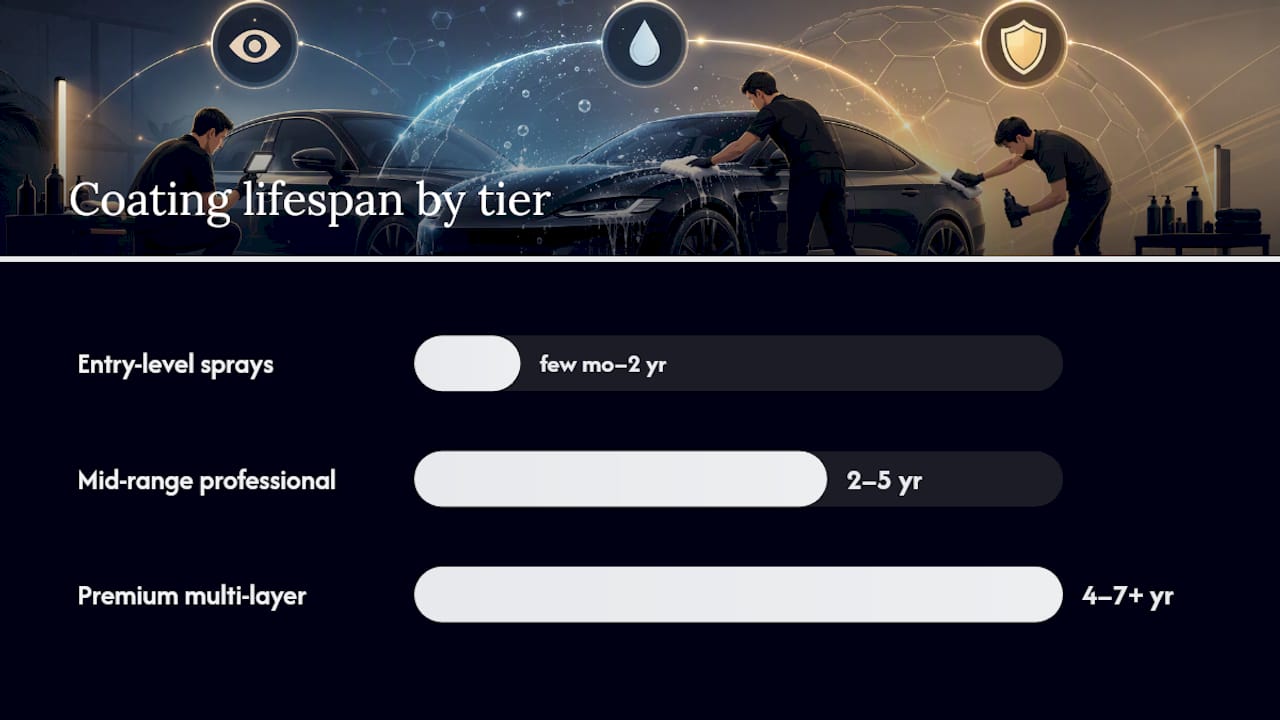
Most professional ceramic coatings hold up for two to five years, with premium multi-layer systems stretching to seven-plus years under ideal care. Entry-level consumer sprays rarely make it past a year or two. The gap between those numbers comes down to two things: how well the paint was prepped before coating, and how the vehicle is washed afterwards.
TL;DR:
- Proper paint preparation and careful washing significantly extend ceramic coating lifespan, with proper decontamination and cleaning being critical.
- Professional-grade coatings typically last two to five years, but environment and maintenance routines can cause sharp variations in durability.
- Using the two-bucket wash method, pH-neutral shampoos, and regular decontamination are essential for maximizing coating performance and longevity.
- Signs of coating degradation include diminished water beading, a rough surface feel, or dullness, prompting reapplication if multiple panels show failure.
- A well-applied, professionally installed coating offers the best chance for years of protection, especially when combined with routine inspections and proper maintenance.
Table of Contents
- Realistic ceramic coating lifespan by product tier
- What actually shortens or extends a coating’s life
- The maintenance routine that keeps a coating performing
- Knowing when to reapply or refresh your coating
- Cure time and the first few days matter more than owners think
- Weighing cost, maintenance and what you’ll actually get
- Get a professional coating that’s built to last from day one
- Sources
- FAQ
Realistic ceramic coating lifespan by product tier
Ceramic coatings are not one product. They span a huge range in chemistry, thickness, and price, and that range explains why one owner gets eighteen months out of a coating while another gets seven years from what looks like “the same thing.”
Entry-level consumer sprays, the kind sold in auto parts stores or applied as a quick add-on at a car wash, typically deliver a working lifespan of a few months up to around one to two years. These products carry a much lower concentration of silica dioxide (SiO2) than professional-grade formulas, which means a thinner bond to the clear coat and a shorter useful life before the hydrophobic effect fades to nothing, as detailing guides on DIY ceramic sprays point out.
Mid-range professional coatings, applied by a trained detailer with proper paint prep, commonly run two to five years. This is where most daily drivers land, and it is a realistic, well-documented range rather than a marketing figure.
Premium multi-layer systems applied under controlled conditions can reach four to seven years or more, according to Gtechniq’s own guidance on ceramic coating lifespan. Manufacturers sometimes advertise “up to” ten years, but that number comes from lab testing, not from a car parked on a driveway in coastal salt air. Real-world driving, sun exposure, and how carefully someone washes their car will always pull that ceiling down.
What actually shortens or extends a coating’s life
Two vehicles can get the exact same coating and end up years apart in performance. The difference is rarely the product itself.
Surface preparation is the foundation everything else sits on. A coating bonds to the clear coat at a microscopic level, so any oil, wax residue, or embedded contamination left behind during prep becomes a weak point. Detailers who specialise in reapplication consistently point to poor decontamination and rushed paint correction as the biggest reason coatings fail early, well before the two-year mark.
Product grade and layering matter too. A single thin layer of a budget coating behaves very differently to two or three layers of a professional system cured under the right temperature and humidity.
Environment plays a bigger role than most owners expect. Constant UV exposure breaks down the coating’s molecular structure over time. Coastal salt air, common across the Sunshine Coast, accelerates that process further, and vehicles parked under trees deal with sap and bird droppings that etch through a coating faster than plain sunlight alone. A car garaged most of the week will noticeably outlast one parked outdoors year round.
Washing technique is where owners have the most control. Abrasive wash mitts, dirty microfibre towels, and automatic brush washes introduce fine scratches (swirl marks) that wear down the coating’s surface layer with every pass.
The maintenance routine that keeps a coating performing
None of the lifespan figures above mean much without the maintenance to back them up. A coating is not “set and forget,” and the owners who get the long end of the range treat washing as part of the deal, not an afterthought.
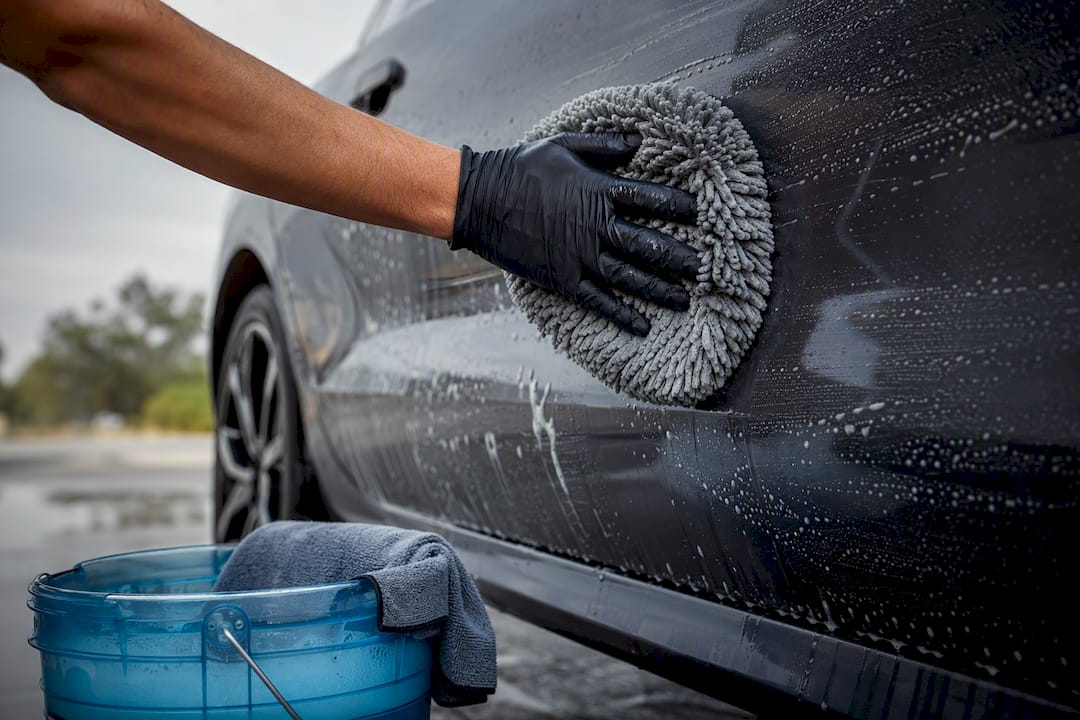
The two-bucket wash method, paired with a pH-neutral shampoo and a quality microfibre mitt, remains the single highest-leverage habit for extending coating life. Chemical Guys’ detailing guidance backs this up directly: correct washing technique matters more than almost any other maintenance step.
A practical routine looks like this:
- Wash every one to two weeks for a daily driver, weekly if you’re parking near the coast or under trees.
- Use two buckets (one for shampoo, one for rinsing grit off the mitt) every single time.
- Dry with a plush microfibre towel or a leaf blower style dryer rather than letting the car air-dry with water spots baking on.
- Apply a maintenance spray or booster roughly every one to three months to top up hydrophobic performance between full washes.
- Book regular decontamination washes and inspections with a professional, since this is what actually resets the coating’s surface and catches early wear before it becomes a bigger problem.
Avoid clay bar treatments on a coated surface unless you’re planning to strip and reapply. Clay is abrasive by design. It lifts bonded contaminants, but it also grinds away at the coating itself. Skip automatic brush washes entirely, and go easy on strong degreases or acidic wheel cleaners that can eat into the coating over time.
Pro Tip:Keep a small bottle of pH neutral quick detailer in the car. A light mist and wipe after a beach trip stops salt spray from sitting on the coating for days before your next proper wash.
Knowing when to reapply or refresh your coating
You don’t need to guess when a coating is on its way out. Inspect it for these three cues:
- Watch how water behaves. Beading that gets flatter and slower to run off is an early sign, though it’s not proof the coating has failed. Hydrophobic performance can fade before the coating’s actual chemical protection does, so FEYNLAB’s technical guidance recommends checking gloss and feel alongside beading rather than relying on water alone.
- Run your hand over the paint after a wash. A coated surface should feel glassy and slick. If it feels gritty or slightly rough, contamination has likely broken through.
- Check for stubborn staining or a dull, flat look, especially around high-exposure panels like the bonnet and roof.
If the coating is mostly intact but losing its edge, a maintenance booster applied over a proper decontamination wash can restore beading and gloss without stripping anything back. If the surface shows failure across multiple panels, or it’s been beyond the expected window for its tier, a full recoat is the better move: inspect, decontaminate, correct any swirl marks or light scratches, then reapply.
Cure time and the first few days matter more than owners think
The first stretch after application is when a coating is most vulnerable. It’s still forming its chemical bond, and that process takes days, not hours. Practitioners treat this window as sacred: no water contact, no rain exposure if it can be avoided, and definitely no clay bar or polishing near the surface.
If the car does get caught in light rain during this period, gentle blotting rather than wiping is the safer move. Parking under cover, or at minimum away from sprinklers and heavy dew, gives the coating the stable environment it needs to finish curing properly. Professional detailers typically do a follow-up inspection under raking light or a dedicated inspection lamp to confirm the coating has bonded evenly before handing the car back, checking for any high spots, streaking, or uncured patches that would need correcting.
Weighing cost, maintenance and what you’ll actually get
A premium coating costs more upfront and demands proper prep time, but it buys years of easier washing and better paint protection, if you keep up your end of the maintenance. Daily drivers should expect the middle of the range rather than the marketing ceiling; show cars kept garaged will edge toward the top.
The smarter approach isn’t marking a recoat date on a calendar. It’s inspecting the coating every few months, watching how water and grime behave on the surface, and acting on what you actually see rather than an arbitrary timeline.
— isaac’s
Get a professional coating that’s built to last from day one
A coating only performs as well as the prep behind it, and that’s where most DIY and rushed professional jobs fall short before they even start. A mobile ceramic coating service can bring full paint correction, decontamination, and multi-layer application straight to your driveway, so there’s no waiting around at a shop and no compromise on the surface prep that determines coating longevity.
Every job includes the inspection steps that catch weak spots before they become a failed coating twelve months later, and we talk you through the exact wash routine to protect your investment once the vehicle is back in your hands. If you want to see what’s actually involved before booking, the ceramic coating workflow guide walks through the full process from decontamination to final cure checks. Ready to get a coating done properly the first time? Book an inspection and quote through our ceramic coating service page and we’ll assess your paint on-site.
Sources
Claims in this article draw on detailer and manufacturer guidance from Gtechniq, Chemical Guys, and Diamondbrite’s maintenance advice.
- How Long Does Ceramic Coating Last – Gtechniq
- When and How to Reapply Ceramic Coating for Lasting Protection
- How Long Does Ceramic Coating Last? Factors Affecting Its Longevity
FAQ
How often should I wash a ceramic coated car?
Every one to two weeks for a typical daily driver, or weekly if you’re near the coast or parking under trees, using the two-bucket method with a pH-neutral shampoo.
Does losing water beading mean my coating has failed?
Not necessarily. Beading often fades before the coating’s actual protective properties do, so check gloss, feel, and stain resistance as well before assuming failure.
How much does it cost to reapply a ceramic coating?
Cost depends on vehicle size, coating tier, and how much paint correction is needed beforehand. A detailed quote is usually provided after an on-site inspection of the paint’s condition.
Can I speed up the cure time by drying the car myself?
No. Avoid water contact, drying, or wiping the surface for the first few days after application. Let the coating cure undisturbed rather than intervening.
Is a booster the same as reapplying the coating?
No. A booster refreshes hydrophobic performance and gloss over an existing, mostly healthy coating, while a full recoat involves decontamination, correction, and a fresh application layer.