
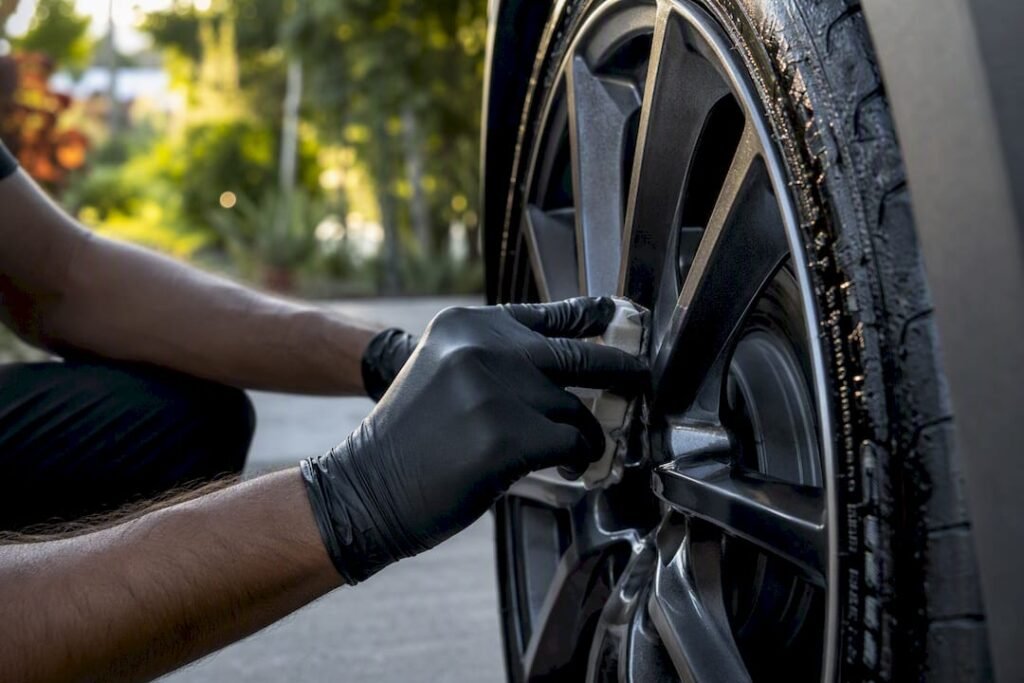
Professional wheel ceramic coating typically runs $30 to $200 per wheel, or roughly $150 to $800 for a full set of four, depending on wheel size, condition and whether they come off the car. DIY kits cost less upfront per bottle but demand hours of prep work and rarely match professional durability. If your wheels are curbed, corroded or you drive in a coastal or salted region, paying a pro is worth it. The breakdown below shows exactly where that money goes.
TL;DR:
- Professional wheel coating costs range from $30 to $200 per wheel, with full sets typically costing between $150 and $800 depending on condition and coverage needed.
- Prices vary significantly based on wheel size, finish, contamination level, removal method, correction, and whether calipers or inner barrels are coated.
- Proper application involves multiple steps, including decontamination, correction, and curing, which are crucial to ensure coating longevity and effectiveness.
- Coating lifespan depends more on application quality and driving habits, with professional coatings lasting 12 to 18 months, and DIY options generally lasting 4 to 12 months.
- Budgeting should include itemized quotes, considering wheel-off services for better coverage, especially on damaged or heavily contaminated wheels.
Table of Contents
- Wheel ceramic coating cost: detailed price breakdown with real examples
- What affects the price: the checklist every pro quote covers
- What a professional wheel ceramic coating service includes
- Lifespan and maintenance: what actually protects your investment
- DIY versus professional: what actually costs more in the end
- How to budget and save on wheel ceramic coating
- How Isaac’s Pro Detailing approaches wheel coating
- When we recommend paying for professional wheel coating
- Ready to get your wheels quoted?
- Sources
Wheel ceramic coating cost: detailed price breakdown with real examples
Professional pricing splits into three rough tiers, and the difference between them usually comes down to prep work rather than the coating product itself. Vehicle-level ceramic coating packages commonly range from under $800 to several thousand dollars, while wheel-only services sit in their own bracket entirely, typically $30 to $200 per wheel depending on scope and location.
Here’s how that per-wheel range typically breaks down:
- Basic coating on clean wheels ($30 to $60 per wheel): wheels stay on the car, minimal contamination, a straightforward two-coat application.
- Standard service with decontamination ($60 to $120 per wheel): includes iron removal, clay treatment and light polishing before the coating goes on.
- Wheel-off, full correction ($120 to $200+ per wheel): wheels removed for barrel access, machine polishing to remove curb rash or oxidation, calipers coated separately.
A full set of four typically falls within a moderate to higher price range, though multi-piece wheels or wheels with heavy brake dust baked into the barrel can push individual quotes higher than the standard bracket. Shops often quote these case by case rather than sticking to a flat per-wheel figure, because the extra hour spent digging corrosion out of a barrel changes the labour cost more than the coating chemical does.
DIY kits look affordable on the shelf. A bottle of consumer-grade wheel coating costs a low to moderate amount, marketed as a weekend job. The real cost includes necessary additional supplies for prep. Altogether, a first-time DIY job can reach a moderate total cost once supplies are bought, before factoring in the several hours of labour often underestimated by owners. Skip the prep and you risk trapping contaminants under the coating, which shows up as cloudy patches or uneven gloss within weeks.
Quick cost snapshot:
Professional per wheel: $30–$200 | Professional full set: $150–$800 | DIY per bottle: $15–$80 | True DIY total (with supplies): $60–$150
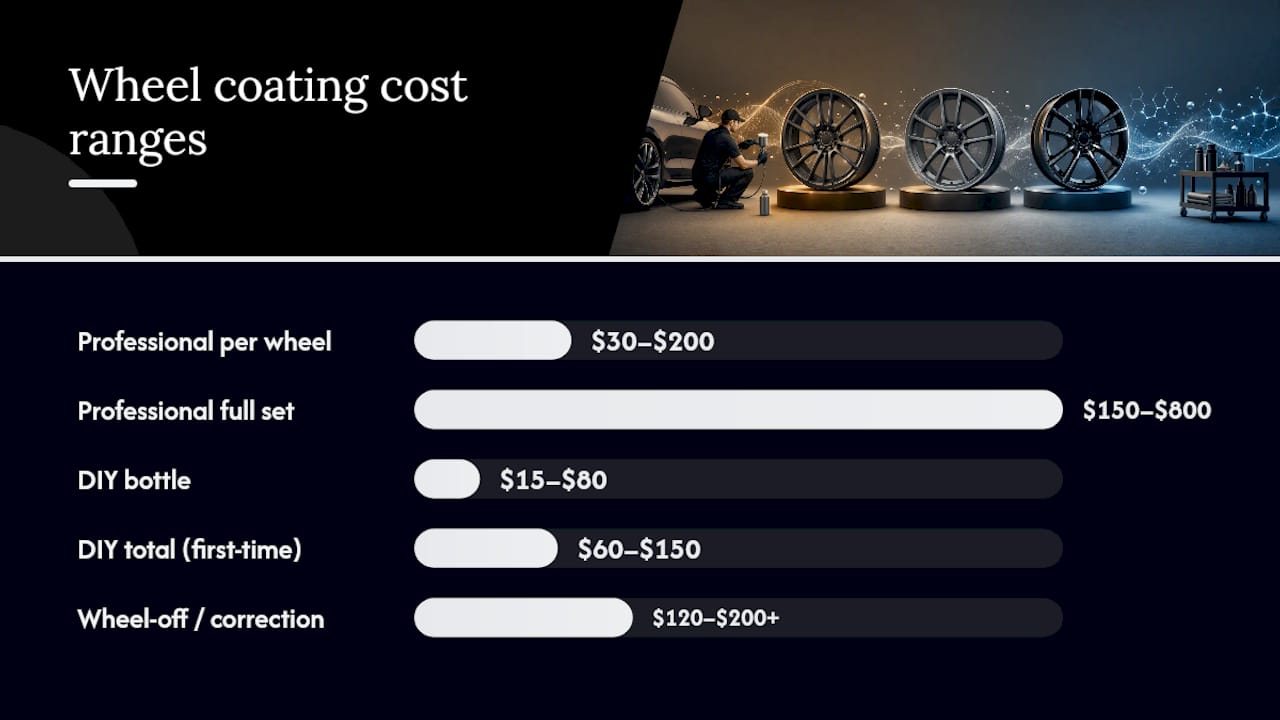
For context, a 20 inch alloy wheel with moderate brake dust build up but no curb damage typically falls in the $80 to $130 professional range per wheel. Add curb rash requiring correction, or a switch to wheel-off service so the inner barrel gets proper coverage, and that same wheel can climb toward $180 to $200. Coating calipers alongside the wheels adds a separate line item, usually $20 to $50 per caliper, since it’s a different surface prep and product application entirely.
What affects the price: the checklist every pro quote covers
Two quotes for the “same” service can differ by $200 or more across a set of four, and the gap almost always comes down to five variables a shop factors into labour time.
- Wheel size and design complexity. A 22 inch multi-spoke wheel has dramatically more surface area and tighter gaps between spokes than a simple 17 inch five-spoke design, which adds prep and application time.
- Finish type. Chrome, matte, powder-coated and raw polished aluminium each need different prep chemicals and, in some cases, different coating formulas to bond properly.
- Contamination level. Heavy brake dust baked onto the surface over months requires stronger iron removers and more clay passes before the coating can be applied.
- Wheel-off versus on-car service. Removing wheels adds labour but is the only way to properly coat the barrel and mounting face, areas that stay exposed to brake heat and road grime.
- Correction and caliper inclusion. Machine polishing to remove oxidation or light scratches is billed separately from coating, and caliper coating is almost always an add-on rather than a default inclusion.
Warranty tiers also shift the price. A basic coating with no written warranty sits at the lower end of a shop’s pricing, while a package including a 12 month or longer warranty and a scheduled maintenance top-up usually carries a premium of $10 to $30 per wheel, reflecting the shop’s confidence in its own prep work.
Pro Tip:Ask for the quote broken into wheel-off labour, decontamination, correction and coating as separate line items. If a shop can’t or won’t itemise it, that’s usually a sign they’re not doing the wheel-off and barrel work at all, just spraying over what’s already on the car.
What a professional wheel ceramic coating service includes
A properly run wheel coating job follows a sequence, and skipping steps is exactly how coatings fail early. Knowing the order helps you check that a quote actually covers what it claims to.
- Inspection and scope confirmation. The detailer checks wheel finish, existing damage and contamination level before quoting final scope, which is why some shops adjust price after a visual check rather than quoting blind from a photo.
- Wheel removal. Wheels come off the car for full barrel and mounting face access, standard practice for anything beyond a basic exterior-only service.
- Iron decontamination and clay treatment. Iron remover dissolves embedded brake dust particles, and a clay bar or clay mitt lifts remaining bonded contaminants the chemical alone can’t shift, a process detailed in Auto Cosmetics’ wheel coating breakdown.
- Correction and polishing, if needed. Curb rash, oxidation or fine scratches get machine-polished out before coating, since coating locks in whatever finish sits underneath it.
- Coating application and cure. The product goes on in thin, even layers with dedicated applicators, then cures for a set period, often 12 to 24 hours before the wheel is safe to drive on.
- Calipers and inner barrels. Where included, calipers get their own prep and product, and inner barrels receive coating coverage most owners never see but which protects against brake heat exposure.
- Documentation and warranty registration. Reputable shops log the service date, product used and any warranty terms in writing rather than a verbal promise.
Lifespan and maintenance: what actually protects your investment
Coating longevity depends far more on application quality and driving habits than on the product label. Professional-grade wheel coatings applied by experienced detailers typically deliver 12 to 18 months of reliable protection, while DIY mid-tier products usually last 8 to 12 months, and budget DIY options often fade within 4 to 8 months.
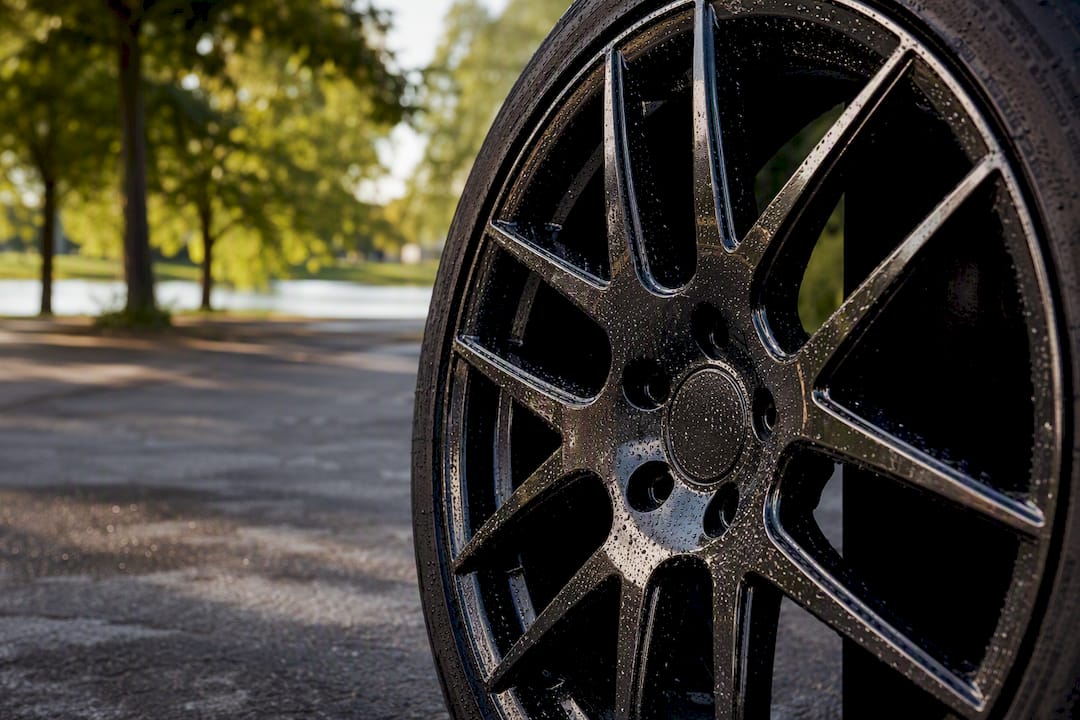
Lifespan snapshot: Professional application: 12–18 months | DIY mid-tier: 8–12 months | DIY budget: 4–8 months
If you regularly track your car or drive hard in hilly terrain, budget for reapplication closer to the shorter end of whichever range applies.
Maintenance is simple but non-negotiable if you want to hit the quoted lifespan:
- Wash wheels with a pH-neutral car shampoo rather than harsh wheel-specific acid cleaners, which strip coatings faster than they clean.
- Avoid automatic touchless car washes with high-pressure acid-based wheel cleaners.
- Rinse brake dust off weekly if you drive frequently in stop-start traffic, since dust left to bake on reduces coating effectiveness over time.
- Book a maintenance top-up around the 10 to 12 month mark for professional coatings to extend total protection life rather than waiting for full failure.
Reapplying before the coating fully breaks down costs less than a full correction and recoat later, since you skip most of the decontamination work.
DIY versus professional: what actually costs more in the end
The sticker price makes DIY look like the obvious winner, but the full comparison tells a different story once you count everything that goes into a DIY job done properly. A DIY kit plus the prep chemicals, clay, applicators and your own time typically lands at $60 to $150 per set once you’re honest about what’s needed, and that’s before factoring in the risk of cured residue, streaking or patchy bonding if the surface wasn’t fully decontaminated first. A professional job at $150 to $800 for a set includes labour, correction where needed, and often a warranty that covers reapplication if the coating fails prematurely.
Here’s a practical way to decide:
- Choose DIY if your wheels are lightly used, already clean, and you’re comfortable reapplying every 8 to 12 months without minding the extra effort.
- Choose a professional if wheels show curb damage, heavy brake dust build-up, or you want barrel and caliper coverage you can’t easily reach yourself.
- Choose a professional if you want a warranty backing the work, since most DIY products carry no service guarantee at all.
Pro Tip:If a quote comes in dramatically cheaper than everything else you’ve collected, ask exactly what surface prep is included. A coating sprayed straight onto dirty wheels without decontamination will look fine for a week and fail within a month.
How to budget and save on wheel ceramic coating
Ask for an itemised quote every time, and specifically compare wheel-off versus on-car pricing since the wheel-off option usually costs more but delivers noticeably better barrel coverage.
- Bundle wheel coating with a full paint ceramic package if you’re already booking one, since most shops discount combined services over booking them separately.
- Ask about seasonal scheduling. Some mobile detailers offer lower rates during slower months.
- Enquire about maintenance plans that include scheduled top-ups at a reduced rate compared to booking a standalone visit later.
- Treat a quote that’s far below the local average as a red flag rather than a bargain. It usually means shortened prep time or a diluted, lower-grade coating product.
How Isaac’s Pro Detailing approaches wheel coating
Our published ceramic coating workflow applies the same inspection, decontamination and cure-time discipline to wheels as to paint. That means wheel-off access where scope calls for it, documented warranty terms, and quotes broken down by the same line items covered above rather than a single flat number.
When we recommend paying for professional wheel coating
We push pro application hardest for curbed, corroded or multi-piece wheels, and for anyone in a coastal salt-air environment where brake dust and grime build up fast. Mobile service means the whole job happens in your driveway, no drop-off required.
— isaac’s
Ready to get your wheels quoted?
Skip the guesswork of comparing mismatched online estimates. Isaac’s Pro Detailing quotes wheel coating the same way this guide breaks it down: by wheel condition, finish and whether barrels and calipers need coverage, so the number you get actually reflects the work involved.
Send photos of your wheels, including any curb damage or heavy brake dust build-up, and you’ll get an itemised quote back rather than a vague ballpark. Because the service is fully mobile, the work happens at your home or workplace across the Sunshine Coast region, no driving to a shop and waiting around. Warranty terms are laid out clearly upfront rather than promised verbally. Check the wash menu and pricing page to see current packages, or get in touch with wheel photos to start your quote today.
Sources
- How Much Does Ceramic Coating Cost? – Autotrader
- Ceramic coating for wheels: why it is worth it and which products hold up | Chariotz
- Adam’s wheel coating guide: DIY vs pro