
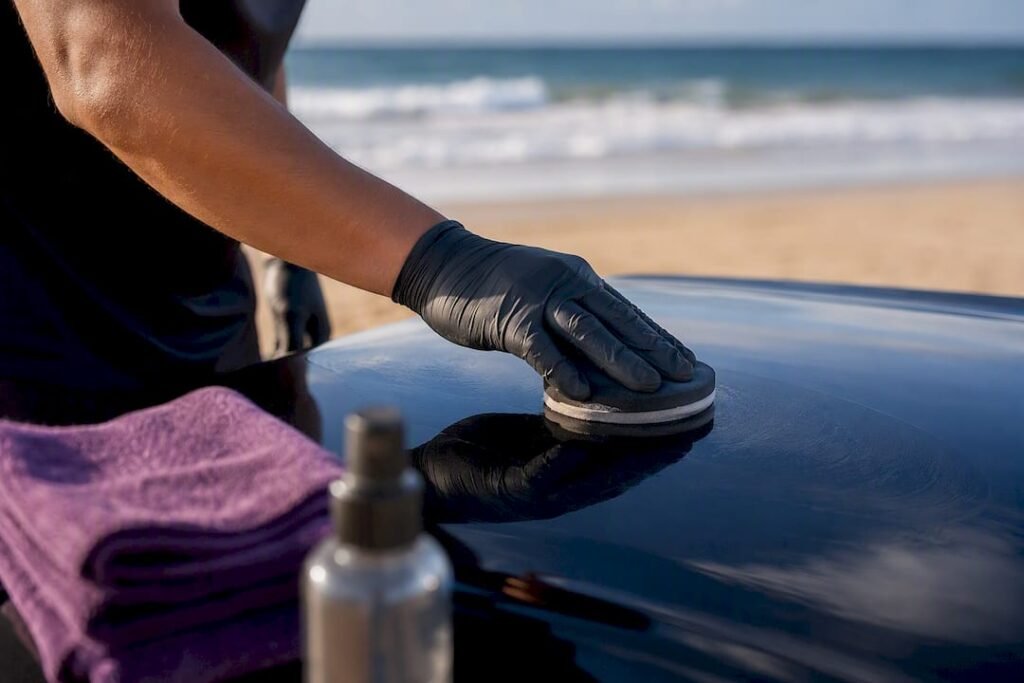
Yes, you can apply ceramic coating over PPF, and doing it properly makes the film noticeably easier to live with. The catch is that “properly” carries real weight here. Get the product wrong, rush the timing, or skip the prep, and you can trap contaminants under the coating or dull the film’s self-healing properties.
Three conditions separate a good result from a costly mistake. First, the coating has to be rated as PPF-safe or TPU-safe, matched to your film’s finish. Second, you need to wait for the film to outgas before coating it. Third, thick or rigid coatings have no place on self-healing film, because they can interfere with the very mechanism that makes PPF worth having.
- Use a coating explicitly marketed as PPF-compatible or TPU-safe, not a generic paint ceramic
- Wait for the recommended cure window before application, even if the film “feels” ready
- Choose a thin, flexible chemistry over a thick, glassy one if self-healing matters to you
This combination is commonly recommended by detailing professionals because it makes the film hydrophobic, adds UV and chemical resistance, and can stretch the practical service life of the film itself. If you drive daily on exposed highways and mostly care about stone-chip protection, PPF alone on the high-impact zones might be all you need for now. If you want a car that beads water, sheds grime, and holds its gloss with less scrubbing, coating over PPF is where the real payoff sits.
Key takeaways
Ceramic coating works over PPF when the product is PPF-rated, the film has fully outgassed, and application uses thin, flexible layers that preserve self-healing.
| Point | Details |
|---|---|
| Confirm product compatibility | Only use coatings labelled PPF-rated or TPU-safe, and matte-safe for matte or satin film. |
| Respect the wait period | Allow 48 to 72 hours minimum, up to 7 to 14 days in cooler or humid conditions, before coating. |
| Prep removes bonding blockers | Decontamination and an IPA panel wipe strip slip agents that stop coatings from bonding properly. |
| Keep coatings thin and flexible | Rigid, thick coatings can dull the self-healing properties that make PPF worth installing. |
| Book a documented professional workflow | Com’s mobile process combines cure checks, decontamination, and PPF-safe application on-site. |
Table of Contents
- Ceramic coating over PPF: the benefits you’ll actually notice
- Compatibility and risks: what can go wrong with PPF and coating
- When to coat PPF and how to prep it properly
- Maintaining coated PPF and how long the coating lasts
- Choosing between PPF, coating, or both: a decision checklist
- How Isaac’s Pro Detailing handles PPF and ceramic coating jobs
- What the research actually settles
- Get your PPF coated the right way, at your place
- Frequently asked questions
- Sources
Ceramic coating over PPF: the benefits you’ll actually notice
The most obvious change after coating PPF is how water behaves on it. A properly cured coating turns the film’s surface hydrophobic, so water sheets off in beads rather than sitting flat and drying into hard-water spots. That single change cuts down the scrubbing you need to do every wash, because dirt and road grime have far less to grip onto.
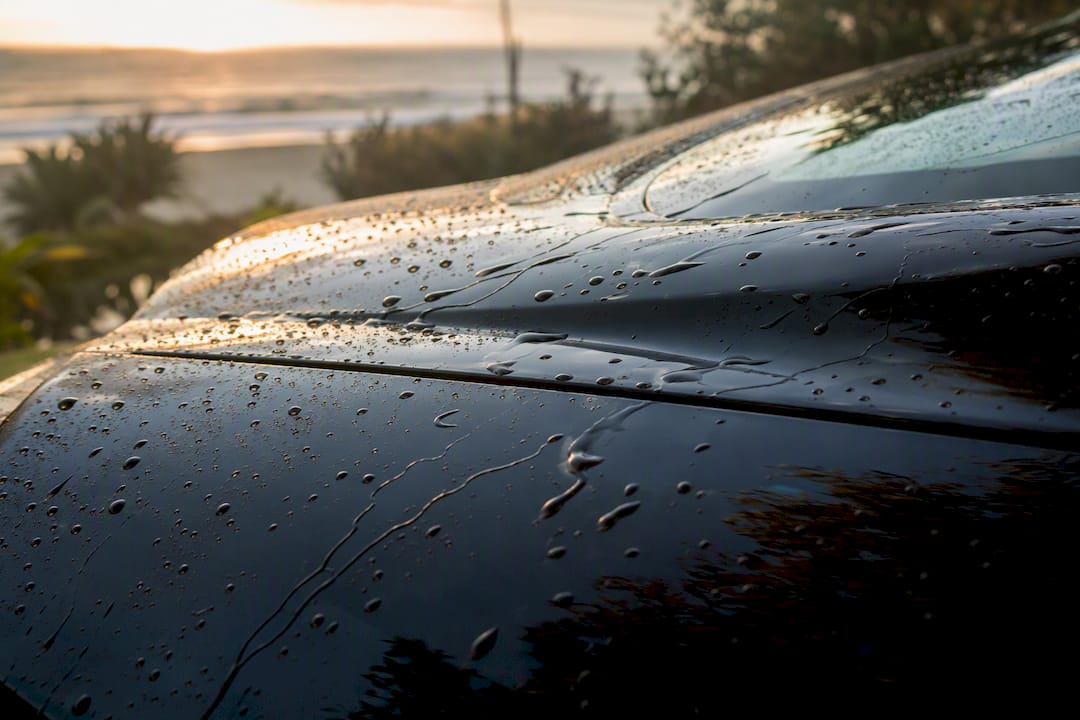
Bird droppings, tree sap, and bug splatter are the other big win. Bare PPF absorbs these contaminants gradually, and if they sit too long, they can etch into the film’s clear coat. A ceramic layer buys you time. Instead of an acidic dropping bonding to the film within hours, it sits on top of a slick barrier, giving you a day or two of grace before it becomes a permanent stain risk. That matters more than people expect, especially for cars parked under trees or near the coast where salt and organic residue build up fast.
Gloss is the benefit most owners actually see first. Glossy PPF gets a visible boost in depth and clarity once coated, similar to what a good paint correction does for bare paint. Matte and satin films are the exception. Coat matte PPF with a standard gloss-enhancing product and you’ll get patchy sheen where none existed before, which looks worse than doing nothing at all.
Pro Tip: If your film is matte or satin, always ask specifically for a matte-safe ceramic coating. A generic “for PPF” label on a product doesn’t guarantee it preserves a matte finish.
The maintenance shift is the part people underestimate. Once a car is coated, most washes become a rinse, a pH-neutral shampoo pass, and a dry. You’re not reaching for degreasers or clay bars nearly as often, which means less abrasive contact with the film’s surface over its lifetime.
- Faster, gentler washes with less scrubbing required
- Reduced risk of permanent staining from organic contaminants
- Noticeably deeper gloss on glossy films (skip this on matte)
- Fewer aggressive decontamination sessions, which is easier on the film long term
Industry commentary backs this up: coated film tends to show better contaminant release and stronger gloss retention compared with bare film left to fend for itself. It’s not a dramatic transformation. It’s a quieter, cumulative advantage that shows up every time you wash the car.
Compatibility and risks: what can go wrong with PPF and coating
Not every ceramic product belongs on PPF, and this is where most DIY mistakes happen. PPF is a thermoplastic polyurethane film, and it doesn’t behave chemically like clear-coated paint. A coating formulated for hard automotive clear coat can react differently on TPU, sometimes leaving a hazy film or failing to bond properly at all.
Look for products that explicitly state PPF-rated or TPU-safe on the label or in the manufacturer’s application guide, not just “suitable for all exterior surfaces.” That distinction is easy to miss and it’s the single most common cause of coating failure on film, according to detailers who document compatibility issues between older or aggressive coating chemistries and certain film topcoats.
Matte and satin PPF add a second layer of risk. These finishes rely on a specific surface texture to scatter light evenly. A standard glossy coating fills in that texture, and you end up with uneven sheen. Matte-safe coatings are formulated to maintain the flat finish while still adding hydrophobic and chemical protection, so check the label twice before booking or buying.
The third risk is one fewer owners think about: self-healing. Modern PPF heals light scratches and swirls when heat passes through its top layer, reflowing the polymer back into shape. Elastomeric, flexible coatings applied at 1 to 2 microns generally don’t block this process, but thick, rigid, glass-like coatings can slow or dull it. If self-healing is one of the reasons you paid for PPF in the first place, a heavy multi-layer glass coating undercuts that investment.
- Confirm the product label states PPF-rated or TPU-safe compatibility
- Match matte-safe coatings to matte or satin film, never a gloss formula
- Choose flexible, thin chemistries over thick or rigid glass coatings
- Ask your installer how they handle edges and seams near the adhesive line
Edges and seams are the last failure point worth flagging. PPF installers wrap film edges tightly around body lines and cut seams at panel gaps, and these zones are more vulnerable to coating buildup or delamination if a product pools there. Experienced installers thin their application near edges and sometimes leave adhesive-zone margins uncoated entirely, a technique that keeps seams visible for inspection and reduces the chance of lifting later.
When to coat PPF and how to prep it properly
Timing trips up more owners than product choice does. Freshly installed PPF is still releasing trapped solvents from the adhesive and film layers, a process called outgassing. Coat over it too soon and you risk sealing that outgassing moisture and haze under a layer that’s hard to remove without redoing the whole job.
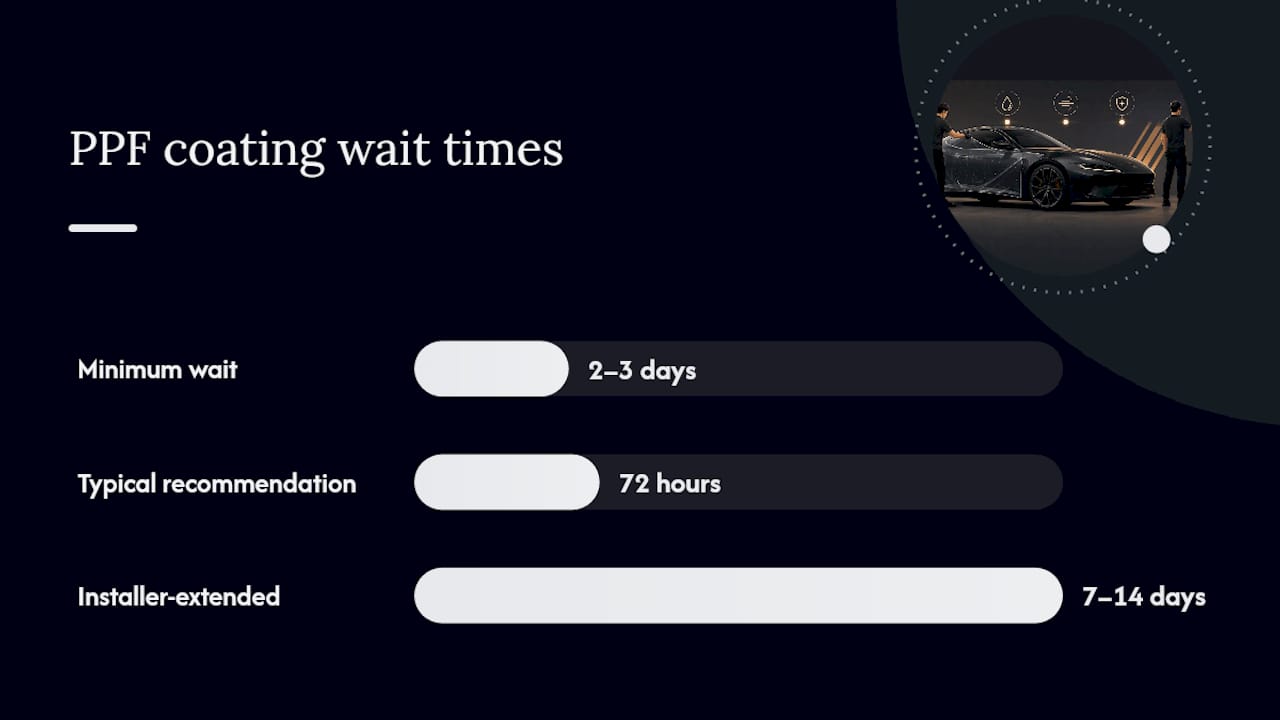
Most professional guides recommend waiting at least 48 to 72 hours after installation, and some installers push that out to 7 to 14 days depending on the film brand and ambient humidity. Cooler or more humid conditions slow outgassing, so a film installed in winter or in a coastal humid climate needs more patience than one installed in a dry, warm workshop.
Once the wait window has passed, the prep sequence matters as much as the wait itself.
- Cure check. Confirm the film has fully bonded and outgassed, either by the installer’s recommended timeline or a visual check for trapped bubbles or haze.
- Decontamination wash. A gentle foam pre-wash followed by a pH-neutral shampoo lifts loose grime without abrasive contact with the film.
- Iron decontaminate and clay if needed. Bonded contaminants like brake dust or industrial fallout need a dedicated iron remover, and light clay work only where contamination is stubborn.
- IPA or panel wipe. This step strips away slip agents and surface oils left behind from installation or washing, which otherwise stop the coating from bonding chemically to the film.
- Thin, even application. PPF-safe coatings go on in light passes, applied in a dust-free, temperature-controlled space to avoid high spots or streaking.
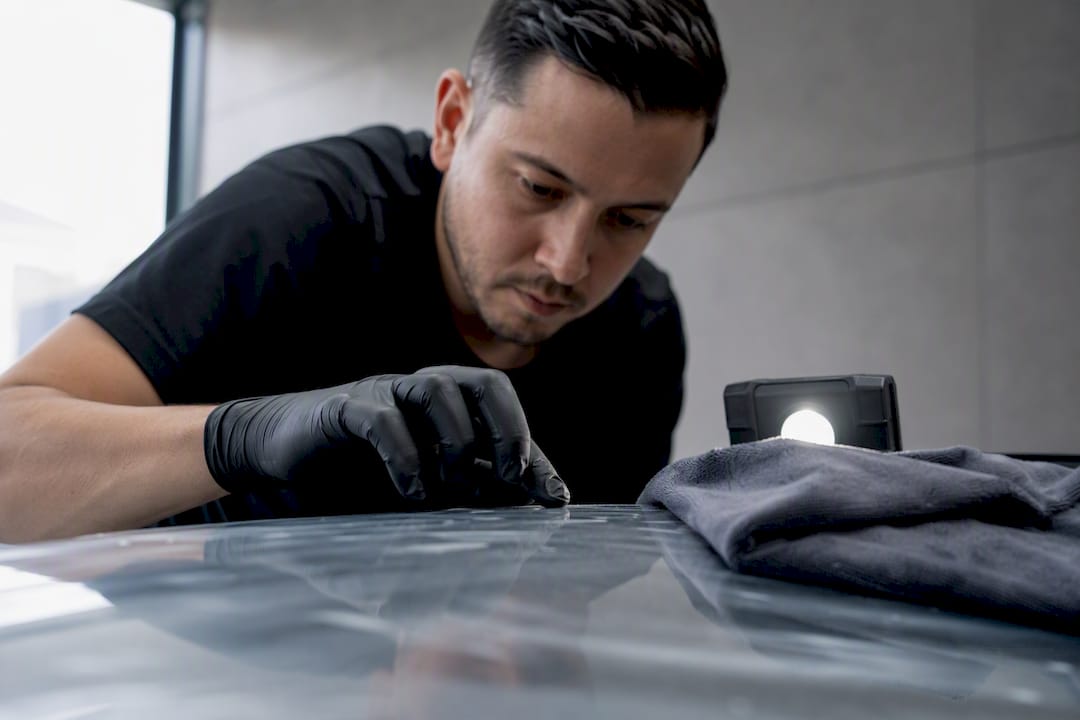
- LED inspection. A raking light check reveals streaks, missed panels, or high spots before the coating fully cures, giving the installer a chance to correct issues while they’re still fixable.
- Dust-free cure. The vehicle sits undisturbed, ideally in a controlled bay, while the coating cross-links and hardens.
Pro Tip: Ask your installer directly how many days they waited before coating your PPF, and what they used for the panel wipe stage. If they can’t answer either question specifically, that’s worth a second opinion.
Post-coat instructions matter just as much as the application itself. A properly cured coating usually needs a no-wash window of several days minimum, and the installer should tell you exactly how long and what products are safe for the first wash. Skipping this step is one of the fastest ways to undo careful prep work. For a full walkthrough of the process from a DIY angle, Com’s guide on how to apply ceramic coating covers the application fundamentals in more depth.
Maintaining coated PPF and how long the coating lasts
Coated PPF still needs proper washing, just less often and with less effort. Stick to a pH-neutral shampoo, soft microfibre wash mitts, and a dedicated drying towel. Automatic car washes with brushes are still a bad idea on coated film, because the brushes can introduce fine swirls into the topcoat and drag grit across the surface.
Drying technique matters more than people assume. A quality microfibre drying towel or a leaf blower style dryer prevents water spots from forming on a hydrophobic surface, since beaded water that’s left to evaporate on its own can leave mineral deposits behind even on a well-coated panel.
Durability depends heavily on what kind of coating you started with. Consumer spray sealants marketed as “ceramic boosted” typically last a matter of weeks to a few months, since they sit on the surface rather than bonding into it. Professional-grade SiO₂ or elastomeric coating systems formulated for PPF are built to last considerably longer, though exposure to sun, salt air, and harsh chemical washes will always shorten that lifespan compared with a garaged car in a mild climate.
- Annual spray toppers can refresh hydrophobicity between full re-coats
- Full re-coating schedules depend on the product and your driving conditions, not a fixed calendar date
- Coastal or high-UV driving shortens the effective life of any coating
- Frequent contact with commercial degreasers accelerates wear on the topcoat
Watch for specific warning signs rather than guessing at a lifespan. If water stops beading and starts sheeting flat, that’s the coating telling you it’s wearing thin. If you notice new staining from bird droppings or sap that didn’t used to happen, that’s another cue. Neither of these signs means the PPF itself has failed, just that the coating on top of it needs attention. A quick call to a professional detailer can confirm whether you need a spray topper or a full strip-and-recoat.
Choosing between PPF, coating, or both: a decision checklist
PPF and ceramic coating solve two different problems, not the same one. PPF is a mechanical barrier that absorbs rock chips and abrasion; ceramic coating is a chemical barrier that improves hydrophobicity and chemical resistance. Knowing which problem you’re actually trying to solve makes the decision much simpler.
- You drive highways often and worry about stone chips. Prioritise PPF on the front bumper, bonnet, mirrors, and rocker panels first, since that’s where impact damage happens most.
- You want low-effort maintenance, gloss, and chemical resistance. Coat the car, and stretch to a full-vehicle coating if your budget allows, since the maintenance benefit compounds across every panel.
- You want both benefits without overspending upfront. Run PPF on the highest-impact zones and ceramic coating across the whole car, a combination many professionals treat as the practical sweet spot between physical and chemical protection.
- You’re staging the spend over time. Get the film installed first, wait out the outgassing period, then book the coating as a second appointment rather than trying to bundle both into a single rushed day.
If your budget only stretches to one service right now, coating the whole car for easier washing and better gloss retention tends to deliver the most day-to-day satisfaction, while PPF on impact zones can wait for the next service cycle.
How Isaac’s Pro Detailing handles PPF and ceramic coating jobs
Getting this right in practice comes down to sequence, not shortcuts. Com’s mobile workflow starts with a cure check on the film, confirming it’s had the right amount of time to outgas before any coating touches it. From there, the car gets a full decontamination wash, an iron treatment where needed, and an IPA panel wipe to strip any slip agents left over from the PPF install.
Application follows in two thin, PPF-safe coats, checked under LED inspection lighting between passes to catch high spots before they cure. The vehicle then cures in a dust-free environment, and clients get clear aftercare instructions covering the no-wash window and what products are safe for the first wash.
A rushed coating job on fresh PPF is one of the more common and entirely avoidable mistakes we see. The film hasn’t finished outgassing, the panel wipe gets skipped, and the coating ends up sealing in problems instead of preventing them.
As a mobile service, this whole process happens at your home, workplace, or wherever suits, using eco-friendly products throughout. Beyond PPF and coating work, the same team handles PPF removal and documents its coating workflow in detail for owners who want to understand the process before booking.
Before hiring any detailer for this job, ask three questions: how long did they wait after PPF installation, what specific product are they using and is it PPF-rated, and what warranty or maintenance plan comes with the coating. A detailer who answers all three without hesitation is one worth trusting with your film.
- Confirm the cure and outgassing period before booking a coating appointment
- Ask whether the coating product is explicitly PPF-rated or TPU-safe
- Request written aftercare instructions, including the no-wash window
- Clarify what warranty coverage applies and what voids it
What the research actually settles
The conventional advice on this topic gets the yes-or-no question right and then stops short of the part that matters: sequencing. Most guidance treats compatibility, timing, and technique as three equal footnotes. In practice, timing is the one that fails jobs. A compatible product applied too early behaves like an incompatible one, because trapped solvents don’t care what the label says.
What’s genuinely overrated is chasing the thickest, glossiest coating available. Owners assume more layers mean more protection, but on self-healing film, that instinct works against you. The flexible, thinner systems built specifically for TPU do the job PPF was bought to do in the first place.
If you take one thing from this, prioritise the wait period over the product hunt. A mediocre but compatible coating applied at the right time will outperform the best coating on the market applied three days too soon.
Get your PPF coated the right way, at your place
Getting the sequencing right, the wait period, decontamination, and a PPF-safe product, is exactly what separates a coating that lasts from one that hazes within months. Com brings that entire workflow to your driveway, workplace car park, or wherever suits, so you’re not stuck coordinating a workshop drop-off around the film’s cure window.

Every job runs on eco-friendly products and follows the same cure-check, decontaminate, IPA-wipe, LED-inspect sequence covered above, whether you’re booking a standalone coating or pairing it with fresh PPF. That consistency is what keeps warranty terms straightforward and results predictable, appointment to appointment.
If your PPF has already cleared its outgassing window, or you’re planning an install and want the coating booked in from the start, check out Com’s ceramic coating workflow and get a quote for your vehicle today.
Frequently asked questions
Can you ceramic coat PPF straight after installation?
No. Fresh PPF needs to outgas first, typically 48 to 72 hours at minimum and up to 7 to 14 days in cooler or humid conditions, before a coating is applied on top.
Is ceramic coating over PPF better than wax?
Ceramic coating lasts considerably longer than wax and bonds more securely to PPF-rated surfaces, while wax needs reapplying every few weeks and offers far less chemical resistance.
Does ceramic coating stop PPF from self-healing?
Thin, flexible PPF-safe coatings generally don’t block self-healing, but thick, rigid, glass-like coatings can slow the film’s ability to reflow and heal light scratches under heat.
What’s the best type of ceramic coating for PPF?
Look specifically for products labelled PPF-rated or TPU-safe, and matte-safe versions for matte or satin film, rather than a generic coating formulated for painted surfaces.
How long does ceramic coating last on PPF?
Consumer spray sealants tend to last weeks to a few months, while professional SiO₂ or elastomeric systems built for PPF last considerably longer, depending on climate and wash habits.
Sources
- Ceramic coating over PPF: Right way to layer (2026 guide) — Detailing Shoppe
- Can you put ceramic coating on top of PPF? | KM Auto Detailing
- Ceramic coating for PPF: Ultimate gloss & durability — Titan Coatings
- Can you ceramic coat PPF? — Best Ceramics Review