
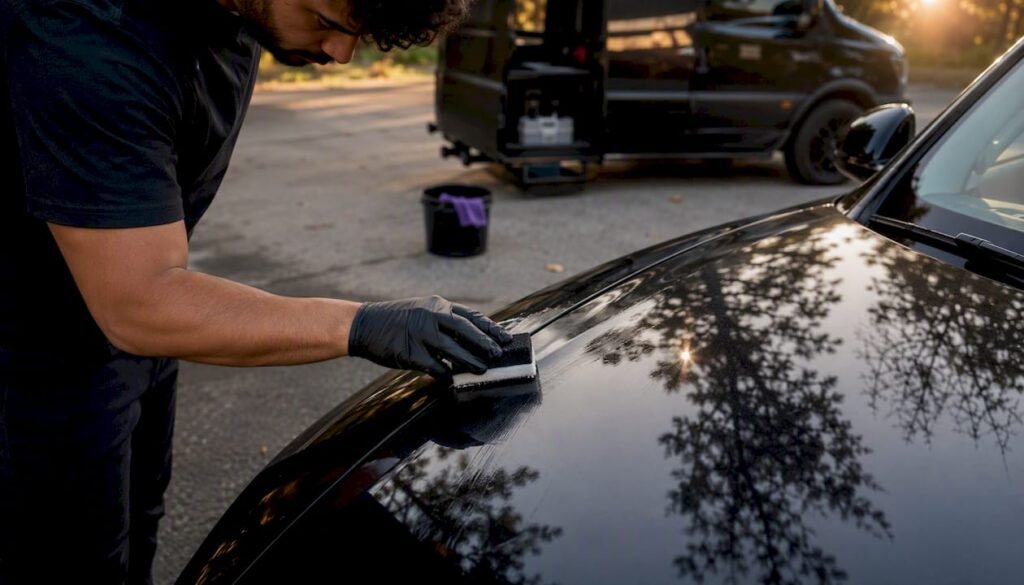
For most Australian owners, the most balanced approach is front-end paint protection film (PPF) combined with a full-vehicle ceramic or graphene coating. That combination handles the three biggest local threats: stone chips on the bonnet and bumper, UV-driven oxidation from Australia’s intense sun, and chemical etching from bird droppings, sunscreen and coastal salt. If your budget doesn’t stretch to both, a professional ceramic coating alone covers UV and chemical risks well. Basic wax or sealant maintenance is a reasonable starting point for low-mileage or garaged vehicles, but it won’t stop chips and needs regular reapplication.
Quick decisions at a glance:
Prioritise PPF if you drive highways regularly, own a new or high-value vehicle, or live near a gravel road.
Coating alone is enough if your main exposure is UV, rain and chemical contaminants rather than stone chips.
Basic maintenance (wax/sealant + regular washing) suffices for older vehicles, tight budgets, or cars rarely exposed to highway speeds.
Key takeaways
The most effective vehicle protection strategy for Australian owners pairs front-end PPF with a full-vehicle ceramic or graphene coating, addressing stone chips, UV degradation and chemical etching in a single combined approach.
| Point | Details |
|---|---|
| PPF stops chips; coatings stop UV and chemicals | No single product does both — combine them for full protection on high-risk vehicles. |
| Surface prep determines longevity | Decontamination and paint correction before any coating or film is non-negotiable for lasting results. |
| Australian UV and salt accelerate damage | Coastal owners should wash weekly with pH-neutral shampoo and apply a coating booster every 3 months. |
| Wax and sealant have a place | They suit older vehicles, tight budgets, or as a maintenance layer on top of a professional coating. |
| Isaac’s Pro Detailing | Mobile ceramic, graphene and PPF services across the Sunshine Coast, with eco-friendly products and on-site convenience. |
Table of Contents
- Why does Australian paint take such a beating?
- What vehicle protection methods are available to you?
- How to wash and decontaminate your car without damaging it
- Waxes and sealants: who actually needs them?
- Ceramic and graphene coatings: what they do and what they can’t
- Paint protection film: the only thing that stops stone chips
- When vinyl wraps and spray-on coatings make sense
- How to choose the right protection for your vehicle
- What does each protection method cost in Australia?
- Common paint problems: what you can fix yourself and when to call a pro
- Local tips from Isaac’s Pro Detailing on the Sunshine Coast
- What the field actually teaches you about protecting paint
- Book Isaac’s Pro Detailing for mobile paint protection on the Sunshine Coast
- Sources
Why does Australian paint take such a beating?
Australia’s paint is under attack from four directions at once: UV radiation, chemical etching, stone chips and salt corrosion. The clear coat sitting over your colour layer is the first to go, and once it starts breaking down, the damage accelerates fast.
Australia has one of the highest UV indexes in the world, and prolonged exposure is the single biggest driver of clear coat oxidation and paint fading for vehicles parked outdoors. The clear coat acts as a sacrificial shield for the colour beneath it, but UV radiation degrades the polymer bonds in that layer over time, leaving paint chalky, dull and eventually cracked. Coastal owners face a compounding problem: salt air accelerates corrosion on exposed metal and speeds up the breakdown of unprotected paint surfaces.
Insects are a seasonal hazard that many owners underestimate. Bug splatter contains formic and other organic acids that begin etching clear coat within hours in hot weather. Sunscreen is equally aggressive: the UV-filtering chemicals in SPF products can strip wax and begin attacking clear coat if left to bake in the sun. Bird droppings, sunscreen and bug residue are chemically active and can etch clear coat quickly if not removed promptly, and persistent stains often need a cut-and-polish or professional restoration to fix.
Common contaminants that etch or stain Australian paint:
- Bird droppings (uric acid, fast-acting)
- Sunscreen residue (UV-filter chemicals)
- Bug splatter (formic acid and organic compounds)
- Tree sap (hardens and bonds to clear coat)
- Salt spray and salt-laden road grime (coastal areas)
- Industrial fallout and iron particles (urban and industrial zones)
What vehicle protection methods are available to you?
The main categories of paint and surface protection range from simple consumables you apply yourself to multi-layer professional systems. Each works differently: some create a physical barrier, some bond chemically to the paint surface, and some are purely cosmetic.
- Wax: A natural or blended product that sits on top of the clear coat, adding gloss and a thin sacrificial layer. Primarily cosmetic with minor UV and water-beading benefits.
- Synthetic sealant: A polymer-based product that bonds more firmly to the clear coat than wax, offering better UV and chemical resistance with longer durability.
- Ceramic coating: A liquid polymer (silicon dioxide or similar) that cures to form a semi-permanent hard layer bonded to the paint. Provides strong UV and chemical resistance plus hydrophobicity.
- Graphene coating: A next-generation variant of ceramic coating with graphene oxide added, offering improved heat dissipation and water-spot resistance.
- Paint protection film (PPF): A thermoplastic urethane film applied over the paint surface. The only widely available option that physically stops stone chips from reaching the clear coat.
- Vinyl wrap: A decorative film that changes the vehicle’s colour or finish and provides light surface protection. Primarily cosmetic and reversible.
- Heavy-duty spray-on coatings: Textured, rubber-like coatings (such as Raptor-style products) for tray tubs, underbodies and high-wear surfaces where aesthetics are secondary to durability.
How to wash and decontaminate your car without damaging it
Regular, correct washing is the single most important maintenance habit you can build. Every other protection method degrades faster when contamination is left to bake into the surface.
The correct wash sequence:
- Rinse the entire vehicle with a strong stream of water to dislodge loose grit before any contact.
- Fill two buckets: one with pH-neutral car shampoo solution, one with clean rinse water. Dip your wash mitt in the shampoo bucket, wash a panel, rinse the mitt in the clean bucket before reloading.
- Work top to bottom, finishing with the lower panels and wheels last.
- Rinse thoroughly, then dry with a clean microfibre drying towel using a patting or dragging motion, not circular scrubbing.
Clay bar decontamination removes bonded contamination (iron particles, industrial fallout, embedded grit) that washing alone cannot lift. Run a clay bar over a lubricated panel every six months, or whenever the paint feels rough to the touch after washing. Clay before any coating or sealant application.
Removing bird droppings, bug splatter and sunscreen safely:
- Soak the affected area with a dedicated bird dropping remover or a diluted pH-neutral detailer. Never dry-wipe.
- Let the product dwell for 30–60 seconds to soften the residue.
- Blot or gently wipe with a damp microfibre cloth. Repeat if needed.
- Rinse the area and inspect for etching. If a white haze or ring remains, the clear coat may need polishing.
Pro Tip:On ceramic-coated cars, use only a pH-neutral car shampoo — alkaline or acidic products strip the coating’s hydrophobic layer faster than normal weathering. Wash weekly in coastal areas and fortnightly inland to keep the coating performing at its best.
Waxes and sealants: who actually needs them?
Waxes and synthetic sealants are the entry point for paint protection, and they still have a legitimate place in any strategy, particularly for owners who want to maintain gloss between professional treatments or who drive older vehicles where a premium coating investment doesn’t make financial sense.
Natural wax suits show-car prep and owners who want a warm, deep gloss finish. It applies easily, buffs off without specialist equipment, and is forgiving of minor application errors. The trade-off is longevity: in Australian conditions, a wax layer typically lasts four to twelve weeks before UV and washing cycles degrade it.
Synthetic sealants last longer and resist UV and light chemical exposure better than wax. A quality sealant applied correctly can hold for three to six months, making it a practical choice for daily drivers who want more than wax but aren’t ready to commit to a coating.
| Feature | Natural wax | Synthetic sealant |
|---|---|---|
| UV protection | Low | Low–medium |
| Chemical resistance | Low | Low–medium |
| Chip protection | None | None |
| Gloss quality | Warm, deep | Bright, reflective |
| Longevity (AUS conditions) | 4 weeks | 3 months |
| DIY ease | Very easy | Easy |
| Typical product cost (AUD) | $20 | $30 |
| Reapplication frequency | Every 1–3 months | Every 3 months |
Common misconceptions worth clearing up:
- Wax does not stop stone chips. It has no physical thickness to absorb impact.
- Sealants are not permanent. They degrade with UV exposure and washing, and need reapplication.
- “More layers” of wax does not mean more protection. One properly applied layer performs the same as three.
- Wax over a contaminated surface bonds poorly and peels unevenly. Always clay before applying.
For coastal Sunshine Coast owners dealing with salt air and intense UV, wax or sealant alone is a short-term solution. They work best as a maintenance layer on top of a coating, or as a stopgap while budgeting for something more durable.
Ceramic and graphene coatings: what they do and what they can’t
Ceramic and graphene coatings are the right choice when your primary threats are UV degradation, chemical etching and the labour of frequent washing. They are not the right choice if stone chips are your main concern.
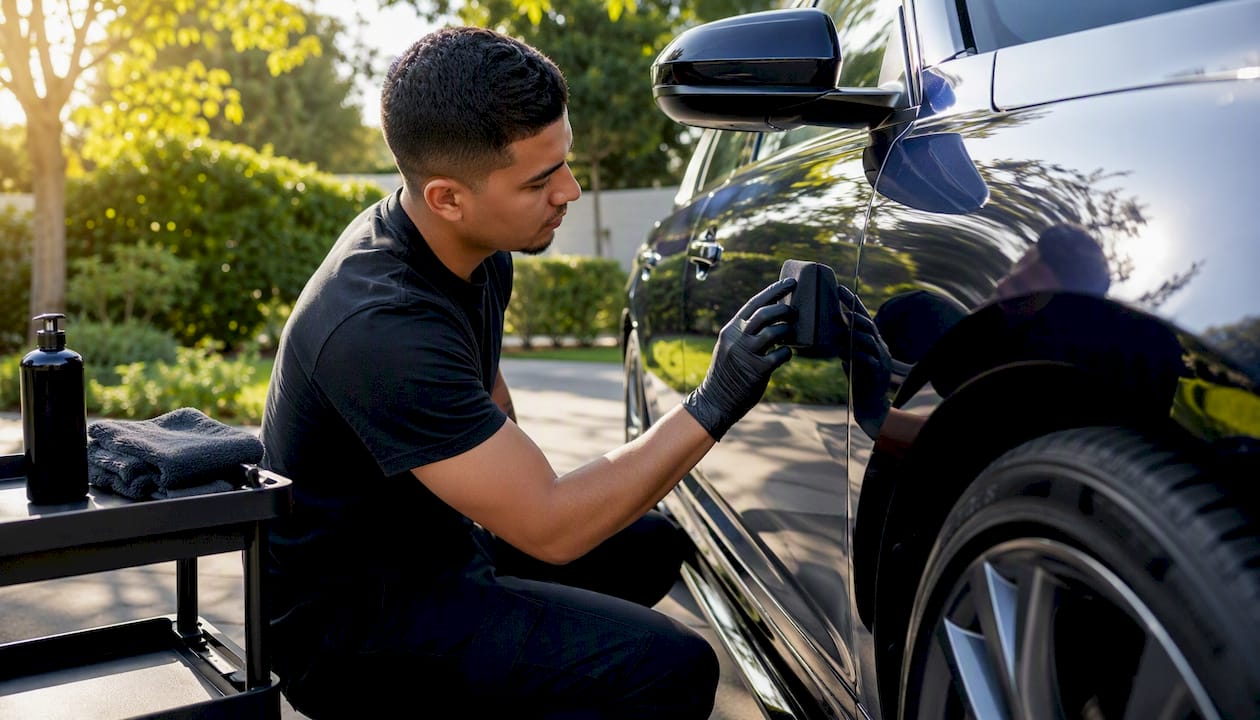
Professional ceramic coatings give hydrophobic and UV-resistant protection, require professional prep and offer multi-year durability compared with DIY kits. The coating bonds chemically to the clear coat and cures to a hard, glass-like layer that repels water, resists bird droppings and bug acids, and makes washing significantly faster. Graphene coatings add graphene oxide to the formulation, which improves heat dissipation (reducing water spotting on hot panels) and tends to offer slightly better durability in high-UV environments like Queensland.
| Feature | DIY ceramic kit | Professional ceramic | Professional graphene |
|---|---|---|---|
| UV resistance | Moderate | High | High |
| Chemical resistance | Moderate | High | High |
| Hydrophobicity | Good | Excellent | Excellent |
| Chip protection | None | None | None |
| Longevity (AUS) | 2 years | 2–5 years | 3–5+ years |
| Prep requirement | Moderate | Multi-stage correction | Multi-stage correction |
| Cure time | 24–48 hours | 24–72 hours | 24–72 hours |
| Typical cost (AUD) | $50 | $500 | $800 |
Maintenance schedule for coated vehicles:
- Wash weekly (coastal) or fortnightly (inland) with pH-neutral shampoo only.
- Apply a coating booster or maintenance spray every three to six months to refresh hydrophobicity.
- Have a professional inspect and top up the coating every twelve to twenty-four months, depending on exposure.
- Avoid automatic brushless car washes, which can introduce fine scratches over time.
Proper surface prep, including decontamination and paint correction, before applying coatings is critical to ensure bonding and longevity. A coating applied over contaminated or swirl-marked paint locks those defects in permanently. For vehicles with existing paint correction needs, budget for a cut-and-polish stage before the coating goes on.
The key limit to understand: ceramic and graphene coatings are measured in microns. They have no physical mass to absorb a stone chip. If you drive highways regularly, pair the coating with front-end PPF. You can read more about types of protective car coatings to compare product grades and maintenance expectations in detail.
Paint protection film: the only thing that stops stone chips
PPF is a thermoplastic urethane film that provides physical protection against stone chips; ceramic coatings provide chemical and UV resistance. The two work best together. PPF is 150–200 microns thick, which gives it the physical mass to absorb impacts that would otherwise crack or chip the clear coat. Most self-healing PPF products use a heat-activated top coat that causes light surface scratches to flow out over time.
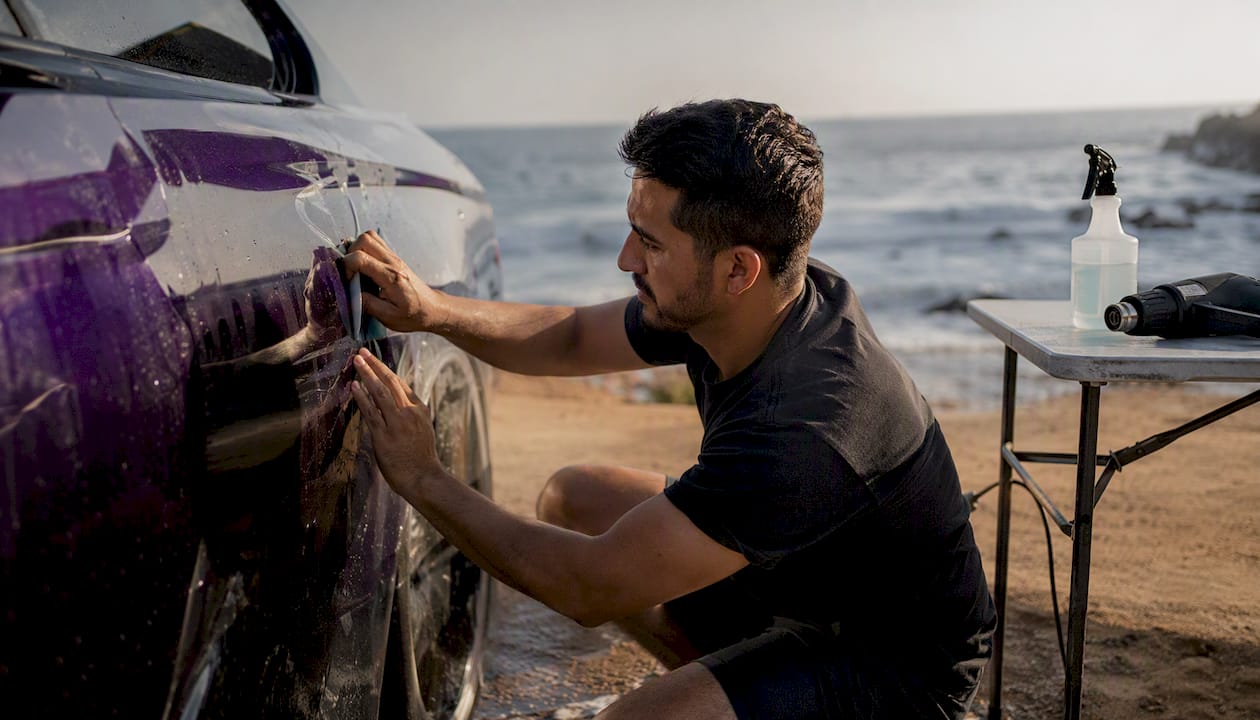
Application order matters. The correct sequence is PPF first, then ceramic coating over the film and the rest of the vehicle. This gives you physical chip protection on the high-impact zones and chemical/UV resistance across the entire car. Australian studios commonly offer package options combining partial or full PPF with a ceramic coating, backed by warranty terms, which is the most practical way to get comprehensive coverage without paying for full-vehicle film.
Red flags when selecting a PPF installer:
- No surface prep or paint correction offered before installation.
- Unwilling to show portfolio images of completed jobs, particularly edge work and curves.
- No written warranty on the film or the installation.
- Quoting unusually low prices: quality PPF film and skilled installation have a real cost floor.
- Rushing the job. A full-front PPF install typically takes one to two days.
For a detailed breakdown of coverage options and what to expect from the process, the paint protection film guide covers the key decisions clearly.
When vinyl wraps and spray-on coatings make sense
Vinyl wraps and heavy-duty spray-on coatings serve different purposes from PPF and ceramic products, and choosing them for the wrong reason is an expensive mistake.
Vinyl wraps are primarily a cosmetic and reversible option. A full wrap changes the vehicle’s colour or finish (matte, satin, chrome, colour-shift) and provides light protection against minor abrasion and UV on the wrapped surface. The paint underneath is preserved for resale. Wraps are not a substitute for PPF: they are thinner and do not absorb stone chip impacts the way thermoplastic urethane film does.
Heavy-duty spray-on coatings (Raptor, Line-X and similar products) are textured, rubber-like materials designed for surfaces where appearance is secondary to protection. They are the right call for:
- Ute tray tubs and load areas subject to constant abrasion from tools and cargo.
- Underbody panels on off-road vehicles exposed to rocks, mud and water.
- Wheel arches on 4WDs that see regular off-road use.
- Any surface where a smooth finish is impractical and impact resistance is the priority.
Pros and cons of wraps and spray-on liners:
- Vinyl wrap pros: Fully reversible, wide colour and finish choice, protects original paint for resale, can be replaced panel by panel.
- Vinyl wrap cons: Does not stop chips, edges can lift in high heat or with poor installation, lifespan of three to seven years depending on UV exposure and care.
- Spray-on liner pros: Extremely durable, resistant to abrasion and impact, can be applied to complex shapes, relatively affordable for tray areas.
- Spray-on liner cons: Textured finish is permanent (difficult to remove cleanly), adds weight, not suitable for visible body panels where gloss is expected.
For a daily driver or show car, neither product replaces a coating or PPF strategy. For a working ute or a 4WD that earns its living off-road, a spray-on liner on the tray is simply the most practical choice available.
How to choose the right protection for your vehicle
Start with your biggest real-world threat. A highway commuter’s worst enemy is stone chips; a coastal owner’s is salt and UV; an off-roader’s is abrasion. Matching the protection to the actual risk is what makes the investment worthwhile.
Decision factors to work through:
- Budget: Wax and sealant for under $150 DIY; professional coating from $500; PPF from $800 for partial front; combined PPF and coating from $2,000+.
- Driving profile: Highway kilometres at speed mean chips are likely. Local suburban driving means UV and chemical exposure dominate.
- Coastal exposure:Coastal vehicles need more frequent washing because salt accelerates corrosion and paint damage. Budget for more frequent maintenance washes and consider more extensive PPF coverage.
- Paint age and condition: Older paint with existing swirl marks or oxidation needs correction before any coating. Applying a coating over compromised paint locks defects in permanently.
- Resale plans: A vehicle you plan to sell in two to three years benefits from a coating that keeps it looking sharp. A long-term keeper justifies the full PPF investment.
- Vehicle value: A $15,000 daily driver and a $90,000 prestige car warrant very different protection budgets.
Questions to ask any installer before booking:
- What surface prep steps do you perform before applying the coating or film?
- Do you offer a written warranty on the product and the installation?
- Can you show me examples of completed jobs, particularly edge work and panel transitions?
- What maintenance does the protection require after installation, and what products should I avoid?
- Is paint correction included, or is it quoted separately?
Recommended packages by use case:
- Daily highway commuter: Partial or full-front PPF plus full-vehicle ceramic coating.
- Coastal owner (Sunshine Coast, Gold Coast, etc.): Full-vehicle ceramic or graphene coating plus more frequent maintenance washes; PPF on front end if budget allows.
- Off-roader/4WD: Front-end PPF, full-vehicle coating, and spray-on liner for tray and underbody.
- Show or concours car: Full-vehicle PPF plus top-tier graphene coating; professional maintenance only.
- Budget daily driver: Quality synthetic sealant, clay bar decontamination twice yearly, and correct wash technique.
What does each protection method cost in Australia?
The honest answer: costs vary significantly by vehicle size, paint condition, product grade and installer experience. The ranges below reflect typical Australian market pricing for a mid-size passenger car in reasonable paint condition.
Factors that push prices up:
- Larger vehicles (SUVs, utes, vans) add 20–40% to coating and film costs.
- Paint correction before coating adds $200–$800+ depending on defect severity.
- Complex panel shapes (deep curves, tight bumper edges) increase PPF installation time and material waste.
- Premium product grades (top-tier graphene, self-healing PPF) carry higher material costs.
Timeline expectations:
- Ceramic or graphene coating: full prep and application typically takes one to two days; avoid washing for 48–72 hours after application to allow full cure.
- PPF partial front: one day; full vehicle, two to three days.
- Wax or sealant: two to four hours DIY including wash and clay.
Common paint problems: what you can fix yourself and when to call a pro
Quick urgency rules: Remove bird droppings and bug splatter immediately. Stone chips need assessment within a few days to prevent rust starting beneath the exposed metal.
Removing droppings, bug residue and tree sap:
- Soak the area with a dedicated remover or a damp microfibre cloth for 30–60 seconds. Never rub dry.
- Gently blot or wipe with a clean microfibre cloth. Repeat the soak-and-blot cycle until the residue lifts.
- Rinse with clean water and inspect the surface.
- If a haze or ring remains after cleaning, the clear coat has been etched. A light polish may restore it; deeper etching needs professional cut-and-polish.
Small stone chip repair (DIY):
- Clean the chip thoroughly with isopropyl alcohol.
- If bare metal is exposed, apply a rust converter or primer before touching up.
- Use a manufacturer-matched touch-up paint pen or brush, applying thin layers and allowing each to dry.
- Finish with a clear coat touch-up pen and allow 24 hours before light polishing.
- If the chip is larger than a few millimetres, or if the metal is already showing rust, seek a professional respray assessment.
When does a stain become permanent? Bird droppings left in direct sun can etch into the clear coat within one to two hours in summer. Tree sap hardens and bonds within days. Once the clear coat surface is physically pitted, no amount of cleaning will restore it. At that point, a cut-and-polish removes a thin layer of clear coat to level the surface. If the etching is deep enough to reach the colour layer, a respray is the only fix.
When a cut-and-polish is required: Swirl marks visible in direct sunlight, oxidation giving the paint a chalky appearance, or light etching that hasn’t penetrated through the clear coat. A cut-and-polish is also the standard prep step before applying any coating. See the cut and polish process guide for what to expect from a professional restoration.
Local tips from Isaac’s Pro Detailing on the Sunshine Coast
Isaac’s Pro Detailing operates as a fully mobile service across the Sunshine Coast, bringing professional-grade detailing, ceramic coatings and PPF removal directly to your location. Working in this region means dealing with some of Australia’s most demanding conditions: extreme UV, salt-laden coastal air and the insect season that runs through summer and autumn.
Isaac’s Pro Detailing publishes practical checklists and guides for Sunshine Coast vehicle owners, including a ten-step vehicle protection checklist that covers the full sequence from wash prep to coating maintenance. For local owners, the car paint protection steps guide is a practical starting point.
Recommended post-installation maintenance checklist:
- Wash weekly with pH-neutral shampoo if you live within five kilometres of the coast.
- Avoid parking under trees where possible. Sap and bird activity are the most common sources of etching seen on Sunshine Coast vehicles.
- Apply a coating booster spray every three to six months to maintain hydrophobicity.
- Book an iron removal treatment annually to clear embedded metallic particles before they cause rust spots.
- Inspect PPF edges every six months for lifting, particularly around the bonnet leading edge and mirror caps.
Service combination that delivers the best value locally: Front-end PPF covering the bonnet, bumper and guards, combined with a full-vehicle graphene coating. The film handles the stone chip risk from Bruce Highway driving; the coating manages UV and salt. Isaac’s uses eco-friendly, biodegradable products throughout, which matters when services are performed at your home or workplace.
Pro Tip:Ask your detailer to use an iron remover as part of the decontamination step before any coating application. In coastal areas, iron fallout from brake dust and rail dust bonds to paint quickly and is invisible until it causes rust spotting. Removing it before coating locks in a clean surface.
What the field actually teaches you about protecting paint
The most consistent mistake seen across vehicles coming in for correction work is delayed action. Owners notice a bird dropping, a chip or a dull patch and assume they have time to deal with it later. In Queensland’s climate, “later” often means the damage is already permanent by the time the car arrives.
The second pattern is over-investing in the wrong layer. A full ceramic coating on a car with existing swirl marks and oxidation just seals those defects in. The prep work, specifically the decontamination and paint correction, is where the real value sits. The coating is only as good as the surface underneath it.
For most Sunshine Coast owners, the most cost-effective starting point is a professional wash, clay decontamination and a quality synthetic sealant, followed by a coating assessment once the paint condition is understood. That sequence costs a fraction of a full coating job and gives you a clear picture of what the paint actually needs. Isaac’s Pro Detailing offers on-site car care across the Sunshine Coast, so the assessment and treatment come to you.
Book Isaac’s Pro Detailing for mobile paint protection on the Sunshine Coast
Isaac’s Pro Detailing brings professional ceramic coatings, graphene treatments and paint correction directly to your driveway, workplace or preferred location across the Sunshine Coast. No need to drop your car at a workshop and wait.

The service covers the full protection workflow: wash and clay decontamination, paint correction where needed, ceramic or graphene coating application, and PPF removal for vehicles needing a fresh start. Eco-friendly, biodegradable products are used throughout. Packages are tailored to vehicle size and paint condition, with transparent pricing and no hidden prep fees. Whether you need a complete ceramic coating workflow or a paint protection package suited to local UV and coastal conditions, the process starts with a no-obligation quote. Get in touch to book your assessment and have your vehicle protected at a time and place that suits you.
Sources
- A quick guide to vehicle coatings.
- How to keep your car’s paint pristine this summer
- PPF vs Ceramic Coating: Which Paint Protection is Best for Melbourne Cars? – Mirror Finish Detail