
TL;DR:
- Protecting leather extends its lifespan by preventing stains, UV damage, and cracking in Australia’s harsh environment. Proper care involves cleaning, conditioning, and applying protective coatings like spray protectants or ceramic layers, especially for high-contact car seats. Regular maintenance and professional treatments significantly preserve leather’s appearance and structural integrity over time.
Protecting leather preserves its suppleness, blocks stains and UV damage, and extends the usable life of car seats and furniture by years. The single most important thing you can do right now: clean any visible dirt, spot-test a suitable protectant in a hidden area, then apply it evenly across the surface. Products range from spray protectants under AUD 50 to professional ceramic coatings that bond to the leather and last well over a year. In Australia’s harsh UV environment, skipping protection isn’t a minor oversight — it’s how leather ages a decade in three years.
Quick actions to take today:
- Wipe down leather surfaces with a dedicated leather cleaner and let them dry fully
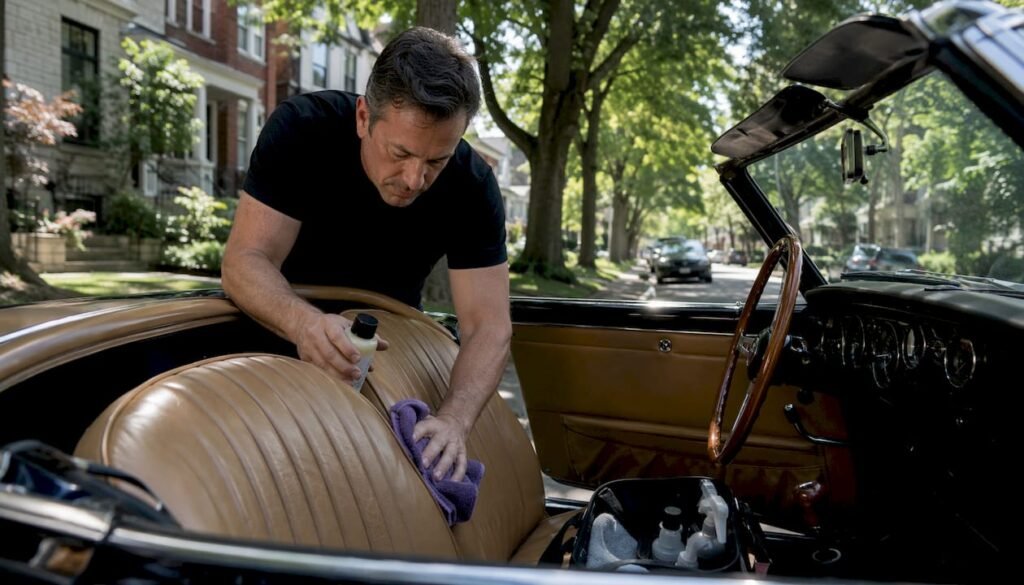
- Apply a conditioner or spray protectant (such as Guardsman Protect & Preserve) using a clean microfibre cloth
- For car seats, consider a professional ceramic leather coating for long-term hydrophobic and UV protection
- Reapply spray protectants roughly once a year; condition older leather every few months
Table of Contents
- What leather protection actually involves — cleaners, conditioners and coatings
- Why leather protection matters for cars and furniture
- What happens when leather is left unprotected
- Which protection type suits your leather — a practical comparison
- How to apply leather protection safely — step by step
- How often to protect leather and what it costs in Australia
- DIY or professional: when a detailer is worth it
- A simple maintenance routine for cars and furniture
- Key takeaways
- A pro detailer’s honest take on leather care mistakes
- Leather protection services from Isaac’s Pro Detailing
- Useful sources and further reading
What leather protection actually involves — cleaners, conditioners and coatings
Not all leather care products do the same job, and using the wrong one at the wrong time is one of the most common mistakes owners make.
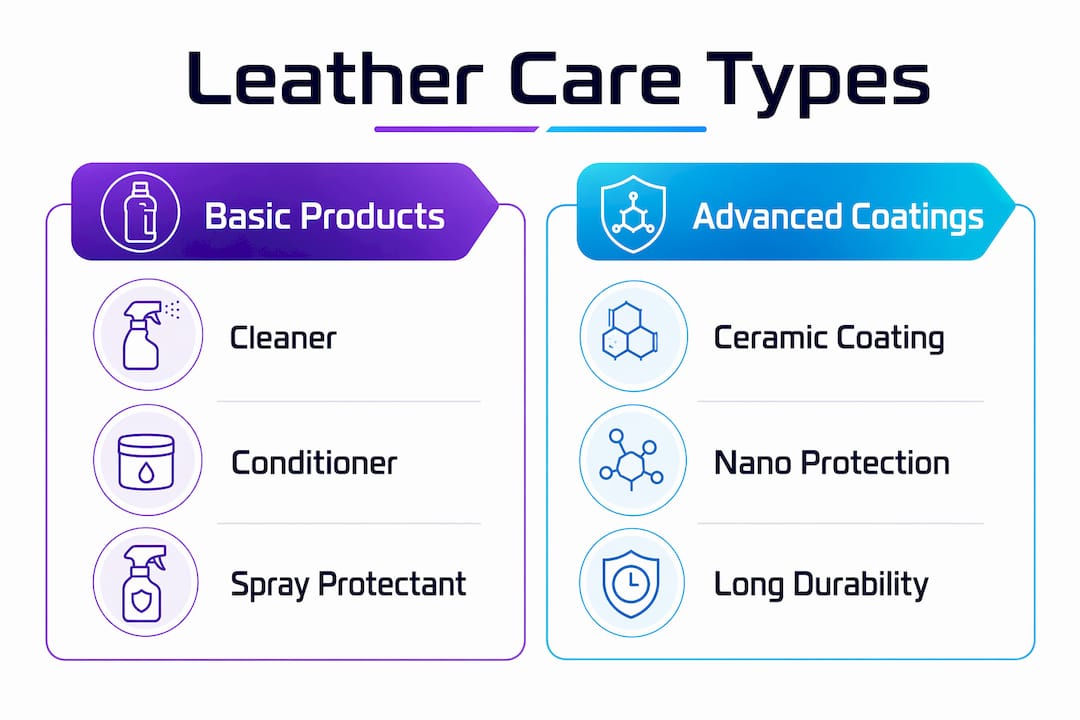
Cleaners remove surface contaminants — body oils, sunscreen, dust, and spilled drinks. They don’t add protection; they prepare the surface for it. Conditioners replenish the natural oils that leather loses over time, restoring flexibility and reducing the risk of cracking. They’re especially important for leather older than two to three years.
Spray protectants (sometimes called repel coatings or fabric-and-leather guards) sit on the surface and create a water- and stain-resistant barrier. Most are easy to apply at home and cost under AUD 50. They wear off with use and UV exposure, so they need reapplying.
Professional ceramic leather coatings are a step above. Products like IGL Ecocoat Leather use a silica-based nano formula that chemically bonds to the leather surface, forming an invisible, breathable, hydrophobic layer. Unlike a conditioner or spray, a ceramic coating doesn’t sit on top — it becomes part of the surface. The result is protection that resists spills, UV rays, and friction for a year or more without altering the leather’s texture or feel.
| Product type | Durability | Appearance change risk | Best for |
|---|---|---|---|
| Cleaner | Single use | None | Pre-treatment prep |
| Conditioner | a few months | Slight sheen possible | Older or dry leather |
| Spray protectant | 6–12 months | Low | New leather, furniture |
| Ceramic coating | 12 months | Very low (stays matte) | Car seats, high-contact areas |
Why leather protection matters for cars and furniture
The benefits of protecting leather go well beyond keeping it looking clean. Here’s what consistent care actually delivers:
- Stain resistance: Leather is porous. Coffee, sunscreen, and soft drink can soak in within seconds. A protectant creates a barrier that gives you time to wipe spills before they penetrate.
- UV defence:Australia’s UV levels are among the harshest in the world. Without UV-capable protection, dyes and oils break down, leaving leather faded and brittle.
- Dye transfer prevention: Denim is the classic culprit. Dark jeans against light-coloured car seats or a cream lounge can leave permanent blue staining without a friction blocker in place.
- Preserved suppleness: Regular conditioning keeps leather fibres flexible. Dry leather cracks; conditioned leather bends without damage.
- Easier cleaning: A protected surface repels grime rather than absorbing it. A damp microfibre cloth handles most mess without scrubbing.
- Higher resale value: Buyers notice worn, cracked seats immediately. Well-maintained leather can meaningfully lift a vehicle’s perceived condition and asking price.
The cosmetic benefits show up quickly. The structural ones — fibre health, tear resistance, reduced shrinkage — compound over years.
What happens when leather is left unprotected
Unprotected leather doesn’t just look worse over time. It deteriorates in ways that become genuinely difficult or impossible to reverse.
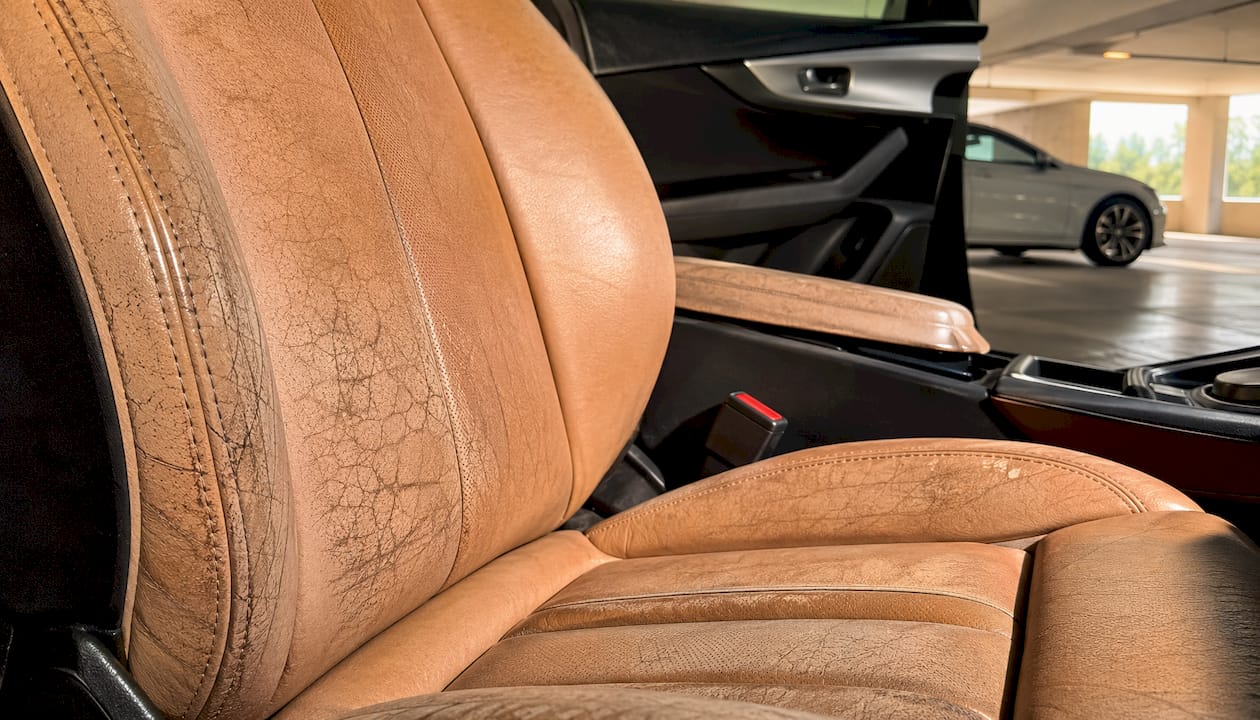
Body oils and sunscreen are the quiet killers. Once they soak into unprotected leather, they oxidise inside the fibres and leave dark, greasy stains that no cleaner can fully lift. Dye transfer from clothing follows a similar pattern — it penetrates the surface layer and bonds with the leather’s own dye, making it a restoration job rather than a cleaning job.
Australia’s UV and heat cycles accelerate every one of these failure modes. A car parked outdoors on the Sunshine Coast in summer can reach interior temperatures well above 60°C. At those temperatures, unprotected leather loses moisture rapidly, the surface stiffens, and fine cracks appear first at high-flex points like seat bolsters and headrests. Once cracking starts, it spreads.
Humidity variability adds another layer of stress. Coastal Queensland air swings between high humidity and dry inland heat, which causes leather to expand and contract repeatedly. Without conditioning to maintain flexibility, that cycling eventually causes surface delamination on pigmented leathers and permanent wrinkling on aniline types.
The practical upshot: neglect for one or two seasons in Australian conditions can age leather by five or more years in appearance. Restoration is possible but expensive and rarely returns leather to its original condition.
Which protection type suits your leather — a practical comparison
Choosing the right product depends on the leather type, the item’s age, and how much contact it gets.
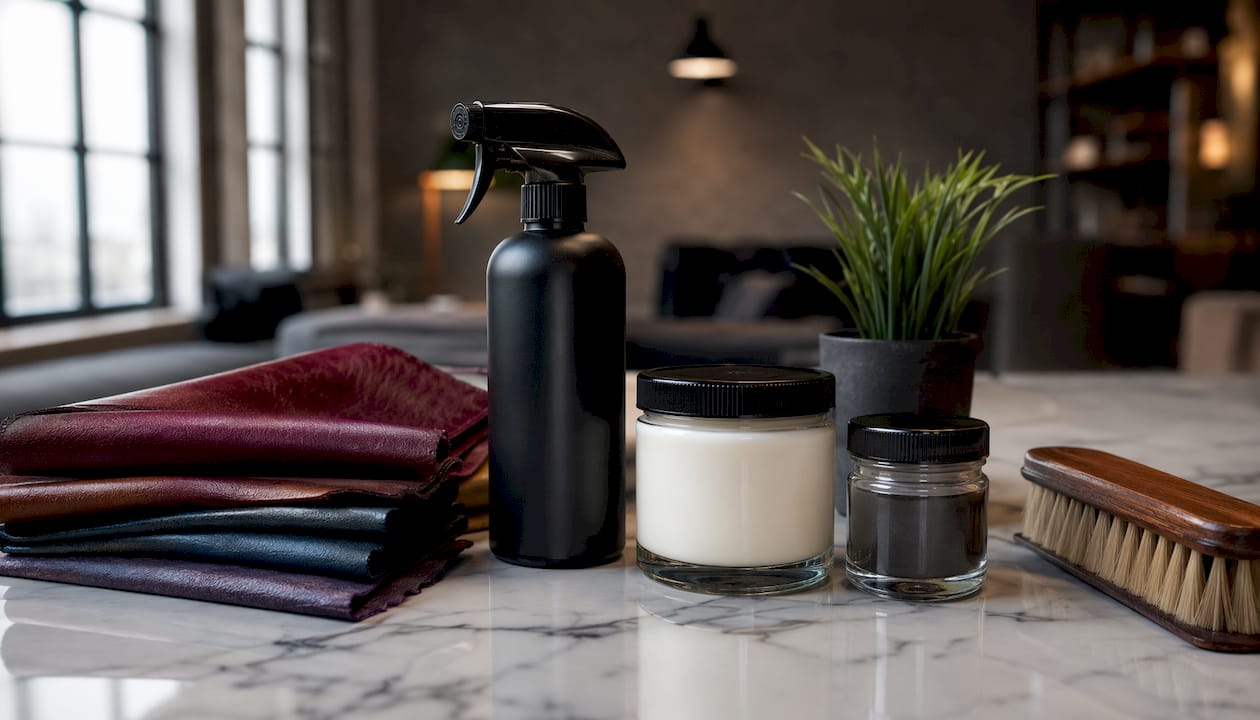
Pigmented (coated) leather is the most common type in modern cars and furniture. It has a factory topcoat that makes it more forgiving. Spray protectants and ceramic coatings both work well here. Conditioners are less critical for new pigmented leather but become important after two to three years.
Aniline and semi-aniline leather is softer, more natural-looking, and far more absorbent. It needs conditioning more frequently and benefits from a lighter-touch protectant. Avoid heavy silicone-based sprays — they can darken the surface and block the leather’s breathability.
New leather (under three years old) retains most of its factory oils. The priority is a repel coating or spray protectant to guard against dye transfer and staining, applied to contact areas every three months and elsewhere every six to twelve months.
Older leather needs conditioning first to restore lost oils and flexibility, then a protectant layer on top. Skipping the conditioning step and going straight to a protectant on dry leather locks in the dryness rather than addressing it.
For car seats specifically, a professional ceramic coating is the most durable option. It handles the friction, UV, and spill exposure that car interiors face daily, and it does so without making seats feel slippery or artificially shiny. Modern ceramic leather coatings are engineered to preserve the factory finish — matte stays matte, satin stays satin.
Pro Tip:Avoid WD-40, petroleum jelly, and household silicone sprays on any leather. Silicone-based sprays can also mist the windscreen under intense sun, creating a visibility hazard — a well-documented issue in Australian conditions.
How to apply leather protection safely — step by step
The sequence matters as much as the product. Applying a protectant over dirty or damp leather traps contaminants and reduces adhesion.
- Vacuum the surface to remove loose debris, then wipe with a dedicated leather cleaner on a microfibre cloth. Work in small sections.
- Allow to dry fully — at least 20–30 minutes, longer in humid conditions. Never apply a protectant to damp leather.
- Spot-test your chosen product in a hidden area (under a seat base, inside a cushion seam). Wait 10 minutes and check for discolouration or texture change.
- Apply the product evenly using a clean applicator pad or microfibre cloth. Use light, overlapping strokes. Less product applied twice is better than a heavy single coat.
- Allow dwell time as directed — spray protectants typically need 5–10 minutes; conditioners can be left to absorb for 15–20 minutes.
- Buff off any excess with a dry microfibre cloth. For ceramic coatings, follow the manufacturer’s cure time precisely — typically 24–48 hours before the surface sees heavy use or moisture.
Pro Tip:For professional ceramic coatings, allow a full two days before heavy use. Sitting on a freshly coated seat before it cures can leave impressions in the coating layer and reduce its longevity.
For a detailed walkthrough of the cleaning stage, the car interior cleaning guide covers extraction, product selection, and drying technique for different seat types.
How often to protect leather and what it costs in Australia
Frequency depends on the leather’s age, how much sun and contact it gets, and which product you’re using. The DetailingShed guidance for Australian conditions is a useful benchmark.
| Task | Frequency | Typical Australian cost |
|---|---|---|
| Quick surface clean | Monthly | AUD $10–$25 (DIY cleaner) |
| Conditioning (older leather) | Every 3–6 months | AUD $20–$50 (DIY conditioner) |
| Spray protectant reapplication | Every 6–12 months | AUD $15 (DIY spray) |
| Professional spray/repel service | Annually | AUD $80 (varies by vehicle size) |
| Professional ceramic leather coating | Every 12+ months | AUD $150 (varies by vehicle and scope) |
Cars parked outdoors in Queensland or Western Australia should sit at the shorter end of every interval; for additional protection, consider complementary services like Van Nuys window tinting and vehicle protection to enhance UV defence and interior comfort. The UV load is simply higher, and protection degrades faster. Vehicles garaged most of the time can stretch toward the longer end.
DIY products under AUD 50 cover most routine maintenance needs. The professional cost is justified when you’re dealing with a new or high-value vehicle, heavily soiled leather, or when you want a coating with manufacturer-backed durability claims.
DIY or professional: when a detailer is worth it
Most routine leather care — cleaning, conditioning, spray protectants — is genuinely manageable at home. The gap between DIY and professional widens in a few specific situations.
Choose a professional when:
- You’re applying a ceramic coating to a new or near-new vehicle and want it done correctly the first time
- The leather has significant dye transfer, body oil staining, or surface cracking that needs assessment before treatment
- You want a coating backed by manufacturer guidance or third-party testing (some professional-grade coatings carry SGS certification claims)
- You simply don’t have the time or confidence to sequence products correctly
What a professional adds isn’t just product quality — it’s environment control, correct sequencing, and proper cure time. A coating applied in a dusty driveway on a humid afternoon will underperform the same product applied in a controlled setting. Ask any detailer you’re considering: what product are they using, what’s the cure time before the car can be used normally, and do they follow manufacturer application guidelines?
For a comparison of physical protection options versus chemical treatments, the seat covers vs detailing guide covers the trade-offs clearly.
Pro Tip:Ask specifically whether the coating needs 24 or 48 hours to cure before the vehicle is used. A detailer who can’t answer that question hasn’t applied that product enough to know it well.
A simple maintenance routine for cars and furniture
Consistency beats intensity. A short routine done regularly protects leather far better than occasional deep treatments.
For car seats:
- Monthly: Wipe high-contact areas (bolsters, headrests, seat base) with a leather cleaner on a microfibre cloth. Remove surface oils and dust before they bond.
- Every 3–6 months (older leather): Apply a conditioner to restore suppleness. Allow full absorption before buffing off excess.
- Every 6–12 months: Reapply a spray protectant or repel coating to all contact surfaces. Clean first, dry fully, then apply.
- Annually (coated vehicles): Check the ceramic coating’s condition. If water no longer beads on the surface, it’s time to reapply or book a professional refresh.
For household leather furniture:
- Monthly: Dust and wipe with a slightly damp cloth. Avoid soaking the surface.
- Every 6–12 months: Condition with a product suited to the leather type. Furniture leather often sees less UV than car seats but more body contact.
- Annually: Apply a spray protectant, particularly on armrests and seat cushions where wear concentrates.
Products like Guardsman Protect & Preserve are designed for household leather and handle both conditioning and surface protection in a single step, which suits furniture owners who want a simple routine without multiple products.
Key takeaways
Protecting leather early and consistently is the single most cost-effective way to extend the life of car seats and furniture in Australia’s demanding climate.
| Point | Details |
|---|---|
| Protect early, not reactively | Applying protection to new leather prevents staining and dye transfer before they become permanent. |
| Match the product to leather type | Aniline leather needs gentle conditioning; pigmented leather tolerates spray protectants and ceramic coatings. |
| Australia’s UV shortens intervals | High UV exposure degrades protection faster — clean and reapply at the shorter end of recommended schedules. |
| Ceramic coatings outlast sprays | Professional ceramic coatings bond to the surface and last well over 12 months, outperforming spray protectants for high-use items. |
| Isaac’s Pro Detailing | Isaac’s offers mobile ceramic leather coating and protection services across the Sunshine Coast, coming to your location. |
A pro detailer’s honest take on leather care mistakes
The most common mistake seen on Sunshine Coast vehicles isn’t neglect — it’s well-intentioned but misguided DIY. Owners reach for whatever spray is in the garage, often a silicone-based product, and apply it without cleaning first. The silicone seals in the contaminants, the leather looks shiny for a week, and then the problems compound underneath.
The second most common issue is dye transfer that’s been left too long. Light-coloured leather seats with blue denim staining are almost always fixable in the first few weeks. After six months, the dye has bonded with the leather’s own pigment and restoration becomes a specialist job.
What actually works, consistently, is the boring answer: clean regularly, condition older leather before it gets dry, and apply a quality protectant on schedule. For vehicles that spend time outdoors in Queensland sun, a professional ceramic coating applied once a year or so is genuinely the most cost-effective protection available — not because it’s the most expensive option, but because it reduces the frequency of every other intervention.
The vehicle interior maintenance tips on Isaac’s site cover the broader interior picture if you want to extend the same thinking to trim, carpets, and plastics.
Leather protection services from Isaac’s Pro Detailing
Isaac’s Pro Detailing brings professional leather care directly to Sunshine Coast vehicle owners — at home, at work, or wherever suits you. The service covers the full protection sequence: thorough leather cleaning, conditioning for older or dry surfaces, spray repel treatments, and professional ceramic leather coatings for owners who want long-lasting, low-maintenance protection.
For new vehicles or high-value interiors, Isaac’s ceramic coating service uses professional-grade products applied in the correct sequence with full cure time observed before handover. No shortcuts, no guesswork on product compatibility. The mobile detailing workflow means you don’t lose a day dropping your car to a workshop. To see the full range of leather and interior protection options, the special services page has current offerings and pricing guidance. Book directly through the site or get in touch to discuss what your leather actually needs.
Useful sources and further reading
For product selection and application technique:
- How to clean, condition and protect leather car seats — DetailingShed — practical sequencing guide with Australian product context; best starting point for DIY care
- Car fabric and leather protection: is it worth it? — CarsGuide — Australian editorial overview covering DIY costs, product types, and the silicone spray warning
- How to take care of your leather interior — carsales.com.au — Australian-specific guidance on UV, heat, and ventilation strategies
For professional and ceramic coating information:
- IGL Ecocoat Leather — IGL Coatings Australia — technical detail on REACH-compliant ceramic leather coatings; useful for understanding what professional-grade products deliver
- Ceramic Pro Leather — Ceramic Pro Australia — overview of nano-ceramic leather coating technology and hydrophobic protection claims
- Why you need ceramic coating for leather seats in Australia — Car Care Products — detailed breakdown of UV, friction, and spill protection specific to Australian driving conditions
Isaac’s Pro Detailing resources:
- Why protect leather interiors: a vehicle owner’s guide — deeper vehicle-specific protection guidance from Isaac’s
- How to protect car leather: a practical guide — step-by-step product recommendations for car seats