

TL;DR:
- Scheduling regular professional detailing preserves your vehicle’s appearance, health, and resale value over time.
- A maintenance schedule every 3 to 4 months, or more frequently in harsh conditions, ensures long-term preservation.
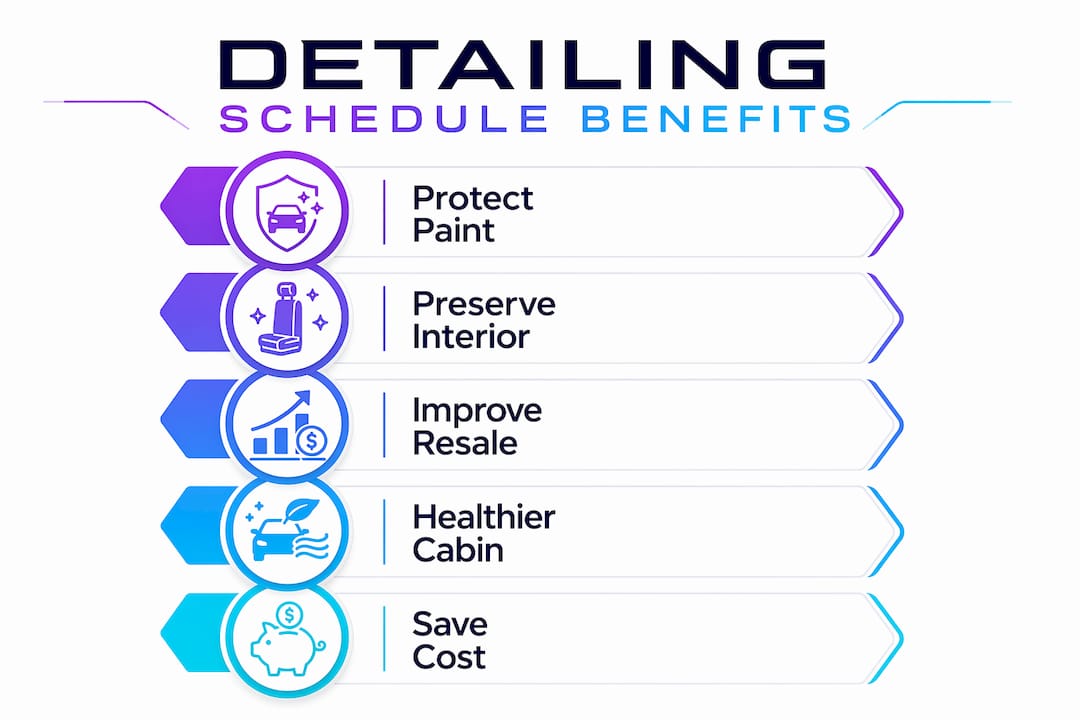
Scheduling recurring detailing means setting up regular professional cleaning and protection sessions to keep your vehicle in showroom condition while preserving its long-term value and health. Vehicle owners who commit to a maintenance schedule avoid the costly cycle of neglect and repair that catches so many drivers off guard. The importance of car detailing goes well beyond appearances. A structured programme protects your paint, your interior, your health, and your resale price, all at once.
Why schedule recurring detailing for your car’s resale value?
Well-maintained vehicles with regular detailing sell for 10% to 15% more than vehicles in poor cosmetic condition. That gap represents thousands of dollars at trade-in or private sale, and it is entirely preventable with consistent upkeep.
Paint is the first thing a buyer sees and the first thing to suffer from neglect. UV radiation, bird droppings, road salt, and industrial fallout all attack clear coat over time. Once oxidation sets in, a simple polish will not fix it. Respraying a single panel on the Sunshine Coast costs far more than a year of maintenance detailing.
Interior degradation follows the same pattern. Cracked leather, stained carpet, and faded trim all signal poor ownership to a buyer. A vehicle that smells clean, looks clean, and feels well cared for commands a premium. Professional detailers use pH-balanced products and specific techniques that preserve protective coatings, unlike many household products that strip waxes and cause micro-scratches over time.
The table below shows how vehicle condition at the point of sale affects potential resale price.
| Vehicle condition | Typical resale impact |
|---|---|
| Regularly detailed, no visible wear | Full market value or above |
| Occasionally cleaned, minor surface marks | 5%–8% below market value |
| Infrequent cleaning, faded paint or stained interior | 10%–15% below market value |
| Neglected, oxidised paint and damaged interior | 20% or more below market value |
The pattern is clear. Every missed detail session compounds the cosmetic decline and shrinks your return when it matters most.
What are the health and convenience benefits of regular detailing?
Regular detailing removes allergens, bacteria, and dust that accumulate inside vehicles, promoting better health and comfort for every person who rides in the car. Most vehicle owners spend between one and two hours per day in their car. That is a significant amount of time breathing recirculated air inside a sealed space.
Dust mites, mould spores, and bacteria thrive in car seats and carpet fibres, particularly in humid coastal climates like the Sunshine Coast. A professional deep clean using hot water extraction and specialised sanitising products removes contaminants that a vacuum and a wipe-down simply cannot reach. The result is a measurably cleaner breathing environment.
Vehicles regularly detailed also provide a more enjoyable driving experience, improving focus and reducing stress. A clean, ordered interior reduces mental clutter and helps drivers stay alert. That benefit is real and practical, not just cosmetic.
Scheduling recurring appointments also removes the friction of organising last-minute bookings. Set appointments and priority scheduling mean you never scramble to find a detailer before a road trip or a car inspection.
The benefits of a regular detailing schedule include:
- Removal of allergens, bacteria, and mould from seats, carpet, and air vents
- Fresher cabin air quality for drivers and passengers
- Preserved leather and fabric that resists cracking and staining
- Priority booking access with your regular detailer
- Consistent vehicle appearance without last-minute stress
- Protection of paint and coatings between major services
Pro Tip:Book your next session at the end of each appointment. You lock in your preferred time slot and never have to chase availability again.
How often should you schedule detailing sessions?
The industry standard recommendation is a maintenance detail every 3–4 months, with an initial deep clean to bring the vehicle up to a high baseline before the programme begins. That baseline matters. Maintenance sessions are designed to preserve a clean vehicle, not rescue a neglected one.
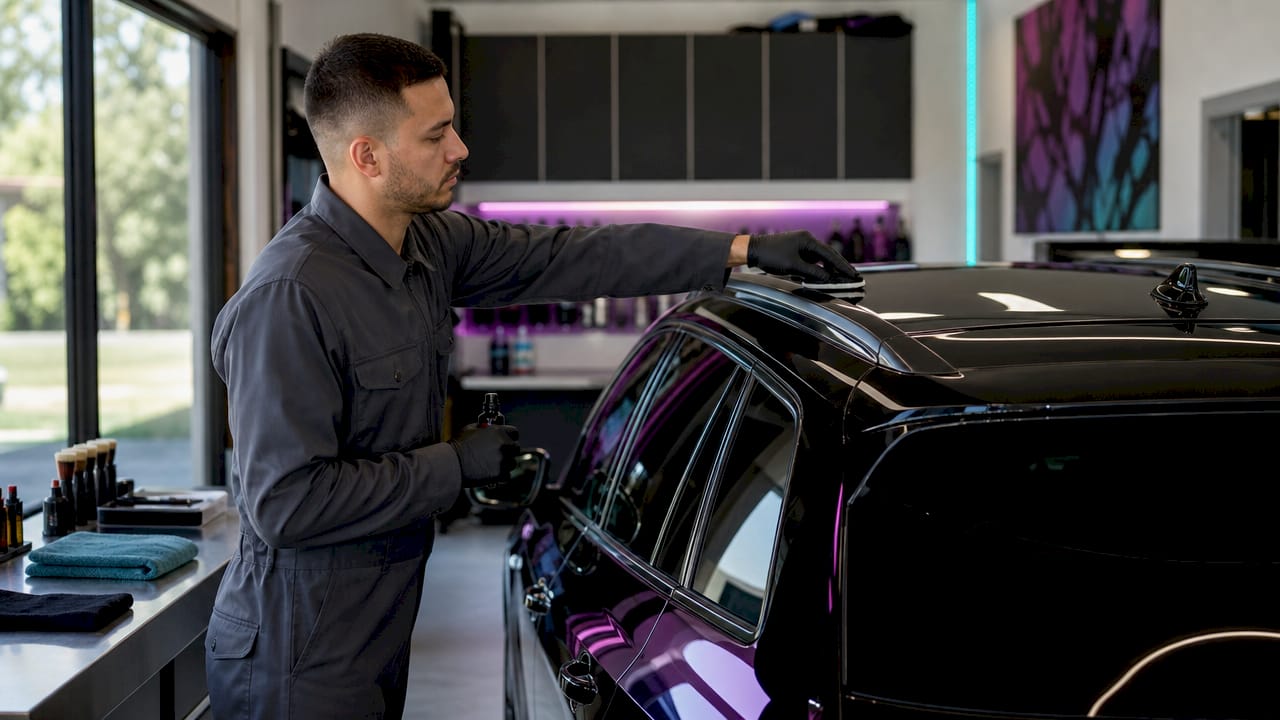
Frequency depends on how and where you drive. Vehicles parked outdoors on the Sunshine Coast face UV exposure, salt air, and humidity year-round. Those conditions accelerate paint degradation and interior mould growth. Drivers in those conditions benefit from scheduling every 8–10 weeks rather than every 3–4 months.
Vehicles used for school runs, tradework, or food transport accumulate grime, crumbs, and odours faster than weekend-only cars. High-use vehicles warrant more frequent interior attention, even if the exterior schedule stays the same.
A practical scheduling plan looks like this:
- Initial deep detail. Start with a full interior and exterior detail to establish a clean baseline. This is non-negotiable before any maintenance programme begins.
- Maintenance detail every 3–4 months. Cover exterior wash, clay bar treatment, paint protection top-up, interior vacuum, and surface wipe-down.
- Seasonal adjustment. Add an extra session before summer to protect against UV and before winter to address salt and mud buildup.
- Annual inspection detail. Once per year, schedule a more thorough session that includes paint correction, seat extraction, and coating reapplication if needed.
- Post-event clean. After road trips, camping, or beach runs, book a targeted clean within two weeks to prevent grime from bonding to surfaces.
Seasonal timing matters on the Sunshine Coast. The wet season from november through march brings heavy rain, mud, and humidity. Scheduling a detail at the start and end of the wet season protects both paint and interior from the worst of it.
What does a recurring detailing programme include?
A recurring detailing maintenance programme operates as a subscription service. An initial deep clean brings the vehicle to a high standard, followed by regular upkeep sessions that maintain that standard efficiently. Maintenance programmes cost around $100 per month and maintain a consistent, freshly detailed appearance while preventing long-term damage from UV, salt, and grime.
That monthly cost compares favourably to the alternative. A single paint correction to fix oxidised clear coat costs several hundred dollars. Replacing stained or cracked leather seats costs more again. The maths strongly favour prevention over repair.
Professional detailers also protect and reinforce coating layers that DIY methods cannot replicate. Ceramic coatings, paint sealants, and fabric protectors all require specific application techniques and compatible maintenance products. Using the wrong household cleaner strips these layers and shortens their effective life. A combined approach of DIY cleaning every fortnight and professional detailing two to four times per year keeps the vehicle in optimal condition while managing costs.
Pro Tip:Ask your detailer which maintenance spray they recommend between sessions. Using the same product line as your professional service protects coating compatibility and extends the life of each treatment.
The table below compares DIY-only upkeep against a professional maintenance programme.
| Factor | DIY-only upkeep | Professional maintenance programme |
|---|---|---|
| Coating preservation | Often strips waxes and sealants | Reinforces and extends coating life |
| Interior deep clean | Surface-level results | Hot water extraction removes embedded contaminants |
| Time investment | High, requires equipment and knowledge | Low, handled by a professional |
| Cost over 12 months | Variable, often underestimated | Predictable, around $100 per month |
| Resale value impact | Moderate, depends on skill level | Strong, consistent professional results |
The role of car detailing in long-term vehicle care is not just cosmetic. It is a structured approach to preserving an asset that depreciates the moment it leaves the dealership. A programme gives you a predictable cost, a consistent result, and a vehicle that holds its value.
Scheduled professional care also pairs well with vehicle safety maintenance. Keeping your car in top condition inside and out reflects a broader commitment to responsible ownership.
Key takeaways
Recurring detailing is the single most cost-effective way to protect your vehicle’s appearance, health, and resale value over time.
| Point | Details |
|---|---|
| Resale value protection | Regularly detailed vehicles sell for 10%–15% more than neglected ones. |
| Health and comfort | Professional cleaning removes allergens, bacteria, and mould that DIY methods miss. |
| Recommended frequency | Schedule a maintenance detail every 3–4 months, starting with an initial deep clean. |
| Programme cost vs repair cost | Monthly programmes around $100 cost far less than paint correction or interior replacement. |
| Professional vs DIY | Professionals preserve coating layers that household products often strip or damage. |
Why I think most vehicle owners wait too long
Most vehicle owners I speak with treat detailing as a reaction rather than a routine. They book a detail when the car looks embarrassing, not before. By that point, the paint has oxidised, the seats have absorbed months of grime, and the protective coatings have worn thin. Getting the car back to a good standard costs significantly more than maintaining it would have.
The vehicles I see that hold their value best are the ones whose owners treat detailing the same way they treat a service interval. It goes in the calendar, it happens on schedule, and the car never reaches a point of visible neglect. Those owners also tend to enjoy driving their cars more. A clean, well-maintained interior changes how you feel behind the wheel.
My honest advice is to start with a proper deep detail, then lock in a maintenance schedule before you leave the car park. The interior care habits you build now will pay off every time you open the door and every time you negotiate a sale price. Detailing is not a luxury. It is a straightforward investment in an asset you use every day.
— Isaac’s
Recurring detailing made easy on the Sunshine Coast
Isaac’s Pro Detailing brings professional maintenance directly to your home, workplace, or wherever suits you best on the Sunshine Coast. Busy vehicle owners get consistent, expert care without rearranging their day.
The mobile detailing workflow at Isaac’s Pro Detailing covers everything from exterior paint protection to deep interior extraction, all using eco-friendly products suited to the coastal environment. Maintenance programmes are structured to keep your vehicle in top condition between sessions, with priority scheduling so you always have your spot locked in. Contact Isaac’s Pro Detailing to set up your recurring programme and keep your car looking its best year-round.
FAQ
Why schedule recurring detailing instead of one-off cleans?
Recurring detailing maintains protective coatings, prevents cosmetic degradation, and costs far less than repairing neglected paint or interiors. One-off cleans restore a vehicle; scheduled maintenance keeps it from declining in the first place.
How often should I detail my car on the Sunshine Coast?
The standard recommendation is every 3–4 months, though vehicles exposed to salt air, UV, and heavy use benefit from sessions every 8–10 weeks. Starting with an initial deep clean before the programme begins gives the best long-term results.
What does a monthly detailing programme typically cost?
Professional maintenance programmes average around $100 per month and include 2–4 hours of service time. That cost covers exterior protection top-ups, interior cleaning, and coating maintenance that DIY methods cannot reliably replicate.
Does regular detailing actually improve resale value?
Well-maintained vehicles sell for 10%–15% more than those in poor cosmetic condition. Consistent detailing preserves paint, interior surfaces, and protective coatings, all of which buyers assess directly when setting their offer price.
Can I combine DIY cleaning with professional detailing?
A combined approach works well. DIY washing every fortnight paired with professional detailing two to four times per year keeps the vehicle in optimal condition while managing the overall cost of care.