
TL;DR:
- Engine bay detailing involves cleaning, degreasing, and protecting visible engine components to prevent wear and identify issues early.
- Regular treatment improves vehicle maintenance, enhances resale value, and helps track potential mechanical failures.
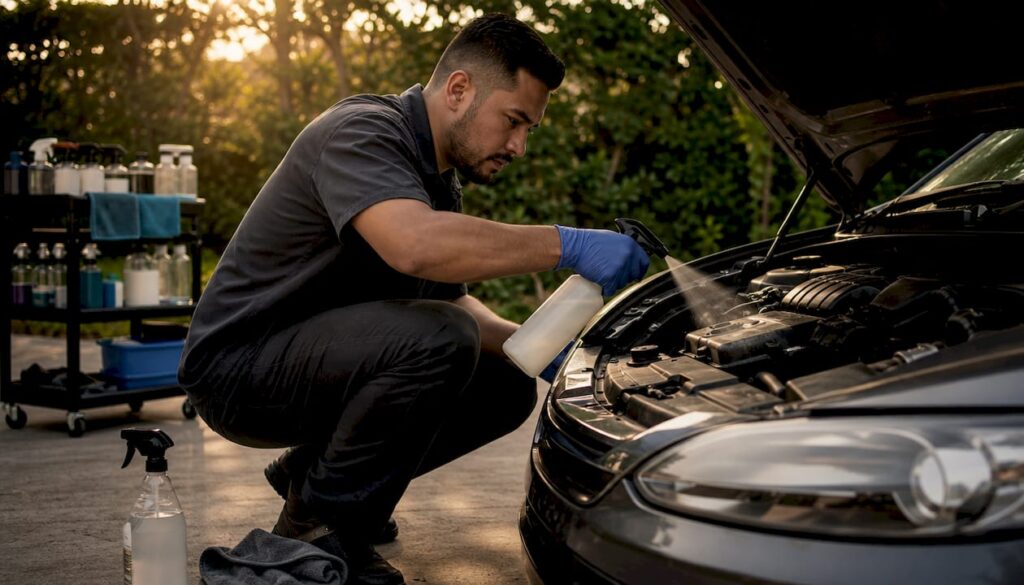
Engine bay detailing is the professional process of cleaning, degreasing, and protecting all visible components inside a vehicle’s engine compartment. Most car owners focus on paint, wheels, and interior, but the engine bay collects grease, road grime, and oil residue that accelerates component wear and hides early warning signs of mechanical trouble. A clean engine bay acts as a health check, making it far easier to spot leaks, pressure loss, or failing gaskets before they become expensive repairs. Done correctly, engine compartment care protects both your vehicle’s performance and its resale value.
What is engine bay detailing and what types are available?
Engine bay detailing covers three distinct service levels, each suited to a different condition of engine compartment. Understanding which type you need saves time and prevents over-treating a bay that only needs a light refresh.
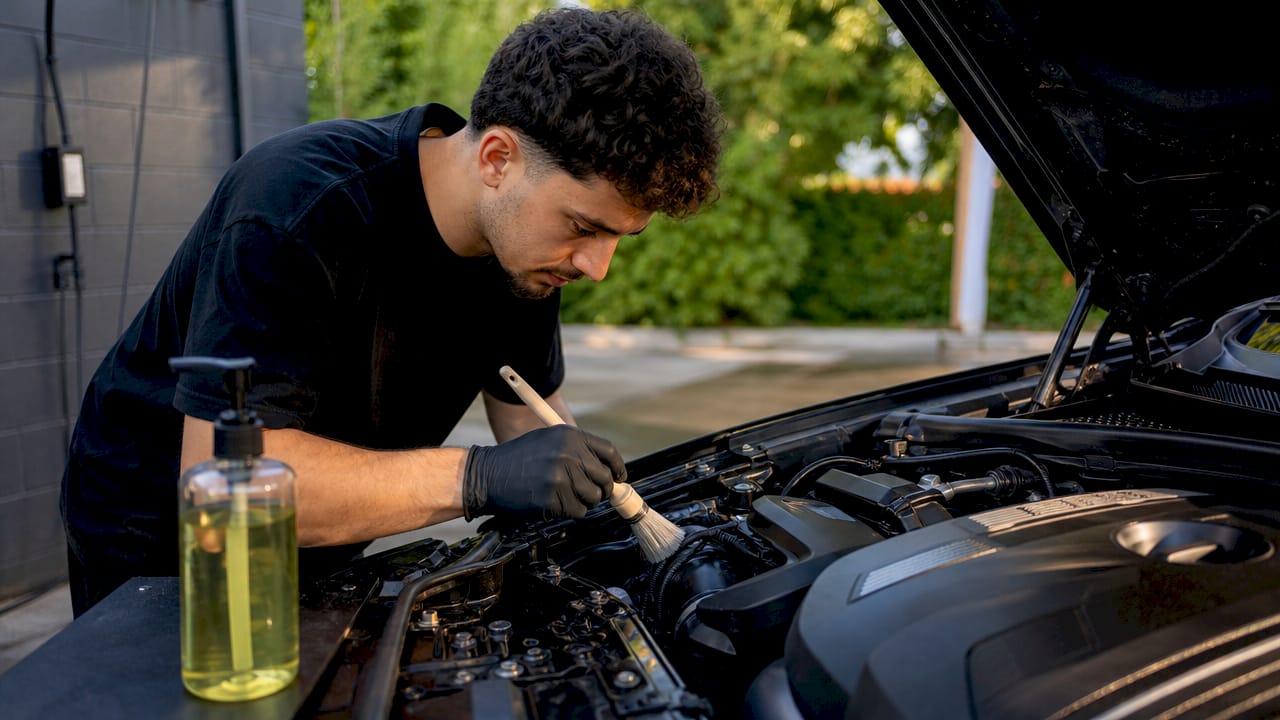
Light wipe-down is the most basic form of engine compartment care. A technician wipes down accessible surfaces with a damp microfibre cloth and a mild all-purpose cleaner. This suits vehicles that receive regular maintenance and have minimal grease buildup. It takes roughly 20–30 minutes and keeps the bay presentable between deeper cleans.
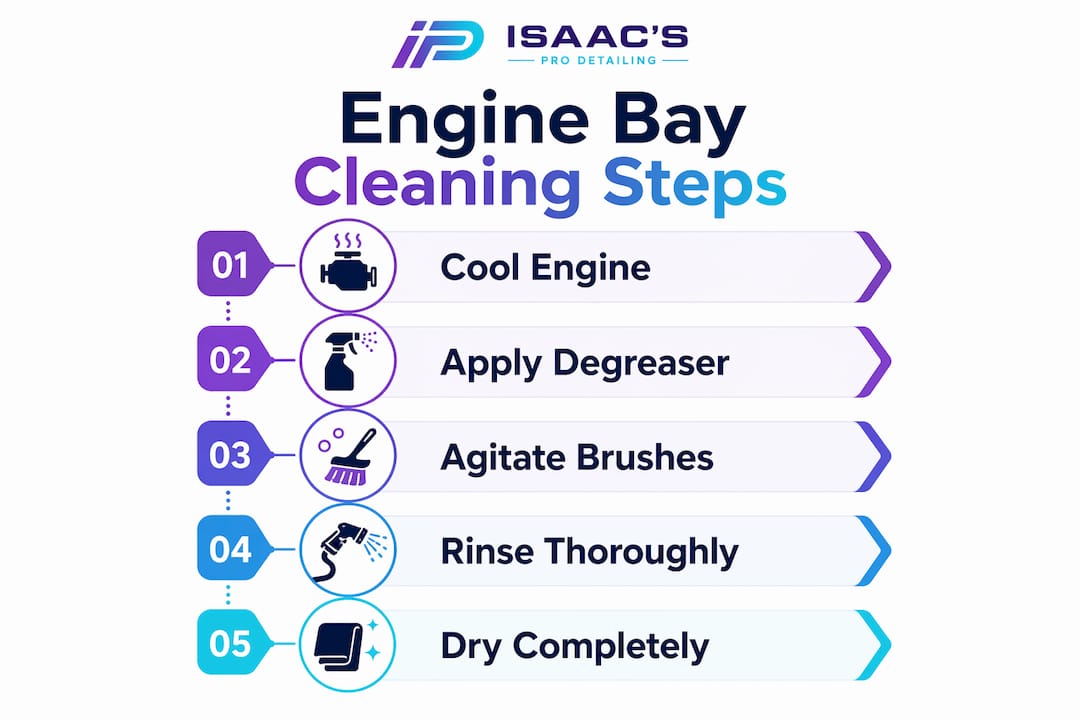
Full degreasing is the most common service. It involves applying a dedicated degreaser, agitating with brushes, rinsing with low-pressure water, drying thoroughly, and finishing with a plastic and rubber dressing. This level suits most vehicles that have gone six months or more without engine bay attention. Professional detailing costs range from $50–$75 for a light wipe-down, $100–$175 for a full degreasing, and $200 or more for heavy restoration work.
Heavy-duty restoration applies to neglected bays with years of baked-on grease, surface rust, or deteriorated rubber. This process may include multiple degreaser applications, detailing brushes of varying stiffness, and specialised trim restorers. It takes the most time and carries the highest risk if done without proper technique.
Step-by-step engine bay cleaning process
The sequence of steps matters as much as the products you use. Skipping a step or changing the order causes damage that is difficult and costly to reverse.
- Cool the engine. Engines must cool for 30–45 minutes before any cleaning begins. Hot metal and plastic suffer thermal shock when cold water hits them, causing cracks and warping.
- Cover sensitive components. Wrap the alternator, fuse box, exposed wiring looms, and any open air intakes with plastic bags or purpose-made covers. Protecting alternators and fuse boxes is non-negotiable to avoid cascading electrical failures.
- Apply degreaser. Spray a diluted degreaser across all greasy surfaces. Work from the bottom of the bay upward so runoff does not re-contaminate cleaned areas.
- Agitate with brushes. Use soft brushes on painted surfaces and delicate plastic covers, medium brushes on hoses and general components, and stiffer brushes on metal brackets and heavily soiled areas.
- Rinse with low pressure. Use a garden hose on a gentle setting. Never use a pressure washer near electrical components.
- Dry thoroughly. Use compressed air to dry hidden crevices and electrical connectors. A leaf blower works as a practical alternative for home use.
- Apply dressings. Finish plastic covers, rubber hoses, and trim with a water-based dressing that restores a factory appearance without leaving an oily residue.
- Run the engine. After cleaning, run the engine for five to ten minutes. This evaporates any residual moisture and reduces the risk of electrical faults developing later.
Pro Tip:Apply degreaser to a cool engine only. Spraying onto a warm surface causes the product to dry before it can lift grime, leaving a streaky residue that is harder to remove than the original dirt.
What tools and products work best for engine bay cleaning?
Choosing the right products protects components that cost hundreds or thousands of dollars to replace. The wrong cleaner does more damage than the grime it removes.
Degreasers are the core product in any engine bay clean. Water-based, pH-neutral degreasers are the safest choice for most vehicles. They lift oil and grease without attacking rubber seals or plastic trim. Always dilute according to the manufacturer’s instructions. A heavily soiled bay may need a stronger dilution, but starting mild and repeating is safer than going straight to full strength.
- Soft bristle brushes suit painted engine covers, plastic shrouds, and any surface that scratches easily.
- Medium bristle brushes work on rubber hoses, metal pipes, and general engine surfaces.
- Stiff bristle brushes tackle metal brackets, chassis rails, and areas with heavy grease deposits.
- Microfibre cloths finish off surfaces after rinsing and apply dressings evenly.
- Plastic and rubber dressings restore colour and flexibility to aged components. Water-based formulas are preferred because they do not attract dust the way solvent-based products do.
Using harsh solvents or brake cleaners degrades rubber seals and plastic trim, causing brittleness and long-term failure. This is one of the most common and costly mistakes in DIY engine bay cleaning. Brake cleaner is designed for metal brake components only. It strips the plasticisers from rubber hoses, leading to cracking and eventual failure.
When considering custom automotive builds or modified vehicles, pay extra attention to aftermarket wiring and lighting components during cleaning. These additions often lack the factory-level waterproofing of original equipment and need additional protection before any water is introduced.
Pro Tip:Test your degreaser on a small, hidden area before applying it across the whole bay. Some older vehicles have painted engine blocks or unusual plastics that react unexpectedly to even mild cleaners.
What safety precautions should you take during engine bay detailing?
Engine bay cleaning carries real risk if you rush or skip protective steps. Electrical faults are the most serious outcome, and they can appear hours or even days after cleaning if moisture sits in connectors.
The most critical safety measures are:
- Allow full engine cooldown. Thirty to forty-five minutes is the minimum. Longer is always safer, particularly for turbocharged engines that retain heat in the turbo housing well after the engine stops.
- Cover every electrical component. Alternators, fuse boxes, ignition coils, and exposed wiring must be wrapped before any liquid is introduced. Use plastic bags secured with rubber bands or purpose-made waterproof covers.
- Never use a pressure washer.Modern engines tolerate ambient moisture but not high-pressure water streams near sensitive electrical systems. Even a brief blast from a pressure washer can force water into sealed connectors and cause faults that are difficult to diagnose.
- Do not let degreaser dry on surfaces. Leaving degreaser to sit too long causes it to bond with grime and bake onto surfaces, particularly in warm conditions. Apply, agitate, and rinse within the product’s recommended dwell time.
- Rinse thoroughly. Insufficient rinsing leaves a chemical residue that attracts dust and can degrade rubber over time.
- Dry before starting the engine. Use compressed air or a leaf blower to remove standing water from all crevices. Running the engine after cleaning evaporates residual moisture and reduces long-term electrical issues.
Reputable professional detailers often ask clients to sign a waiver before engine bay work. Client waivers acknowledging electrical risk are standard practice in the industry, even when every precaution is taken. This reflects the genuine complexity of working around modern vehicle electronics, not a lack of skill.
How does regular engine bay detailing benefit vehicle maintenance and resale value?
A clean engine bay does more than look good. It changes how you interact with your vehicle and how buyers perceive it.
“A clean engine bay reduces vehicle repair time by exposing potential issues masked by dirt and grime. When every surface is visible and accessible, a mechanic or owner can spot a weeping gasket, a cracked hose, or a loose fitting in seconds rather than minutes.”
Engine bay detailing is primarily an aesthetic and preventative service. It does not repair mechanical faults, but it removes the layer of grime that hides them. A vehicle owner who details their engine bay every six months catches small problems before they become large ones. That habit translates directly into lower repair bills over the life of the vehicle.
Resale value is the other major benefit. A buyer inspecting a used vehicle forms an immediate impression from the engine bay. A clean, well-dressed bay signals that the owner maintained the vehicle carefully. A greasy, neglected bay raises doubts about service history, even if the mechanical condition is sound. For regular detailing and resale value, the engine bay is one of the most persuasive areas a seller can present well.
| Benefit | What it means for your vehicle |
|---|---|
| Early fault detection | Leaks, worn hoses, and gasket failures are visible before they cause breakdowns. |
| Reduced grime buildup | Less accumulated grease means components run cooler and last longer. |
| Faster servicing | Mechanics work more efficiently on a clean engine, reducing labour time and cost. |
| Higher resale value | A clean bay signals careful ownership and builds buyer confidence. |
| Preventative maintenance | Regular cleaning creates a routine inspection habit that catches issues early. |
Understanding car maintenance best practices positions engine bay care as part of a broader vehicle health routine, not a standalone vanity exercise.
Key takeaways
Engine bay detailing is the most overlooked preventative maintenance step a vehicle owner can take, combining aesthetic improvement with early fault detection in a single service.
| Point | Details |
|---|---|
| Three service levels exist | Light wipe-down, full degreasing, and heavy restoration suit different levels of grime and neglect. |
| Safety steps are non-negotiable | Cool the engine, cover electrical components, and never use a pressure washer. |
| Correct drying prevents faults | Compressed air and a post-clean engine run remove moisture that causes electrical gremlins. |
| Detailing is preventative, not mechanical | It exposes faults early but does not fix them; pair it with regular servicing. |
| Resale value improves visibly | A clean engine bay builds buyer confidence and signals careful vehicle ownership. |
Why I treat engine bay work as the most technical part of detailing
Engine bay cleaning is the service I approach with the most caution, and I think most vehicle owners underestimate why. The margin for error is thin. One careless blast of water near an ignition coil can create an intermittent fault that takes a mechanic hours to diagnose. I have seen it happen, and the cost to the client far exceeded what the detail was worth.
The step most people skip is the drying phase. Rinsing and walking away feels like the job is done, but moisture sitting in a connector overnight is where the real damage happens. Compressed air and a short engine run after cleaning are the two steps that separate a professional result from a risky one.
I also think there is a conversation that needs to happen before every engine bay clean. Clients deserve to know that even with every precaution in place, modern vehicles carry some inherent risk when water enters the engine compartment. That transparency builds trust and sets realistic expectations. It is also why I recommend professional engine bay care for anyone with a vehicle under warranty or with complex aftermarket electronics.
For most Sunshine Coast vehicle owners, a full degreasing every six months is the right rhythm. It keeps the bay clean enough to spot problems, protects components from accelerated wear, and keeps the vehicle looking well-maintained when it counts.
— Isaac’s
Professional engine bay detailing on the Sunshine Coast

Isaac’s Pro Detailing brings a fully equipped mobile service directly to your home, workplace, or wherever suits you on the Sunshine Coast. Engine bay detailing is included across service packages, with pricing starting from a light wipe-down through to a full degreasing and dress. Every job follows a strict cool-down, cover, clean, dry, and dress workflow to protect your vehicle’s electronics and deliver a result that lasts. For a full breakdown of what each package includes, the mobile detailing workflow page covers the process in detail. You can also view current pricing and inclusions on the service and wash menu to find the right option for your vehicle.
FAQ
What is engine bay detailing exactly?
Engine bay detailing is the professional cleaning, degreasing, and protection of all visible components inside a vehicle’s engine compartment. It improves appearance and helps identify leaks or worn components early.
How often should you clean your engine bay?
A full engine bay clean every six months suits most vehicles. Vehicles driven in dusty or coastal conditions may benefit from more frequent attention.
Is it safe to use a pressure washer on an engine bay?
Pressure washers are not recommended for engine bay cleaning. High-pressure water forces moisture into electrical connectors and sealed components, causing faults that are difficult to trace.
How long does an engine bay need to cool before cleaning?
Engines must cool for at least 30–45 minutes before any cleaning begins. This prevents thermal shock that can crack plastic components and warp metal surfaces.
Does engine bay detailing fix mechanical problems?
Engine bay detailing is a preventative and aesthetic service. It does not repair mechanical faults but removes the grime that hides them, making early detection far easier.