
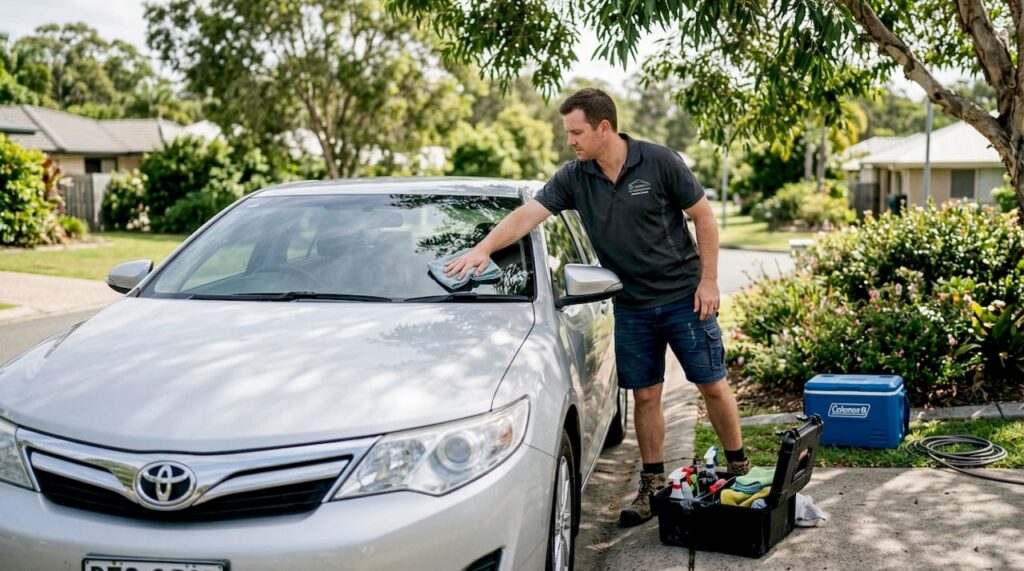
Keeping your vehicle looking immaculate on the Sunshine Coast is genuinely tricky. Between salty coastal air, intense UV, and the kind of busy schedule that leaves no room for a three-hour weekend wash, most owners end up settling for less than their car deserves. The good news is that mobile detailing has evolved significantly, and in 2026 there are smarter, faster, and more eco-conscious ways to protect your investment. This guide walks you through the key criteria for choosing a service, the best protection methods, wash options, time-saving routines, and aftercare habits that keep your car looking sharp long after the detail is done.
Table of Contents
- Choosing the right mobile detailing service: Key criteria
- Comparing detailing protection methods: Wax, sealant, or ceramic?
- Waterless vs. traditional washes: What works for you?
- Time-saving routines for busy owners: Efficient detailing workflow
- Maintaining that new-car look: Aftercare tips and frequency
- Expert insight: What most car detailing guides won’t tell you
- Ready for a shine that lasts? Mobile detailing made easy
- Frequently asked questions
Key Takeaways
| Point | Details |
|---|---|
| Mobile detailing must-haves | Look for water-efficient methods, self-contained setups, and flexible scheduling from Sunshine Coast service providers. |
| Protection options explained | Ceramic coatings offer the longest-lasting protection, but regular wax or sealant helps keep your vehicle shiny if budget is tighter. |
| Eco-friendly vs. traditional | Waterless washes save time and water, but only suit light to moderate dirt—and traditional washes are still best for heavy contamination. |
| Routine makes perfect | A streamlined workflow and small touch-ups between deep cleans keep your car looking fresher for longer. |
| Perspective matters | The best detailing approach balances convenience, care, and real-world protection—not just the latest products. |
Choosing the right mobile detailing service: Key criteria
Not every mobile detailer is worth your time or money. For busy Sunshine Coast owners, the most important qualities to look for go well beyond a shiny finish.
First, flexible scheduling is non-negotiable. A good mobile service should work around your calendar, not the other way around. Look for providers who offer early morning, weekend, or same-week bookings. Weather on the Coast can be unpredictable, so rescheduling policies matter too. A detailer who leaves you scrambling after a sudden downpour is not a detailer worth keeping.
Second, check whether the service is genuinely self-contained. The best mobile operators bring their own water tanks, generators, and waste management systems. This means they can come to your home, workplace, or even your favourite beach car park without needing access to your hose or power point. Mobile detailing strategies that rely on water-efficient methods, self-contained equipment, and weather-rescheduling systems are the gold standard for coastal regions like ours.
Here is what to look for when comparing services:
- Waterless or low-water wash options for eco-conscious care
- Self-contained units with tanks and portable power
- Clear weather and cancellation policies
- Transparent pricing with no hidden call-out fees
- Verified reviews from local Sunshine Coast customers
Understanding the mobile car detailing workflow a provider uses tells you a lot about their professionalism. Efficient operators can protect and enhance your vehicle across multiple jobs in a single day without cutting corners.
Pro Tip: Ask your detailer how many vehicles they service per day. Professional mobile detailers typically handle 2 to 4 jobs daily using streamlined workflows, which means they have refined their process to deliver quality consistently, not just occasionally.
Comparing detailing protection methods: Wax, sealant, or ceramic?
Once you have found a reliable mobile service, the next decision is which protection treatment suits your vehicle and lifestyle. The three main options are wax, paint sealant, and ceramic coating, and they are not interchangeable.
Wax (both natural carnauba and synthetic blends) gives a warm, deep gloss but needs frequent reapplication. Expect to reapply wax up to 6 times per year for consistent protection, which adds up in both cost and effort over time.
Paint sealants are synthetic polymers that bond to the clear coat and last 6 to 12 months. They offer better UV resistance than wax and hold up well against the Sunshine Coast’s harsh summer conditions.
Ceramic coatings are the longest-lasting option, providing protection for anywhere from 2 to 7 years depending on the product and application quality. The upfront cost is higher, but the lasting shine and protection they deliver makes them cost-effective per year of coverage.
| Protection type | Longevity | UV resistance | Cost level | Reapplication frequency |
|---|---|---|---|---|
| Natural wax | 1 to 3 months | Low | Low | Up to 6x per year |
| Synthetic sealant | 6 to 12 months | Medium | Medium | 1 to 2x per year |
| Ceramic coating | 2 to 7 years | Very high | High upfront | Rarely |
Key things to weigh up:
- Vehicles parked outdoors need stronger UV protection
- Ceramic suits owners who want minimal ongoing maintenance
- Wax is fine for garaged vehicles or those wanting a budget option
- Detailing protection tested consistently shows ceramics cost less per kilometre over time compared to repeated wax applications
Pro Tip: For vehicles parked outside in Sunshine Coast conditions, ceramic or at minimum a synthetic sealant is the smartest choice. The UV index here is no joke, and natural wax simply cannot keep up.
Waterless vs. traditional washes: What works for you?
With a clearer picture of protection options, choosing the right wash method is the next step. Both waterless and traditional washes have their place, and the right choice depends on your situation.
Waterless washing uses a specially formulated spray that lubricates and lifts dirt from the surface, which is then wiped away with a microfibre cloth. It is fast, requires no hose or drain access, and uses a fraction of the water of a traditional wash. Waterless and rinseless options support water conservation in mobile settings and are ideal for light to moderate dirt loads.
Traditional washing involves a full rinse, shampoo, and rinse-off process. It is more thorough and essential when your vehicle has heavy mud, road grime, or post-storm contamination. It uses more water and takes longer, but nothing beats it for a deeply soiled car.
“Some prefer waterless for convenience and eco-benefits, but a full wash is still best for heavily soiled vehicles.”
| Method | Best for | Water use | Time required | Eco-friendliness |
|---|---|---|---|---|
| Waterless | Light to moderate dirt | Very low | 20 to 40 mins | Excellent |
| Traditional | Heavy grime, mud, post-storm | High | 45 to 90 mins | Moderate |
How to decide:
- Assess the dirt level before choosing a method
- Consider your access to water at the location
- For regular maintenance between professional details, waterless is often ideal
- Explore eco-friendly car detailing options that reduce runoff and chemical impact
- Choosing methods that create less harmful runoff protects local waterways and beaches
The waterless detailing business model has grown significantly because it genuinely solves real problems for time-poor, eco-aware owners. But it is not a one-size-fits-all solution.
Time-saving routines for busy owners: Efficient detailing workflow
Knowing which wash suits your needs, you will want to get the process down to a reliable routine. Order matters more than most people realise, and a smart sequence saves both time and effort.
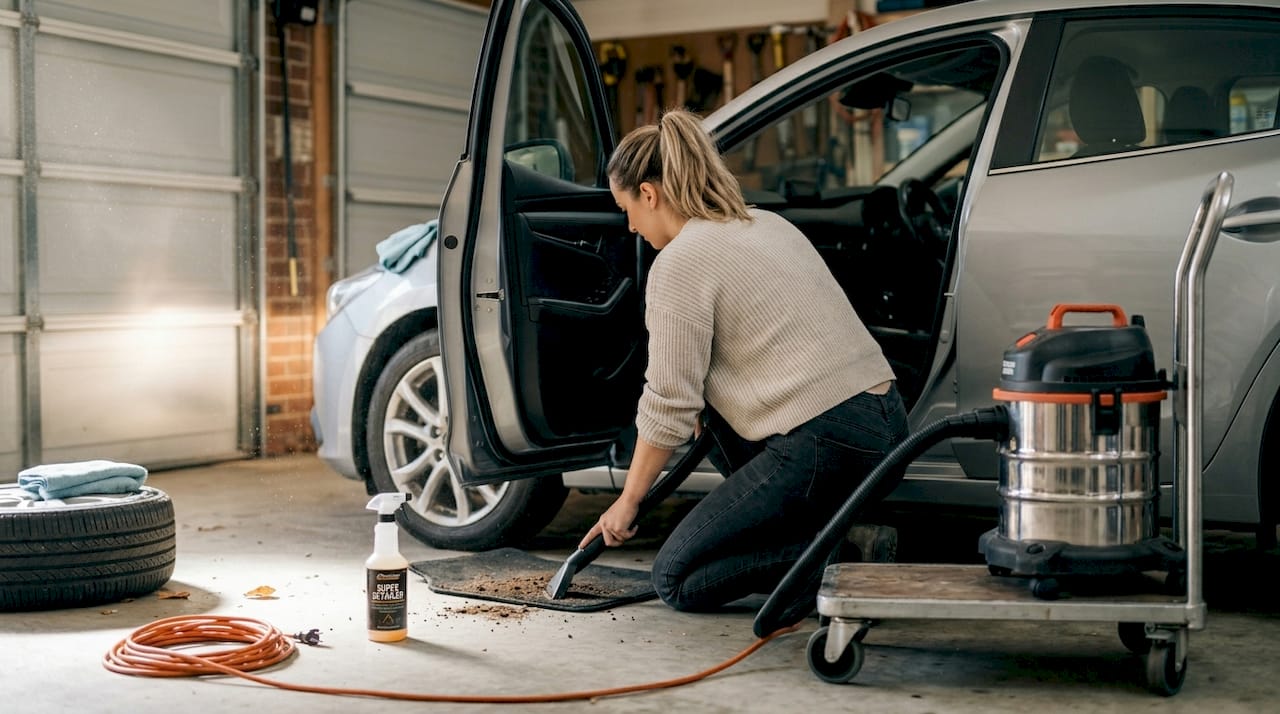
Professional mobile detailers maximise efficiency by handling 2 to 4 cars per day using waterless or rinseless workflows, which means their process is refined to eliminate wasted steps. You can apply the same logic to your own routine.
Here is a practical workflow for a thorough but time-efficient detail:
- Clear the interior first. Remove rubbish, loose items, and floor mats before anything else.
- Vacuum seats, carpets, and boot using a portable vacuum. Work from front to back.
- Wipe down interior surfaces including the dash, console, and door trims with a microfibre cloth and interior spray.
- Clean the windows from inside out to avoid streaks.
- Tackle the wheels and tyres before moving to the paintwork. Brake dust and grime from wheels can splash onto clean panels.
- Wash or waterless-clean the exterior panels, working from the roof down.
- Apply your chosen protection (wax, sealant, or ceramic top-up) to a clean, dry surface.
- Final check for smears, missed spots, and tyre shine.
Must-have tools for this workflow: quality microfibre towels, a quick detailer spray, a portable vacuum, and a wheel brush. Learning how to mobile detail your car properly from the start saves hours over time. Regular detailing also supports lasting car value when it comes time to sell.
Pro Tip: Schedule your detail session right after sunrise or in the late afternoon. Direct midday sun causes products to dry too fast, leaving streaks and reducing effectiveness.
Maintaining that new-car look: Aftercare tips and frequency
Once you have an efficient routine, ongoing care is what makes the results last. A single professional detail is not a set-and-forget solution.
For most Sunshine Coast owners, the ideal schedule looks like this: a light clean or waterless wash weekly, and a professional deep detail every 3 to 6 months. Wax requires 4 to 6 applications per year to maintain consistent protection, while ceramic coatings can last multiple years with minimal upkeep.
Small habits that make a big difference between details:
- Use boot mats and seat covers to protect high-wear areas
- Keep a small bin liner in the car to avoid rubbish build-up
- Store a compact umbrella in the car to avoid wet-seat situations
- Keep a pack of interior wipes in the glovebox for quick clean-ups
- Remove bird droppings and tree sap immediately. Both are acidic and can etch through clear coat within hours in Queensland heat
- Check tyres and windows regularly as part of your weekly walk-around
Understanding the difference between interior vs exterior detailing needs helps you prioritise where to focus between professional visits. Sometimes the interior needs more attention than the paint, especially for families or tradespeople.
Pro Tip: A regular touch-up spray between major details dramatically boosts the effectiveness of ceramic and sealant coatings. Think of it as topping up sunscreen rather than waiting until you are burnt.
Expert insight: What most car detailing guides won’t tell you
Most detailing guides focus on products and techniques. What they rarely address is the real-world trade-off between convenience, protection, and consistency.
Here is the honest truth: the “best” method does not exist in isolation. It depends entirely on where you park, how often you drive, and how much time you can realistically commit. A ceramic coating on a car that never gets touched up or properly washed is no better than a good sealant applied consistently. Preparation and follow-through matter more than the product itself.
Waterless washing is genuinely brilliant for the Coast’s day-to-day conditions. But after a storm or a beach run through muddy tracks, it simply is not enough. Waterless is not sufficient for heavy dirt, and forcing it in those conditions risks scratching your paint.
The lesson we have learned from working with vehicles across the Sunshine Coast is this: consistency and early intervention beat chasing the latest product every time. A small touch-up the moment you notice a water spot or bird dropping is worth more than a full detail three weeks later. Detail your car regularly and you will always spend less money and effort in the long run.
Ready for a shine that lasts? Mobile detailing made easy
Putting all of this into practice takes time, the right products, and a reliable process. When you are ready to take the guesswork out of vehicle care, a trusted professional is just a booking away.
At Isaac’s Pro Detailing Sunshine Coast, we bring everything to you. Our mobile car detailing workflow is built around your schedule, using self-contained equipment and eco-conscious products. Whether you want a full ceramic treatment or a thorough interior clean, our detailing tips for a flawless finish are backed by real experience with Sunshine Coast conditions. Browse our full range of services and book your next detail with the Sunshine Coast mobile detailers locals trust.
Frequently asked questions
How often should I detail my car for best protection?
Aim for light cleans weekly and professional detailing every 3 to 6 months. Recommended detailing frequency varies by coating type, but this schedule suits most Sunshine Coast owners.
Are waterless washes safe for all vehicles?
Waterless is safe for paintwork with light to moderate dirt, but should be avoided for heavy grime to prevent scratching. Waterless detailing works best as a maintenance wash between deeper cleans.
Does ceramic coating really last for years?
With proper application and occasional aftercare, ceramic coatings protect paint for 2 to 7 years. The key is correct surface preparation before application.
What’s the best time of day to detail my car on the Coast?
Early morning or late afternoon is ideal. Cooler temperatures allow products to bond properly and prevent premature drying that causes streaks.
Can I get professional results with DIY mobile detailing kits?
With quality products and the right workflow, modern mobile kits make near-professional results achievable. Following a structured sequence, as outlined above, is the key to consistent outcomes.