
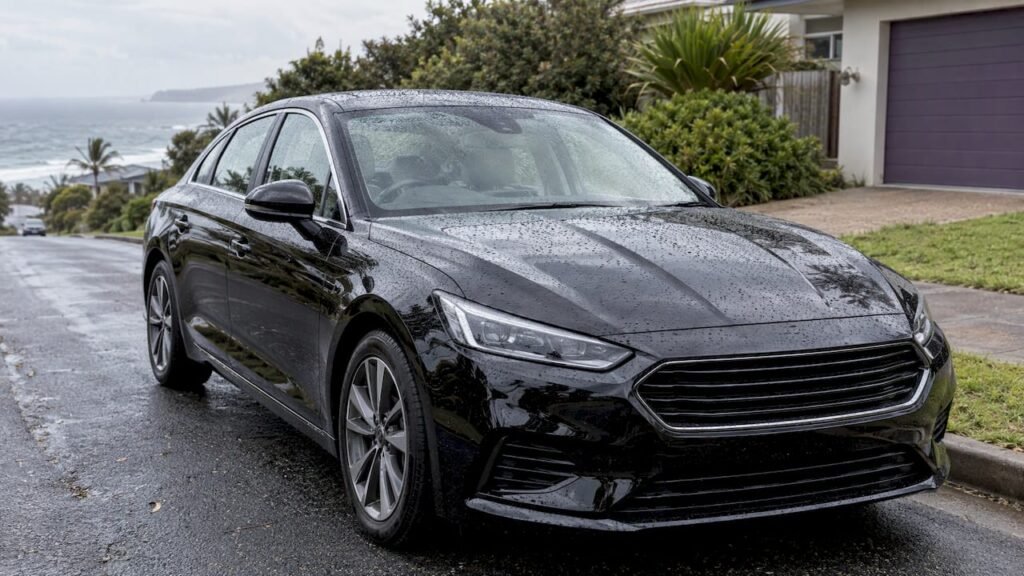
If you live or park within a few kilometres of the surf, salt air protection for your car comes down to three things: keep salt and damp dirt off the metal, put a durable barrier on the paint, and give the underbody the attention it never gets at a normal car wash. A sealed coating applied by a professional does the heavy lifting, and a short weekly routine does the rest. We come to your home, work or the beach car park, so the protection happens where the car already lives.
This guide explains what coastal air does to a car, what to do each week, and how wax, sealant, ceramic coating and paint protection film compare for Sunshine Coast conditions.
TL;DR
- Salt itself is only half the problem: damp, retained dirt keeps corrosion active after the car looks dry, so wheel arches, sills and the underside matter as much as the bonnet.
- Rinse with fresh water weekly, use a pH-neutral car shampoo for full washes, and rinse sooner after beach trips.
- A ceramic or graphene coating makes salt and grime release more easily, but no coating makes paint scratch-proof, so gentle wash technique still counts.
- Park undercover when you can, repair chips quickly and check door edges, arches and underbody panels.
- Our Ultimate Protection Package, graphene packages and underbody wash are built for exactly this exposure, and we do them on site.
Table of Contents
- What salt air actually does to a car
- The weekly routine that slows salt damage
- Where you park matters
- Wax, sealant, ceramic coating or film: what each does
- Which owner needs what
- What we offer for coastal protection
- Perspective: protect first, then maintain
- Book protection that suits your car
- A simple coastal care calendar
- FAQ
- Sources
What salt air actually does to a car
Salt air is not a single threat. It is a combination of salt-laden moisture, sand, humidity and sun, and each one makes the others worse. The same environment is hard on anything metal that lives outdoors on the coast: even salt spray corrosion on coastal solar panels is a recognised problem for rooftop equipment, and a car faces it at ground level every day.
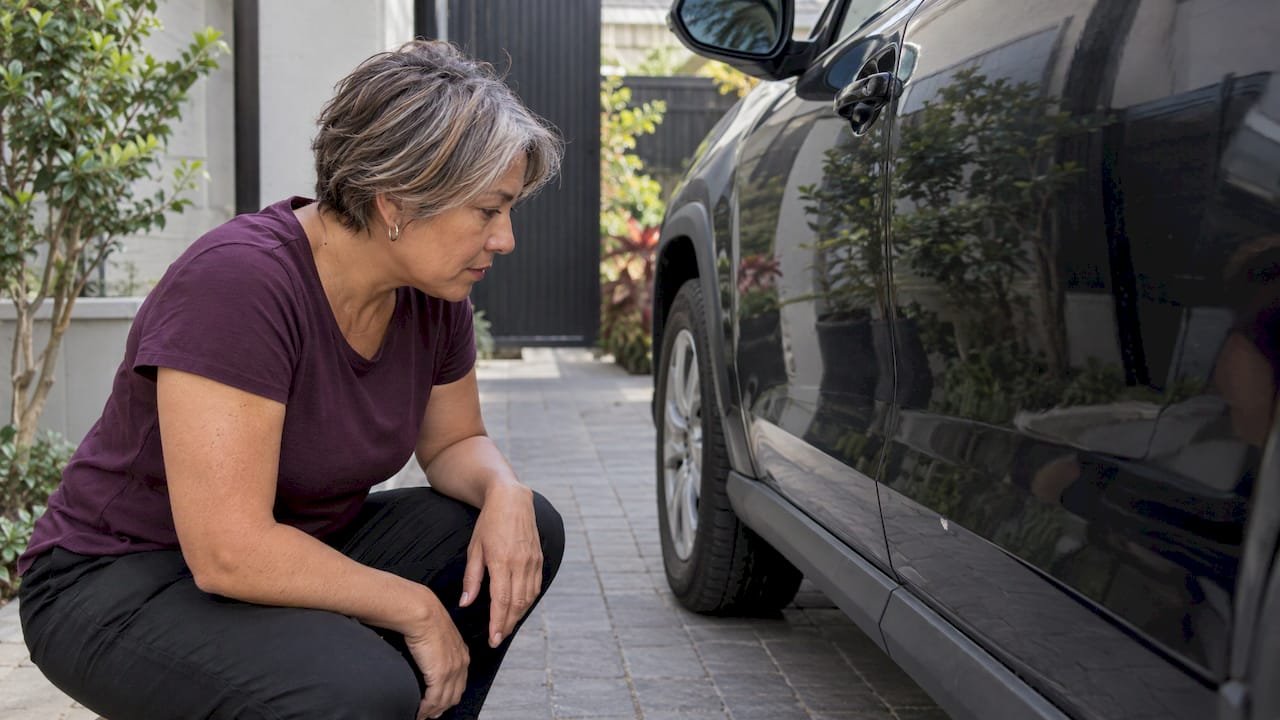
The key point comes from the Australasian Corrosion Association, which explains that damp, retained dirt creates the conditions for corrosion in a car body. Dirt that sits in a wheel arch or along a sill holds moisture against the metal long after the panels you can see have dried. That is why washing only the exterior is not enough.
In practice, salt exposure shows up in a few predictable places:
- Paint: salt and grit that stay on the surface dull the clear coat and make stone chips and scratches more likely to open up.
- Wheel arches and sills: these trap sand and damp, and rarely get rinsed properly.
- Door edges and seams: chips here expose bare metal quickly.
- Underbody: salt-laden spray collects out of sight, so problems start where you cannot see them.
- Wheels, trim and leather: brake dust, salt and sun age these faster than inland cars.
On the Sunshine Coast, the exposure is not limited to a beachfront address. Driving the Esplanade at Mooloolaba, parking at Coolum or Noosa Main Beach, a surf before work, or a weekend on the sand at Rainbow Beach all put salt on the car. Our own guide to salt air corrosion on the Sunshine Coast goes deeper on the local picture.
The weekly routine that slows salt damage
A good routine is short and repeatable. The aim is to remove salt and dirt before it sits, without scratching the paint while you do it.
Rinse weekly, and sooner after the beach
MG Motor Australia’s owner FAQ advises a weekly fresh-water rinse, with a pH-neutral shampoo for full washes monthly or as needed, and extra cleaning when you live near the ocean. RAC WA’s car-doctor advice is similar: after exposure to salt air or salt water, wash as soon as possible, or at least rinse with clean water.
A simple rule: if the car has been on the sand, in a beach car park with a strong onshore wind, or driven through spray, rinse it that day or the next.
Wash gently
The Australasian Corrosion Association recommends washing with water and a proper car detergent, not household detergent. RACV’s guidance on swirl marks adds the technique: rinse thoroughly before touching the paint and avoid dry wiping, because grit dragged across the finish scratches it. In a salty environment that matters even more, because salt crystals are abrasive.
The basics:
- Rinse the whole car first, top to bottom, to lift loose salt and sand.
- Wash with car shampoo and a soft sponge or microfibre cloth. Avoid abrasive cleaners and scrubbing brushes.
- Rinse again thoroughly, including door shuts and around the fuel flap.
- Dry with a clean microfibre towel so salty water does not dry onto the paint.
Do not forget the places you cannot see
MG Motor Australia specifically calls for cleaning wheel arches, sills and underbody areas where dirt, sand or salt may collect. A garden hose from the side rarely reaches these properly. This is the step we take off your hands: our Professional Mobile Underbody Wash is $50, and it is done at your location, so the underside is rinsed without you lying on the driveway with a hose.
Inspect and repair early
MG Motor Australia also recommends repairing chips and scratches promptly and regularly inspecting door edges, arches and underbody panels. A small chip that is sealed early stays small. One that sits in salty air can lift the paint around it. Make a habit of looking at the lower doors, the bonnet edge and the wheel arches each time you wash.
Where you park matters
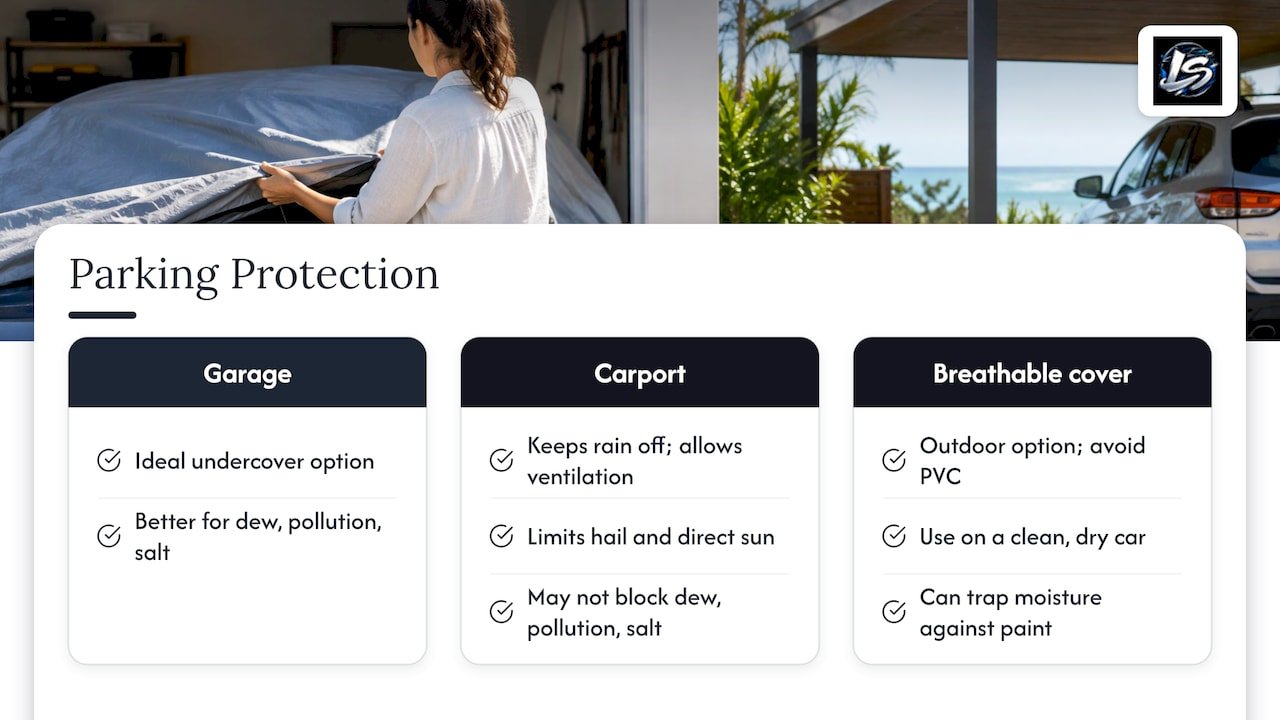
RACV’s 2026 paint-care guidance recommends undercover parking, noting a garage is ideal and a carport also limits exposure to rain, hail and direct sun. The Australasian Corrosion Association adds a coastal nuance: a carport keeps rain off while allowing ventilation, but if the shelter does not protect from dew, pollution or salt, a garage may be better.
If the car has to live outside, MG Motor Australia suggests a breathable cover and says to avoid PVC covers. A cover that traps moisture against the paint works against you in humid conditions. Always put a cover on a clean, dry car, otherwise you seal salt in.
Wax, sealant, ceramic coating or film: what each does
The coating decision is the biggest single choice in coastal paint protection. RACV sets out the differences clearly:
| Option | What RACV says it does | What it means on the coast |
|---|---|---|
| Wax | Shields against UV, dirt and contaminants | Gentle protection, needs frequent reapplication |
| Paint sealant | Lasts longer and shields against environmental pollutants | A step up in durability for regular washers |
| Ceramic coating | A hydrophobic, bonded barrier against UV, oxidation, bird droppings and chemical stains | Salt and grime sit on a slick surface and rinse off more easily |
| Paint protection film | Helps protect against scratches, chips and fading, especially on high-impact panels | Useful on the front end where stone chips happen |
The table summarises RACV’s comparison of wax, sealants, ceramic coatings and paint protection film, which also tells owners to weigh durability, finish, cost and whether application is DIY or professional.
For most coastal owners, a ceramic or graphene coating is the practical answer. It bonds to the paint, so it does not wash off in a few weeks the way wax does, and it makes the regular rinse far more effective because contaminants release more easily. RACV is clear that coatings reduce wash friction and help contaminants come off more easily, and equally clear that no coating makes paint scratch-proof. That is the honest framing: a coating makes protection easier to maintain, and the safe-wash habits above keep it working.
Why the prep decides the result
A coating is only as good as the paint underneath it. Paint that already has swirls, oxidation or embedded iron contamination will lock those flaws in. That is why a coating job properly begins with cleaning, iron removal and, where the paint needs it, a cut and polish before anything is sealed. We apply premium ceramic coatings with certified application, and the preparation is part of the work, not an extra.
If you want to compare the two main chemistries, we have written about when graphene beats ceramic on Australian cars and a ceramic coating versus sealant comparison for local owners.
Which owner needs what
Different households use their cars differently, and the protection should match.
- Busy professionals: you do not have time to babysit paint. A coating plus a monthly rinse routine is the lowest-effort setup, and mobile service means no drop-off.
- Car enthusiasts: a cut and polish followed by a ceramic coating gives the deepest gloss and the longest protection. Add leather ceramic coating for the cabin.
- Families with pets and kids: sand, salt and surf gear end up inside the car too. Seat and carpet extraction, odour elimination and Fabric Guard protect the interior from the beach as well as the paint.
- Environmentally conscious owners: we use eco-friendly products, and a coating that makes washing easier means less scrubbing and less product over the years.
- Beach and 4WD drivers: the underside takes the most punishment, so regular underbody washing is the priority.
What we offer for coastal protection
These are the packages most relevant to salt air, with the published prices for the vehicle range shown on each page.
| Service | Price (AUD) | Where it helps |
|---|---|---|
| Deluxe Detail | $375 to $575 | Thorough clean inside and out |
| Revival Detail | $575 to $775 | A deeper restoration for tired paint and interiors |
| Graphene spray sealant coating package | $339 to $739 | Hydrophobic protection that sheds salty water |
| Ultimate Protection Package | $1,500 to $2,200 | All-inclusive protection with no hidden extras |
| Professional Mobile Underbody Wash | $50 | Removes salt and sand from the underside |
| Fabric Guard | $25 per seat | Protects seats from spills and beach mess |
| Leather ceramic coating | $50 per seat | Protects leather from sun and salt-laden humidity |
Prices depend on vehicle size and the package. Cut and polish and ceramic coating are quoted to the vehicle.
Perspective: protect first, then maintain
Most coastal owners come to us after the damage has started: dull paint along the lower doors, rough patches on the bonnet, or rust bubbling at a wheel arch. In nearly every case the car was washed regularly. What it lacked was a bonded protective layer and a proper clean of the places a driveway wash misses.
Our view is simple. Protect the paint properly once, then maintain it gently. A ceramic or graphene coating, applied after the paint is cleaned, decontaminated and polished where needed, gives salt and grime a surface that does not hold on. Our Ultimate Protection Package is built around that idea, as an all-inclusive package with no hidden extras.
We do it where you are. Your driveway, your workplace car park or a quiet spot near the beach all work, because the point is that protection should fit around a busy week and not the other way round. We use eco-friendly products, and we stand behind the work with a 100% satisfaction guarantee.
isaac’s
Book protection that suits your car
If your car lives near the water, the most useful next step is a coating matched to its paint condition, with the underbody cleaned at the same visit. Our Ultimate Protection Package ranges from $1,500 to $2,200 depending on the vehicle, and our Deluxe and Revival Details ($375 to $575 and $575 to $775) suit owners who want a deep clean first.

Tell us the make, how close you park to the coast and how you use the car, and we will recommend the right package. You can start at Isaac’s Pro Detailing.
A simple coastal care calendar
Once the car is protected, upkeep takes minutes.
- After every beach trip: fresh-water rinse, including wheel arches and the lower body.
- Weekly: rinse, and glance at door edges and arches.
- Monthly or as needed: a full wash with pH-neutral shampoo and a soft mitt, dried with a clean microfibre.
- Every few months: an underbody wash, especially if you drive on sand or park close to the surf.
- Whenever you see a chip: get it sealed before salt reaches bare metal.
- Yearly: have the coating and paint checked so any problem is dealt with early.
This routine is the same one the motoring bodies describe, and a coating simply makes each step quicker and more effective.
FAQ
Does salt air damage car paint even if I live a few streets from the beach?
Yes. Salt travels in the air and settles on the surface as a fine film, and when it mixes with damp dirt it keeps corrosion active, as the Australasian Corrosion Association explains. A weekly rinse and a protective coating reduce what stays on the paint. The wheel arches, sills and underbody are the areas most often missed.
How soon should I rinse my car after the beach?
As soon as practical, ideally the same day or the next. RAC WA advises washing, or at least a clean-water rinse, after salt-air or salt-water exposure. Pay attention to the wheel arches, sills and underside where sand and salt collect.
Is ceramic coating worth it for a coastal car?
For most coastal owners, yes. RACV describes ceramic coating as a hydrophobic, bonded barrier against UV, oxidation, bird droppings and chemical stains, and it helps contaminants rinse off more easily. It does not make paint scratch-proof, so gentle washing still matters. We apply ceramic and graphene coatings on site on the Sunshine Coast.
Should I use a car cover instead?
Undercover parking is best, with a garage ideal and a carport still helpful. If the car must stay outside, MG Motor Australia recommends a breathable cover and warns against PVC covers. Put it on a clean, dry car so salt is not trapped underneath.
Can you protect my car at my home or work?
Yes. Our service is fully mobile across the Sunshine Coast, so we can work at your home, your workplace or a convenient spot near the beach.
Sources
- Corrosion in cars, Australasian Corrosion Association
- How to protect car paint: wax and coatings explained, RACV
- How to remove swirl marks from your car, RACV
- FAQ, MG Motor Australia
- Car doctor advice on salt-air exposure, RAC WA