
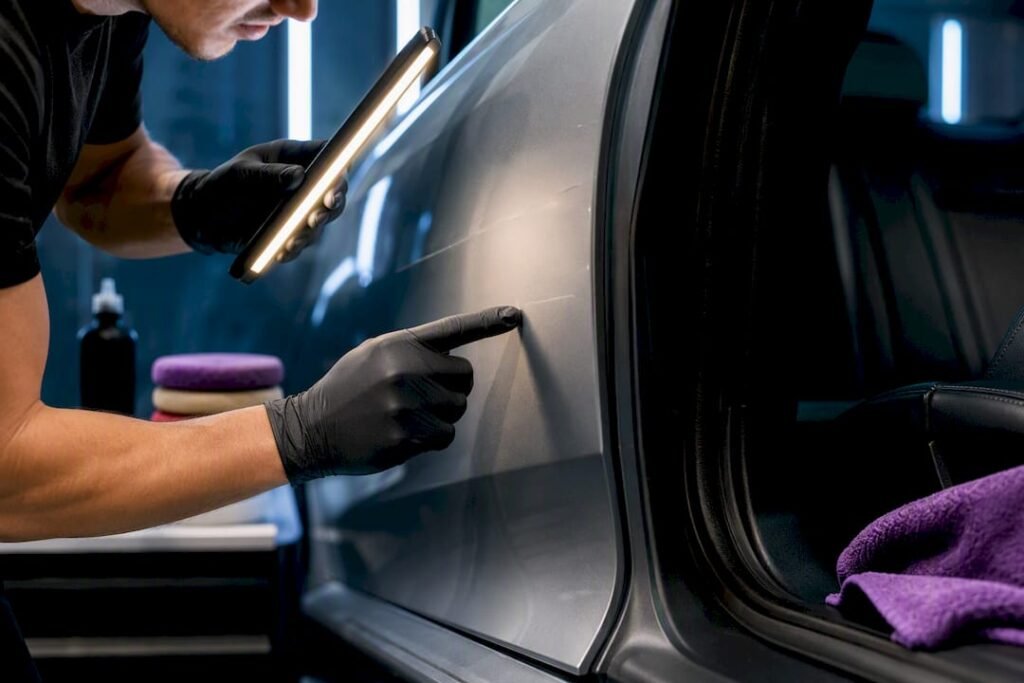
Yes, a professional detail before lease return is worth it in almost every case, because inspectors charge for what they see, not what you meant to fix. A thorough pre-return detail addresses the polishable scratches, stains and odours that inspectors flag as chargeable defects, and it usually costs far less than the excess wear-and-tear fees it prevents. Pair it with a pre-inspection and you go in with evidence, not guesswork.
TL;DR:
- A pre-return detail is cost-effective because it addresses chargeable defects like scratches, stains, and odours, preventing costly excess wear-and-tear fees.
- Inspectors focus on surface flaws such as light scratches under 20mm, minor stone chips, and scuffs, which can typically be fixed with polishing and detailing.
- Timing a detail one to two weeks before the inspection allows for repairs and fixes of flagged issues, avoiding last-minute rush charges.
- Documenting pre-inspection conditions, equipment items, and receipts strengthens your negotiating position if inspection charges are disputed.
- Professional mobile detailers offer targeted services on-site, with transparent quotes that include interior extraction, polishing, odour removal, and safe decal removal to meet lease return standards.
Table of Contents
- Why detailing matters before a lease return
- What do lease inspectors actually check?
- What’s included in a lease-return detail?
- Building your lease-return checklist and timing it right
- Pre-inspection, documentation and the equipment trap
- Why professional mobile detailing makes the difference
- DIY detailing vs calling in a professional
- Common mistakes that cost lessees money
- Our take: fix what’s visible, document everything else
- Book your pre-return detail with Isaac’s Pro Detailing
- Sources
- FAQ
Why detailing matters before a lease return
Inspectors work from a checklist, and anything that shows up on that checklist becomes a line item on your final bill. A dull, marked-up paint job or a coffee-stained seat doesn’t get judged on intent. It gets judged on appearance, and appearance is exactly what detailing fixes.
The key distinction is between flaws that are polishable and damage that needs repair. A light scuff or swirl mark can usually be corrected with cutting and polishing. A dent or a crack in the panel cannot. Fair wear-and-tear guides from finance companies draw this line precisely, and Avis’s own guidelines treat scratches under 20mm and small stone chips as acceptable once polished out, but not otherwise.
Pro Tip:Book your detail before your pre-inspection, not after. If the inspector flags something, you want the chance to fix it before the real assessment.
The cost logic is simple enough to do on the back of an envelope:
- A full interior and exterior lease-return detail typically costs a moderate amount depending on vehicle size and condition.
- A single “excess wear” charge for a stained seat or a scuffed bumper can easily exceed that on its own.
- Multiple minor defects stack. Three small issues, three separate charges.
What do lease inspectors actually check?
Inspectors move through the vehicle in a fairly predictable order, and knowing the sequence tells you where to focus your prep.
On the exterior, they’re looking at:
- Stone chips and scratches, measured against size and count thresholds
- Dents and bumper damage, particularly anything that’s broken the paint
- Sticker residue, decal ghosting or aftermarket adhesive marks
- Wheel scuffs, curb rash and tyre condition
Inside the cabin, the focus shifts to:
- Stains on seats, carpet and door trims
- Odours, especially smoke, pet smells or mildew
- Tears, burns or excessive wear on upholstery
- Pet hair embedded in fabric
Then there’s the equipment audit, which catches out more lessees than paint condition does:
- Both sets of keys and remotes
- The owner’s manual and service book
- Jack, wheel brace and any factory accessories
The thresholds matter more than people expect. Manufacturer guides, including Hyundai’s fair wear and tear guidelines, spell out specific dimensions and counts for what’s acceptable. A scratch under a certain length is generally considered acceptable, but longer scratches or multiple ones may lead to chargeable damage.
What’s included in a lease-return detail?
A proper lease-return detail is built around the exact items inspectors flag, not a generic wash-and-vac.
On the interior side, expect:
- Full vacuum and steam or hot-water extraction on carpets and seats
- Leather cleaning and conditioning where fitted
- Targeted stain extraction on cloth upholstery
- Odour treatment, including ozone deodorisation for smoke or pet smells
On the exterior:
- Full wash and chemical decontamination to strip embedded grime
- Clay bar treatment followed by cutting and polishing for swirl marks and light scratches
- Wheel and tyre restoration
- Headlight restoration where oxidation has dulled the lens
Specialist work often includes safe adhesive removal for old parking permits or dealer decals, since peeling stickers off without the right technique can lift clear coat and leave a worse mark than the sticker did.
Pro Tip:If a defect needs actual repair, paintless dent removal or a panel respray, get a quote before your inspection date, not after. Repairs take longer to schedule than a detail does.
Not everything belongs in a detailer’s toolkit. A cracked windscreen, a dented door or a mechanical fault needs a repairer, not a detailer, and no amount of polish changes that.
Building your lease-return checklist and timing it right
Work through this in order, roughly two to three weeks out from your return date:
- Inspect the vehicle yourself in good daylight, walking the full exterior and checking every panel.
- Photograph everything, including anything that already looks borderline.
- Gather all originally supplied items: both keys, remotes, manual, jack, wheel brace, cargo blind.
- Remove personal accessories and stickers, or flag them for professional removal if they’re stuck fast.
- Book your detail, ideally one to two weeks before your inspection so there’s still time to address anything the detailer flags as beyond their scope.
- Keep every invoice and receipt from the detail as inspection evidence.
If your walk-around turns up actual damage rather than surface marks, book earlier again. Repairs need lead time a detail doesn’t. On cost, weigh a mobile detail’s price against the excess charges you’re trying to avoid. It’s rarely a close call once you’ve seen a real invoice for stone chip repair or seat trim replacement.
Pre-inspection, documentation and the equipment trap
A formal pre-inspection, arranged through your leasing company, gives you a written condition report before the real return date. That report is your negotiating tool if a later charge seems unreasonable.
Document everything as you go: dated photos, notes on any pre-existing marks, and every receipt from detailing or repair work. This paper trail is your defence if a dispute arises over a charge you believe is unfair.
The equipment trap catches plenty of lessees who’ve nailed the cleaning but forgotten the basics. A complete lease return means every originally supplied item comes back with the car:
- Master and spare keys, plus remotes
- Owner’s manual and service book
- Jack, wheel brace and spare wheel
- Cargo blinds and any factory-fitted accessories
Missing security keys or remotes often trigger a fixed fee that no amount of detailing fixes. Run an equipment check alongside your cleaning prep, not as an afterthought.
Why professional mobile detailing makes the difference
A professional mobile detailer can come to your home, workplace or wherever suits, with services built around exactly the defects lease inspectors flag: interior extraction, ceramic coatings for paint and leather, ozone deodorisation, and safe adhesive removal.
Polishing and extraction are standard trade treatments for moving surface-level defects into the acceptable category, whether that’s a swirl mark in the clear coat or a stain that’s set into cloth upholstery.
The point of professional correction is straightforward: a scratch that would fail inspection at full depth often disappears entirely once it’s properly cut and polished, because most of what looks like damage is sitting in the clear coat, not the paint itself.
What you get with a mobile booking:
- On-site service, so the car never leaves your driveway or car park
- Transparent, itemised pricing before work starts
- An invoice you can hand straight to your leasing inspector as proof of condition
DIY detailing vs calling in a professional
There’s a real place for DIY work in lease prep, but it has limits worth knowing before you start.
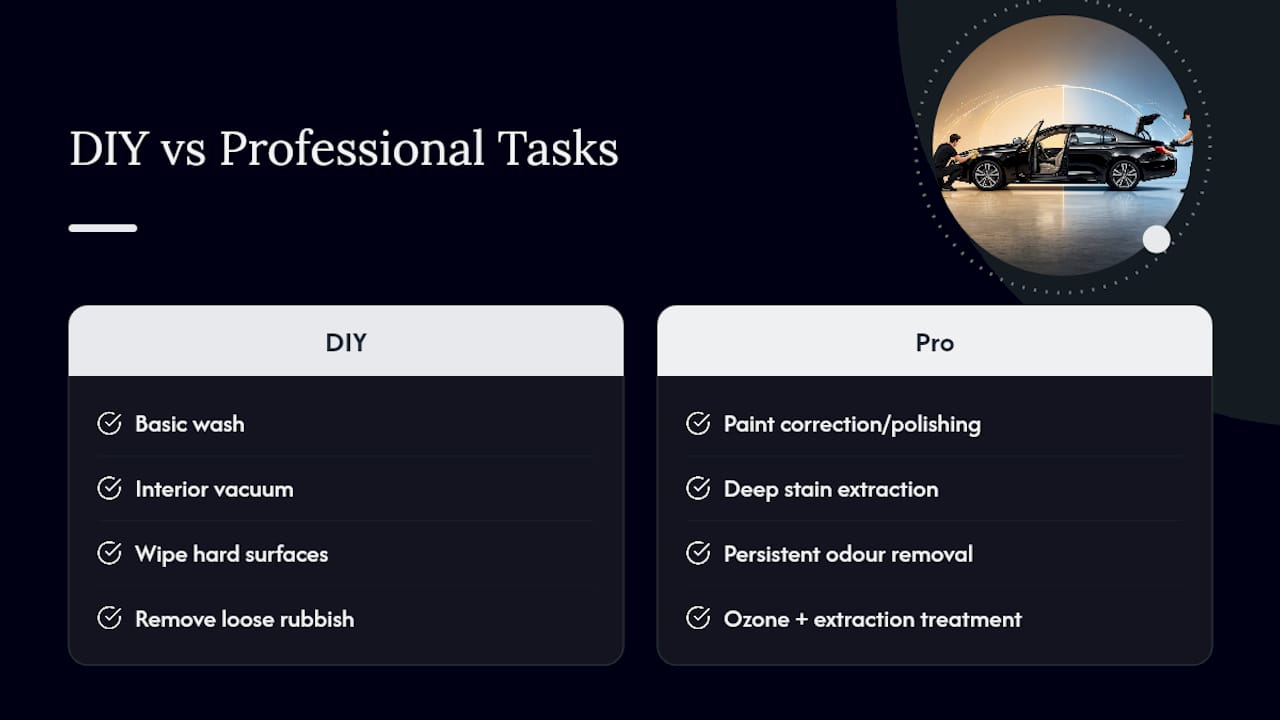
A basic wash, interior vacuum and wipe-down of hard surfaces is well within reach for most people, and it’s worth doing regardless of whether you book a professional detail afterwards. Removing loose rubbish, giving the boot a proper clear-out and running a handheld vacuum over the seats takes an afternoon and costs nothing.
Where DIY runs into trouble is anything involving correction or extraction. Cutting and polishing paint without the right pads, compounds and technique can dull the clear coat rather than restore it, turning a minor swirl mark into a hazy patch that’s harder to fix than the original problem. Stain removal on cloth seats has a similar trap: aggressive scrubbing or the wrong cleaning product can set a stain permanently or bleach the fabric, which is worse than leaving it alone.
Odour is the category where DIY genuinely struggles. Air fresheners and fabric sprays mask smells temporarily, but smoke and pet odour sit in the foam under the upholstery, and getting it out needs the kind of extraction and ozone treatment a home vacuum simply can’t deliver.
The practical split: handle the easy surface cleaning yourself, then bring in a professional for anything involving paint correction, deep stain extraction or persistent odour. That division usually gets the best result for the least spend, and it means the professional’s time goes where it actually matters.
Common mistakes that cost lessees money
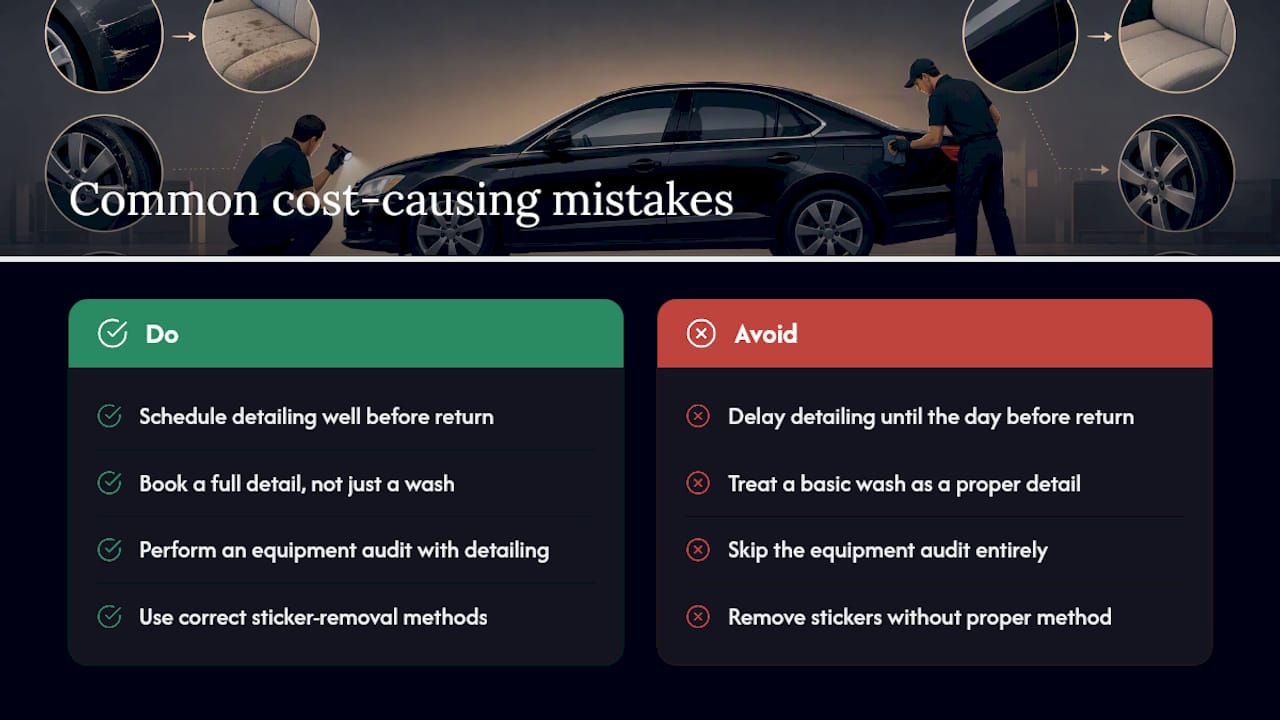
The single biggest mistake is leaving detailing until the day before return. Rushed jobs miss things, and there’s no time left to fix anything a detailer flags as needing repair rather than cleaning.
Second is treating a basic car wash as equivalent to a proper detail. A wash cleans dirt off the surface. It does nothing for a swirl mark, a set-in stain or embedded odour, all of which still show up at inspection regardless of how shiny the paint looks.
Third, and one that catches out otherwise well-prepared lessees, is forgetting the equipment audit entirely. A spotless car with a missing spare key still gets charged. Detailing and equipment checks need to happen together, not as separate afterthoughts.
Fourth is DIY sticker or decal removal gone wrong. Peeling off an old parking permit or dealer badge without the right approach can strip clear coat and leave a mark that’s worse than the sticker was.
Fifth is skipping the pre-inspection because it feels like an extra step. Going in without a written condition report means you’ve got no baseline to argue from if a charge feels unreasonable later.
And finally, some lessees assume detailing covers mechanical issues. It doesn’t. A service light, a worn brake or a neglected maintenance schedule generates its own charges that no detail, however thorough, will touch.
Our take: fix what’s visible, document everything else
The conventional advice on lease returns focuses almost entirely on cleanliness, and that’s only half the picture. A spotless car with missing keys still gets charged. A well-documented car with a minor stain often gets a pass that an undocumented one wouldn’t. Paperwork and cleanliness carry roughly equal weight, and most guides underweight the paperwork side badly.
Where we’d push back hardest on common thinking: don’t wait for the inspection to tell you what’s wrong. By then, you’ve lost your negotiating position. A pre-inspection report, taken two to three weeks out, turns the whole process from a surprise into a checklist you can actually work through.
If you do one thing differently after reading this, make it the equipment audit. Detailing gets all the attention because it’s visible and satisfying to book. Missing keys and manuals are boring, easy to forget, and just as expensive. Sort the boring stuff first, then let a professional handle the polish and extraction that genuinely needs a trained hand.
— isaac’s
Book your pre-return detail with Isaac’s Pro Detailing
Mobile detailing services offer an alternative to driving your car across town for a same-day slot at a fixed shopfront. You can get a detailer at your home, office or wherever suits, with a lease-return package covering interior extraction, exterior cut and polish, stain and odour treatment, and safe adhesive removal for stickers or decals.
Many professional detailers provide itemised pricing before work starts, so you know exactly what’s covered, and a detailed invoice afterwards that doubles as evidence for your leasing inspector. If you’ve already had a pre-inspection report, bring it along. It helps the detailer prioritise exactly the items your inspector flagged, rather than guessing. Check current packages on the wash menu and book your slot with enough lead time, ideally one to two weeks before your return date, to leave room for anything unexpected.
Sources
Every finance company sets its own thresholds, so check your contract before relying on general guidance.
- How to prepare for a car lease return: a step-by-step guide
- Hyundai finance fair wear and tear guidelines (2025)
- Avis fair wear and tear guidelines
FAQ
How clean does a car need to be for a lease return?
Clean enough that no stains, odours, pet hair or embedded grime are visible during inspection. A wash alone often isn’t enough; extraction and odour treatment matter more than most lessees expect.
What is the 1.5 rule when leasing a car?
This isn’t a standard term used in fair wear-and-tear guides or lease agreements. Check your own finance company’s documentation for the specific mileage or condition thresholds that apply to your contract.
Is buying a lease return car a good idea?
It can be, since lease return vehicles are often well maintained and have documented service history, but always request an independent inspection and check for any repair work done before the sale.
What does a lease-return detail typically include?
Interior extraction, stain and odour treatment, exterior wash and decontamination, cutting and polishing for minor scratches, and often adhesive removal for stickers or decals.
Should I get a pre-inspection before booking a detail?
Yes. A pre-inspection report tells you exactly which items an inspector will flag, so your detailer can prioritise those specific issues rather than guessing at what matters.